4 Key Elements That Belong In Every Weekly Workout Routine, and How to Put It All Together
Take the guesswork out of your workouts—and crush some goals while you’re at it.
By Alyssa Sparacino•
Everything You Need to Create a Balanced Weekly Workout Routine
How to Design Your Ideal Weekly Workout Routine
A Sample Weekly Workout Plan for General Fitness & Longevity
How to Build Your Perfect Weekly Workout Routine with Peloton
You know the scene: You’re dressed and ready to exercise, head down to the gym (your basement counts!), then spend the next 10 minutes trying to decide on a workout, stuck in indecision. Before you know it, your motivation has waned, and you’ve burned through what should have been your warm-up time just trying to get started.
An exercise game plan fixes all that—and gets you closer to your fitness goals much faster than a random assortment of workouts. All it takes is a smart, efficient weekly workout routine to get you on track. If you’re not sure where to start, aiming for a balance of modalities is a great way to ensure you cover all your exercise bases. From there, you can tweak the plan as needed.
Below, Peloton instructor Selena Samuela drills it down even further to help you craft your own weekly workout routine.
Everything You Need to Create a Balanced Weekly Workout Routine
While individual goals, preferences, and available time mean everyone’s schedule will look different, there are some elements that belong in everyone’s workout routine to promote overall wellbeing. These include cardiovascular training (aka cardio), strength workouts, mobility and flexibility work, and plenty of strategic rest and recovery.
As a baseline for general health and wellness, adults should aim for 150 minutes of moderate-intensity exercise, 75 minutes of vigorous-intensity exercise, or an equivalent combo of the two every week, according to both the Centers for Disease Control and Prevention (CDC) and the World Health Organization (WHO). The WHO reports you can reap even more benefits by increasing that to 300 minutes of moderate-intensity exercise each week. Both orgs also specify that at least two of those days should be dedicated to “muscle-strengthening” activities.
Given the above, here’s how you might want to think about organizing your weekly workouts so you “check all the boxes,” while still leaving some room to adapt.
Cardio: 2-3 Workouts Per Week
Cardio doesn’t have to mean running—though that’s a tried and true example of a great bone-building, heart-boosting workout. Cardiovascular training (i.e., aerobic exercise) is anything that gets your heart rate up and taxes your breath. That can include rowing, swimming, cycling, bodyweight workouts (think: dance cardio or power yoga), or even fast-paced lifting sessions. The key is to reach moderate intensity, which is equivalent to approximately a 5 or 6 on a perceived exertion scale of 0 to 10 or heart rate training zones 2 or 3.
Cardiovascular training is great for your heart and lung health, but high-intensity cardio can also “be great for cognitive/brain health as well as metabolic health,” Selena says. Make it high-impact (think bounds, jumps, and other plyometric moves), and you’ll get some help in the bone-building department, too, she says. Not to mention, cardio can also help improve endurance in strength workouts.
Strength: 2-3 Workouts Per Week
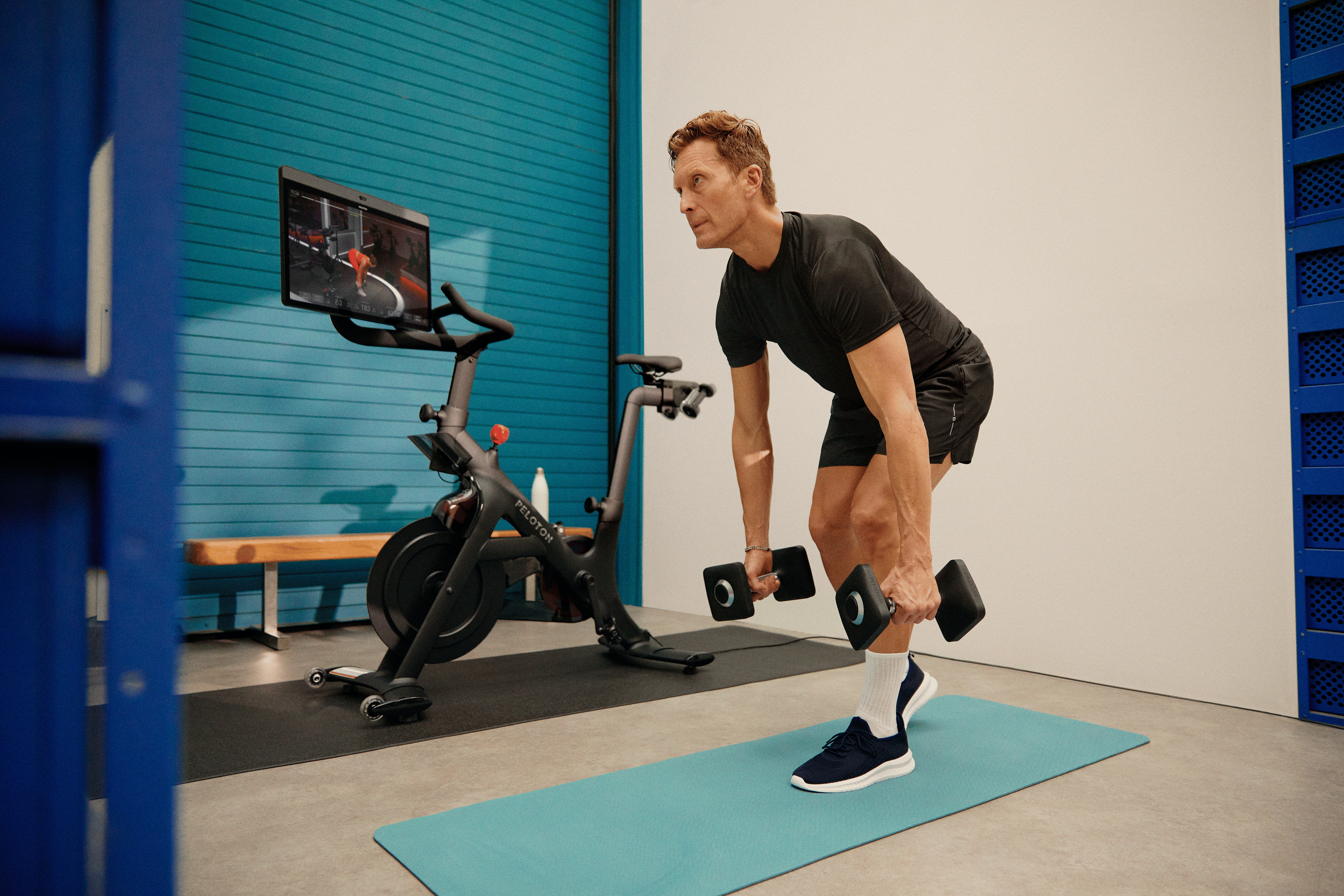
Strength training is any workout that uses resistance to build muscle. That resistance can come from weights, resistance bands, machines, or your own bodyweight. There’s a reason why health organizations suggest at least two days of strength training for all muscle groups—it offers important health benefits for exercisers of all ages and abilities.
“Strength is important for increasing or maintaining muscle mass, improving or maintaining bone density, and reducing risk of injury,” Selena says. It’s also key to your overall metabolic health. Plus, strength training complements your cardio workouts and vice versa—this is why runners should strength train and lifters can’t forgo HIIT. They work well together by improving balance and stability, power output, and your form and efficiency, she explains.
Flexibility & Mobility: 1 Workout Per Week (or Within Other Training)
First, know that flexibility and mobility are not the same. Think of flexibility as how far you can stretch a muscle and mobility as how you can use that flexibility while you’re actively moving. Both are important, but mobility will carry you through future decades of training and is essential to ensure you're moving well and with proper form. This not only minimizes your chance of injury, but it’ll also improve your performance in other activities, like running or recreational sports.
Point blank: “The better you move, the more you can do,” says Selena. You can train your mobility through dynamic warm-ups and cool-downs, she says, as well as recovery classes such as foam rolling. You can work on your flexibility by stretching or tackle them both with consistent practice in modalities such as yoga and Pilates.
Rest & Recovery: At Least 1 Day Per Week
Experts recommend that you take at least one complete rest day per week, and that you also consider adding one or two more days of active recovery. Active recovery can include things like stretching, foam rolling, mobility work, or low-intensity practices like yoga and Pilates. True rest (aka passive recovery), however, entails taking a break from doing anything physically active.
Rest is key because it allows your body time to recoup and rebuild after challenging workouts, which ultimately helps you to keep seeing progress and prevent overtraining. In the case of strength training, that rebuilding is literal; your body is repairing the microdamage done to the muscle tissue during training, and rebuilding it bigger and stronger.
Related Articles

Cardio
Everyone Needs to Do Cardio. Here’s How to Love Having It In Your Routine

Strength Train
Strength Training Is Key to Living a Longer, Healthier Life. Here's How to Get Started

Yoga
Why Every Athlete Should Add Yoga to Their Fitness Routine

Stretching + Mobility
The Best Active Recovery Workouts, Based on Your Fitness Routine
How to Design Your Ideal Weekly Workout Routine
Now that you have the essential ingredients to a balanced weekly workout routine, take that and customize it to your liking. That includes thinking about your specific goals (training for a race? looking to PR a lift?), fitness and injury background, and available time and equipment.
You’ll want to prioritize any workouts that are specific to your main fitness goals. As an example, “if your goal is to run a marathon, then your priorities will have to shift a bit—cardio takes over and strength takes a back seat as you get closer to race day,” Selena explains. In this case, your marathon training plan should fill in your schedule first, then you can pepper in strength, cross training, and recovery where it fits (and won’t interfere with your runs).
On the other hand, if your goal is to get stronger, you might allocate three or four days to strength training specific muscle groups, and then tack on some cardio on active recovery days or after your lifts.
People who are super busy might benefit from combining their cardio and strength workouts (think: HIIT with weights or bootcamp workouts) in order to get strength and cardio done in a single session.
The goal is to create a framework which you can—and should!—adjust over time depending on your wants and needs.
“Do your best to stay consistent but give yourself grace if life happens and you miss a day,” Selena says. “If you notice that you’re consistently missing a day every week, then it’s time to look at your calendar and priorities and see what you can do to shift things around either in your workout plan or in other parts of your life.”
A Sample Weekly Workout Plan for General Fitness & Longevity
Don’t have a specific end point in mind? If you just want to move more now and stay active throughout life (a valid and important goal), get started with Selena’s suggested weekly workout schedule for health and longevity—including class recommendations you can find on the Peloton App.
Monday: Cardio Endurance
Kick the week off with a longer workout that emphasizes stamina and endurance. These classes kick your cardiovascular system into high gear, and really push your mental and physical reserves and perseverance and get you geared up for what’s to come the rest of the week.
Try: 45-minute Endurance Run or Hike
Tuesday: Lower Body Strength
Keep the focus on your bottom half with a lower-body strength workout. Opt for a strength training class rather than a HIIT-style option to slow things down and build muscle with heavier loads.
Wednesday: Mobility & Active Recovery
Give your body some TLC after two tough training days with a juicy full-body stretch. Sending blood to your tight or sore muscles ensures you’ll be primed and ready for another workout tomorrow. Don’t sleep on this!
Thursday: Upper Body Strength
You checked off your lower half, so now it’s time to tackle the upper body. Grab some dumbbells and get to work.
Friday: HIIT
Head into the weekend by taking things up a notch with a fast-paced high-intensity interval training class. Whether using equipment, light dumbbells, or your bodyweight only, these workouts aim to give you the biggest burn for your time buck.
Try: 20- or 30-minute HIIT Run, Tabata Ride, or HIIT Cardio
Saturday: Rest
Take a load off. It’s the weekend—go enjoy it! Remember that everyday activities such as walking the dog or grabbing groceries are also great ways to keep up with your movement goals. If you'd like to take a moment to give your body and mind some TLC, consider using your rest day to do some gentle stretching, mobility, or meditation.
Sunday: Bootcamp
Weekends might offer you the chance to accomplish a longer workout that you’d otherwise be stretched too thin to do during the week. Take advantage of some extra time with a bootcamp class that combines the best of both worlds: cardio and strength training. It’s efficient, effective, and anything but boring.
Try a Cardio, Strength, or Mobility Workout with Peloton


How to Build Your Perfect Weekly Workout Routine with Peloton
If you’re looking for something tailored to a specific goal or modality you prefer—from marathon training to workouts focused on your core, glutes, or arms—there are instructor-designed workout programs available within the Peloton App and Peloton Strength+ app. Every program is designed to progress each week and can be done again and again, so you can continue to test your limits.
Strength lovers, for example, will appreciate the 3- or 5-day split programs for both intermediate and advanced members that target individual muscle groups or different areas of the body each day.
Finally, if you haven’t tried Peloton’s personalized workout plan feature (available to all Members)—this is the perfect time. Select a goal (i.e., build strength or support weight goals), and using your previous workout history and preferences, it delivers a unique training schedule straight to your app homepage each week. You can tweak it from there depending on your needs.
No matter how you create your weekly workout routine, simply having one is the first step to success.

Peloton App
Access thousands of classes with no equipment needed.
This content is for informational and educational purposes only and does not constitute individualized advice. It is not intended to replace professional medical evaluation, diagnosis, or treatment. Seek the advice of your physician for questions you may have regarding your health or a medical condition. If you are having a medical emergency, call your physician or 911 immediately.

Level up your inbox.
Subscribe for a weekly dose of fitness, plus the latest promos, launches, and events.
By providing your email address, you agree to receive marketing communications from Peloton.
For more about how we use your information, see our Privacy Policy.