
Zorica Nastasic / E+ via Getty Images
The Surprising Ways Exercise Affects Your Lungs
Does all that huffing and puffing during a workout impact your lungs? Three health experts break down the connection.
By Jennifer Heimlich•
How the Lungs Respond When You Exercise
How Does Exercise Affect Your Lungs?
The Benefits of Exercise for the Lungs
Another Lung-Boosting Option: Breathing Exercises
Other Things to Know About Exercise and the Lungs
The Takeaway
One of the first things you’ll notice when you begin nearly any workout is your breath. As your lungs start to suck in more oxygen and dispel more carbon dioxide, you start to breathe harder and faster. And if you pick up the pace fast enough, you might eventually wind up panting and downright gasping for air. But do you know exactly how the relationship between exercise and the lungs works?
Well, the way this particular organ responds to physical activity can actually be a bit surprising. So we tapped a few experts—a pulmonologist who works with athletes as well as two scientists who research respiratory ir pulmonary physiology—to break down what goes on in the lungs when you work out, and what to keep in mind if you want to prioritize your lung health. Here’s what they want you to know.
How the Lungs Respond When You Exercise
When you’re performing any kind of aerobic workout in which you gradually increase the intensity from a warm-up to a moderate effort and then maybe to a hard or even max effort, both the depth of your breathing (how much air you’re taking into your lungs) and your breathing rate (the number of breaths you take per minute) go up incrementally.
“At low intensities, the increased rate of pulmonary ventilation (the total amount of air breathed in and out of the lungs every minute) is mainly caused by an increase in breathing depth, whereas at higher intensities, the breathing frequency increases relatively more,” says Andrew M. Jones, PhD, a professor of applied physiology at the University of Exeter who researches respiratory physiology.
Once you hit your lactate threshold (the point during activity at which lactate starts to build up in your blood faster than your body can remove it), the amount of air you’re sucking in and out of the lungs suddenly shoots up, increasing disproportionately relative to your pace, Jones says. This is partly why working to increase your lactate threshold can be so beneficial.
“As an example, if a person has a lactate threshold of 100 watts, then exercising at 120 watts will feel somewhat tough; if, however, the lactate threshold increases to 140 watts, then exercising at 120 watts will require a lower ventilation and will feel significantly more comfortable,” Jones says.
How Does Exercise Affect Your Lungs?
In news to no one, exercise offers a ton of benefits for your body. However, you might be surprised to learn that it doesn’t directly improve your lung function. “The lungs don’t adapt in any meaningful way to repeated exercise,” says Hans Haverkamp, PhD, an associate professor of nutrition and exercise physiology at Washington State University whose expertise focuses on the pulmonary system. “They don’t grow. They don’t build new blood vessels. They don’t increase their volume capacity. They just kind of do their thing.”
This is because the lungs are already designed to be quite powerful. “Although we might feel ‘out of breath’ when we are working hard, even when we reach our VO2 max, our lungs are typically only operating at up to 80 percent of what they are capable of,” Jones explains. “Essentially, our lungs are ‘overbuilt’ for exercise.” It’s almost always other factors—like our heart’s ability to pump oxygen-rich blood to our muscles—that limit our aerobic performance, he adds.
The rare exception to this is extremely fit elite endurance athletes who can start to get close to their lungs’ max rate when they hit very high intensities. However, Haverkamp says even their lungs don’t improve from that stimulus.
Can Exercise Increase Lung Capacity?
Although all the heavy breathing that happens during an intense HIIT session might seem like it would increase the amount of air you can hold in your lungs, unfortunately, that’s not the case either. “Exercise does not significantly increase our lung capacity,” Jones says. He explains that your lung capacity is primarily based on your age and height (although restrictive and obstructive lung diseases can reduce your lung capacity.)

Goodboy Picture Company / E+ via Getty Images
The Benefits of Exercise for the Lungs
Although working out doesn’t directly benefit your lungs, that definitely doesn’t mean exercise is pointless if you’re looking after your lung health. “Exercise is ubiquitously recommended because it improves everything else in the body,” Haverkamp says. Your cardiac function, your muscular ability, your bone density, your nervous system, even your cognition all get a boost from increasing your physical fitness. And when things like your heart and muscles are working at their peak, they can help to support proper lung function.
For example, Haverkamp points out that exercise can strengthen the respiratory muscles (like your diaphragm and the intercostal muscles between your ribs), which your body uses to generate the changes in lung volume that make your lungs expand to breathe in oxygen and then contract to dispel the carbon dioxide you produce during activity. “In response to exercise training, those can increase their capacity for repeated contraction because they’re the same type of muscle as, let’s say, your quadriceps or your calf muscles,” he says. In simpler terms: Just like working out can strengthen the muscles in your legs that help you run, exercise can also strengthen the muscles that help your lungs breathe.
In turn, this might give you greater endurance for long periods of heavy breathing, like during a marathon. “It could increase the capacity of those muscles to contract with high force, high velocity during moderate and intense physical activity,” Haverkamp says. Yet Jones adds the caveat that it’s not 100 percent clear that these muscles could actually tire enough during exercise to limit your athletic performance: “Whether strengthening them has any positive effect on performance is controversial,” he says.
One undeniable benefit, though: Increased fitness has consistently been found to reduce perceptions of breathlessness or shortness of breath in all kinds of populations. Scientists aren’t exactly sure why this is, but hypothesize that it may be because it decreases your rate of perceived exertion at the same relative intensity or because you just get more used to the discomfort of breathing heavily, so your nervous system doesn’t freak out about it as much. “The lungs get more and more accustomed to the higher and higher airflow states, essentially,” says Tod Olin, MD, a pulmonologist who works with athletes.
Another Lung-Boosting Option: Breathing Exercises
Although physical activity may not be your direct golden ticket to stronger lungs, for those with chronic lung diseases like asthma or chronic obstructive pulmonary disease (COPD), the American Lung Association suggests another kind of exercise: dedicated breathing exercises. Respiratory therapists say these can make the lungs more efficient and retraining the diaphragm to help you breathe as best it can.
In particular, two exercises that the organization recommends are pursed lip breathing (breathing in through the nose and then out through pursed lips for at least twice as long) and belly breathing (breathing in the nose with a focus on expanding the belly and then out through the mouth for two to three times as long as the inhale).
Other Things to Know About Exercise and the Lungs
If your lungs are among your top priorities when you’re planning your workouts, here are a few more things you might want to keep in mind.
Working Out to Improve Perceptions of Breathlessness
So you want to stop feeling quite so out of breath quite after climbing that flight of stairs? Dr. Olin says that heart-pumping cardio exercise, unsurprisingly, is the way to go since it will challenge your breathing the most. “I am going to perceive less shortness of breath and tolerate higher airflow rates with less discomfort over time with cardio rather than pure strength work,” he says.
Still, resistance training and weight lifting are incredibly important for your overall health and well-being. Plus, as your muscles get stronger, they become more efficient and need less oxygen to move, in turn decreasing the amount of air you have to breathe in and out during a workout, according to a factsheet from the journal Breathe.
Get Moving with a Cardio Workout on the Peloton App


Exercising with Respiratory Issues
Even for people with a lung condition like asthma, COPD, or exercise-induced bronchoconstriction, getting regular exercise is still generally recommended. But you should always follow your physician’s advice about working out safely.
Experts also say it’s smart to be aware of your personal triggers (like cold, dry air) so you can take action to minimize their effects—for example, wearing a scarf over your nose and mouth or a face mask, “which increases the humidity of the air coming into the body,” Haverkamp says, or preventively taking your prescribed inhaler before your workout.
Easing into your workouts with a solid warm-up period is important too. “A sudden increase in exercise intensity can be problematic, so gradual warm-up is recommended,” Jones says.
Working Out When the Air Quality Is Bad
As beneficial as exercise usually is for us, it can backfire when the air you’re working out in isn’t clean. “In the places where air pollution, dust, or forest fire [smoke] is a problem, as you exercise, you expose your air tubes to more and more of that,” Dr. Olin says. “And over time, that can lead to things like asthma.” Although a five-minute run to catch the train in bad air likely won’t harm you, regularly training for a marathon in it could bring on respiratory problems over the long term, he says.
That’s why it’s important to check out the air quality index, or AQI, when planning your workouts. “If the air quality index is over 100, I would say, start thinking about a backup plan, and those with asthma should treat it like a sick day with your medications,” Dr. Olin says. “If it’s over 150, I would definitely be in backup plan mode. For over 200, I would not be outside doing cardio at all.”
What might a backup plan look like? Here are a few ideas, according to our experts:
Wait to exercise until a time of the day when the air quality is better.
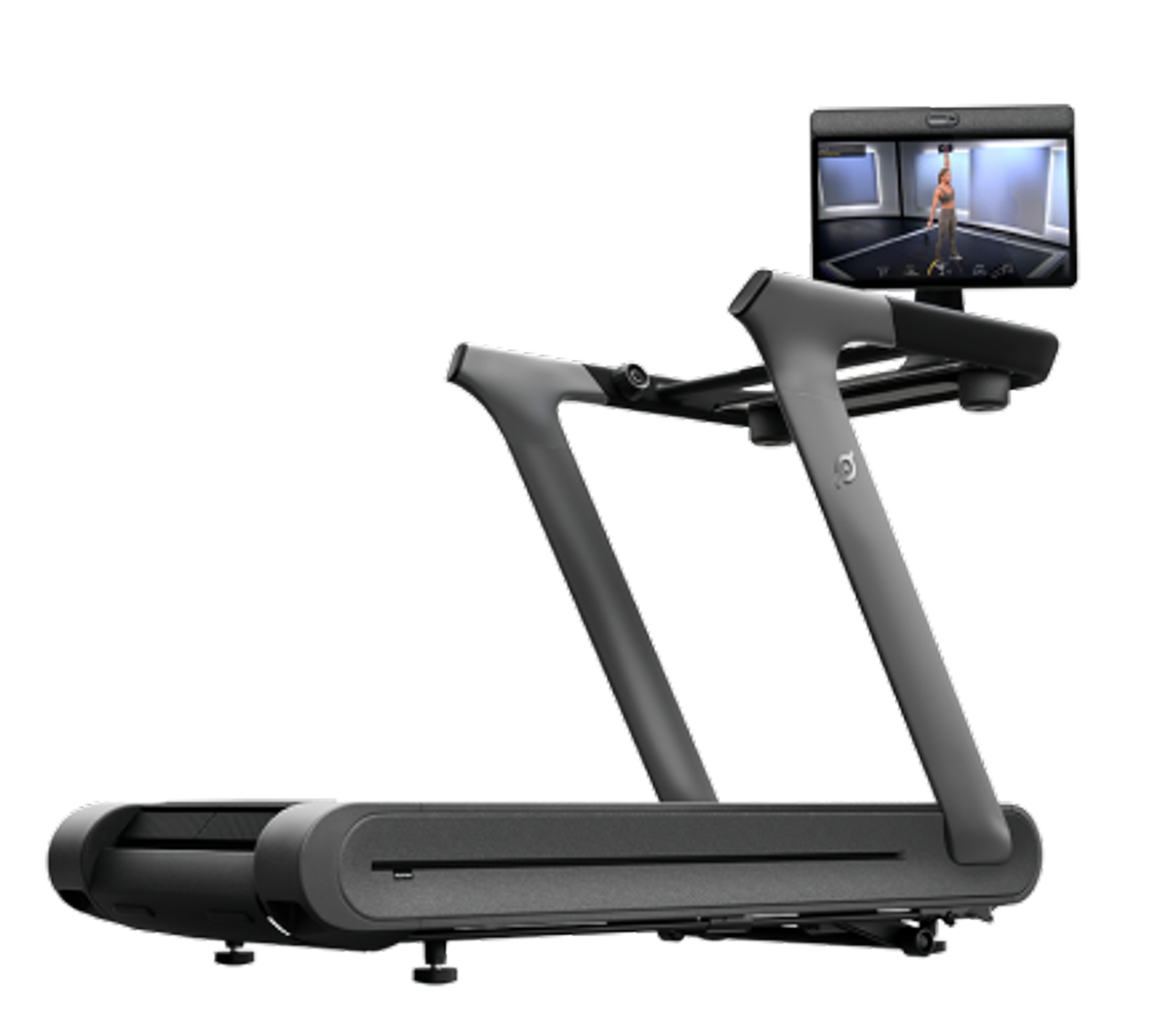
Move your workout indoors where the air is filtered. You could go for a run on the Peloton Tread+, clip in for a ride on the Peloton Bike+, knock out a rowing workout on the Peloton Row, or do a strength workout on the Peloton App, for instance.
Consider wearing a good mask to screen out large particulates
Look up whether a town nearby might have better air quality and consider going there for your workout. (And always avoid working out near traffic during rush hour.)

Peloton App
Access thousands of classes with no equipment needed.
The Takeaway
Although exercise won’t directly enhance your lung function or increase your lung capacity, it can improve all the other systems in your body that support the lungs, plus help to decrease perceptions of breathlessness. If you have a respiratory condition, you should always follow your physician’s advice about working out safely and ask them whether breathing exercises might be helpful to add to your routine.
For anyone, it’s smart to pay attention to the air quality for outdoor workouts, but don’t let bad numbers stop you from getting moving somehow, whether that’s indoors or at a nearby locale with healthier air. Even if you live in a busy city, “it is still healthier to exercise than to remain sedentary,” Jones says. You just need to be strategic with exactly where and when you get in your workout.
Related Articles


This content is for informational and educational purposes only and does not constitute individualized advice. It is not intended to replace professional medical evaluation, diagnosis, or treatment. Seek the advice of your physician for questions you may have regarding your health or a medical condition. If you are having a medical emergency, call your physician or 911 immediately.
Our Products
Level up your inbox.
Subscribe for a weekly dose of fitness, plus the latest promos, launches, and events.
By providing your email address, you agree to receive marketing communications from Peloton.
For more about how we use your information, see our Privacy Policy.