How to Get Started with Treadmill Running If You’re a Total Beginner
Get ready to tackle treadmill runs with confidence.
By Liz Doupnik•
1. Get to Know Your Treadmill
2. Choose the Right Running Gear
3. How to Warm Up On a Treadmill
4. Choose Your Workout
5. Common Mistakes to Avoid
6. Cool Down Properly
7. Consider What You’re Doing Off the Tread
The Takeaway
Whether you’re a complete beginner to running, coming back from a hiatus, or a casual outdoor jogger looking to make the transition inside, a treadmill can be a game-changing tool for your training.
“The treadmill offers convenience and the ability to control the variables,” says John Goldthorp, UESCA-certified run coach and running mechanics specialist at Fix Your Run, a coaching service based in Philadelphia. “You don’t have to worry about weather conditions, traffic, or footing. You can focus directly on your running without using extra energy to cope with those kinds of variables.”
That said, if you’ve never set foot on a treadmill, it can be intimidating. To help you stride confidently onto the tread and through your next treadmill run, read ahead as experts share advice on how to start treadmill running—whether you’re new to running, overall, or just have yet to hop on a tread.
1. Get to Know Your Treadmill
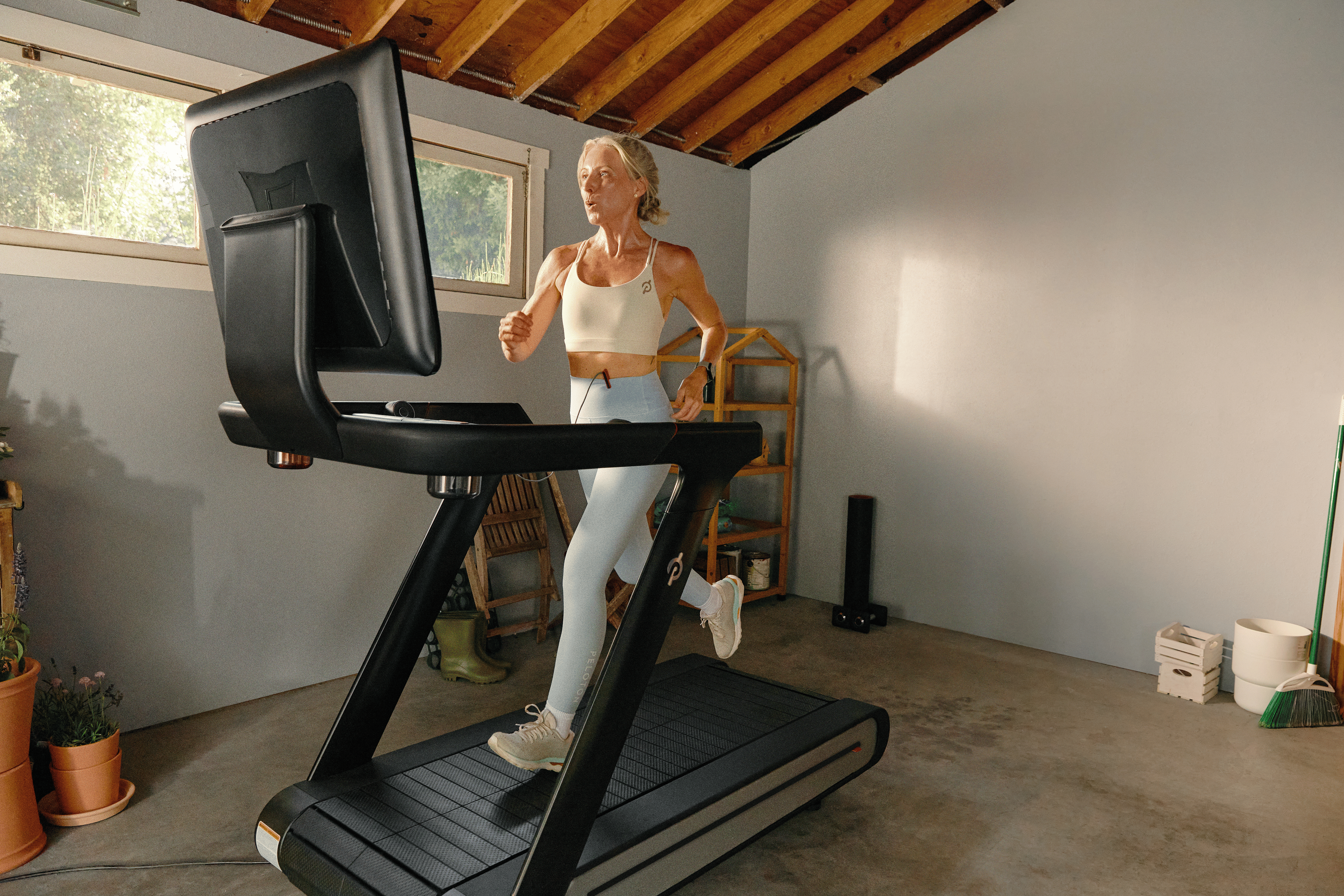
If you’ve ever been a little daunted by a treadmill, you’re not alone. Between the moving belt, screen, and buttons, it can feel like there’s a lot to figure out. Fortunately, most treadmills will have the same basic parts and controls. These are going to be the key ones to know as you get started with treadmill running:
Display Screen: This is where you’ll see your workout stats, including speed, incline, pace, distance, and time. In the case of Peloton Tread or Tread+, the touchscreen also allows you to stream instructor-led classes, Scenic workouts, or your favorite TV shows.
Speed Control: Treadmills may have speed buttons, a touchscreen, a remote, or a rolling knob to control the speed, which will be expressed as miles per hour. On the Peloton Tread or Tread+, for example, you adjust your speed by twisting the Speed Knob on the right side of the treadmill forward to increase your speed or backward to decrease your speed by 0.1 mph at a time. Press the jump button inside the knob to increase the speed by 1 mph at a time.
Incline Control: Like the speed control, a treadmill’s incline may be adjusted with a knob, button, touchscreen, or remote. The steepness of a treadmill is typically measured in 0.5-percent increments and capped at a certain incline. For example, Peloton Tread has a maximum of 12.5-percent incline, and Tread+ has a maximum of 15-percent incline, both of which can be adjusted in 0.5-percent increments by twisting the Incline Knob forward (to increase) and backward (to decrease). Press the jump button inside the knob to increase the incline by 1 percent at a time.
Stop Button: For whatever reason, this can be tapped to immediately stop the treadmill.
Safety Key: For an added layer of security, treadmills also feature a safety key: a magnetic button that connects from the center console to a clip, which can be placed on your shirt or pants waistband. If the magnetic button on the console is pulled off, the treadmill will automatically stop.
Treadmill Belt: The treadmill belt is the moving surface on which you run.
Handrails: Framing the tread are handrails, which extend out of a treadmill’s display or center console. These are here for additional stability as you step on and off the treadmill, or speed up or slow down.

Peloton Treadmills
Two treadmills. One Peloton experience.
2. Choose the Right Running Gear
Selecting the right running outfit is relatively subjective, but there are a few items you’ll want to consider when preparing to run on a treadmill.
Sweat-Wicking Clothing: On a treadmill, things are bound to get sweaty. To help keep your body cool, consider clothing that’s made from sweat-wicking materials, which pull moisture away from the body. You can usually find these details on the item’s tag or care instructions. While finding sweat-wicking tops and bottoms might seem like a no-brainer, also consider underwear, sports bras, and socks made of the same materials to help avoid chafing or blisters.
Running Shoes: A regular pair of running shoes should more than suffice on a treadmill. While not always the case, a common rule of thumb is to swap your running shoes every 300-500 miles, depending on wear and tear. To find the right shoe for your foot and gait, consider swinging by your local run shop for customized recommendations.
Heart Rate Monitor: A heart rate monitor can help keep the easy runs easy and the hard ones challenging, and aid in matching paces to various heart rate zones.
3. How to Warm Up On a Treadmill
While warm-ups can look different depending on your personal needs, experts generally recommend you do some sort of mobility work, dynamic stretching, or muscle activation before you start a run. “A great warm-up might include some tread-based activations and mobilizations to prepare the important muscle groups,” says Peloton instructor Jon Hosking.
According to research published in a 2023 issue of Sports Medicine, dynamic stretching can help decrease your risk of injury when it targets movement patterns and muscle groups that will be used in the upcoming activity. Some examples of dynamic stretches for treadmill running include moves like front and back hurdles, leg swings, reverse lunges, and hamstring scoops.
Next, it’s a good idea to do a brief warm-up on the treadmill that gradually turns up the intensity. You can start with a few minutes of walking and eventually include running drills such as strides. “A great warmup allows runners to experience what different speeds feel like,” Jon says. Tapping into faster paces can also help bolster proper running mechanics while lifting your heart rate, he adds.
“Warming up effectively makes a huge difference in how you experience your workout,” agrees Goldthorp, who reiterated the importance of increasing your speed slowly and intentionally, as it can take your body up to 15 minutes to switch into “aerobic exercise mode,” he adds.
It’s wise to keep in mind the type of workout you have planned, and pick a warm-up that will best prime your body for it. As a general rule of thumb, “the more intense the workout, the more thorough and intense the warm-up needs to be,” Goldthorp says.
If you’re training with Peloton, consider cueing up a Pre-Run Stretch class, which will take you through dynamic stretches and activations, and then a Warm Up Run before diving into the meat of your workout.
Try a Running Warm-Up on the Peloton App


4. Choose Your Workout
Once you’ve warmed up, it’s time to choose your workout. When you’re first starting out or training for a race, it can be wise to follow a plan—such as any of Peloton’s You Can Run or race training programs—which gradually increase your running time and distance over several weeks and take the guesswork out of which workout to do next.
Regardless of what your training plan or run crew might recommend, it’s always best to listen to your body and pick a sweat sesh that matches your current needs to avoid injury or overtraining. Running when you’re sore or exhausted can interrupt your recovery process and lead to burning out or injury, Jon explains.
Just like running outside, there’s a wide variety of workouts you can do on a treadmill. They can range from walk-runs to interval training, hill repeats, and long runs. Below, check out three types of workouts that are particularly great for beginners to treadmill running.
Walks and Power Walks
Whether you’re still getting the hang of the treadmill, taking an active recovery day, or simply vibing on power walks, these can be instrumental for beginners as they continue to build a cardiovascular base, Jon says. Doing a few walking workouts first can also help you get comfortable on the treadmill before you try to ramp up your speed. The Peloton app offers loads of walking workouts to try, including power walks, music-themed classes, and even hikes.
Walk-Runs
Just as you might suspect, walk-run workouts alternate between periods of walking and running. Initially introduced in the 1970s by Jeff Galloway, the walk-run method has been proven to not only improve running endurance but also to reduce lower back pain. The strategic walk breaks allow the body to adapt to the high impact caused by running, explains San Francisco-based running coach Eve Schaeffer, RRCA-certified run coach, USTFCCCA-certified endurance specialist, USATF-certified level 1 coach.
These types of workouts “really help members experience the different speeds and sensations of running, recovering, and transitioning from walking into running,” Jon says. “The walking recoveries allow beginners to take on more running and gain the confidence to run.”
To do this type of workout on the Peloton Tread, Tread+, or App, look for Walk + Run Classes under the Walking category.
Beginner Runs
On the Peloton Tread, Tread+, and App, you’ll find Beginner Runs and Advanced Beginner Runs that are specifically designed for newer runners. In these workouts, you’ll crush everything from rolling inclines, which replicate running hills outdoors, to speed injections, and hear plenty of cues on proper running form. “With the implementation of pace targets, these runs can help members familiarize themselves with how paces feel and introduce new runners to a multitude of programming formats and principles like intervals, endurance, incline, and HIIT,” Jon says.
Try a Beginner Treadmill Workout on the Peloton App


5. Common Mistakes to Avoid
As you get started with treadmill running, be sure to keep these common mistakes in mind to help you reach your goals—and enjoy the process while you’re at it.
1. Going Too Fast
It’s totally normal to get pumped up by your workout playlist. But just because you’re jamming doesn’t mean you need to boost your speed. To find your ideal running paces, Goldthorp recommends using a simple metric: the talk test. Ideally, you’ll be working at a low enough intensity that you could hold a full conversation while running. This is your “run forever” pace, Goldthorp says.
Meanwhile, you can find a tempo pace by checking in to see if you can still speak in full sentences, but need to occasionally pause to take a breath. “You’re working, but can keep it up for a while. It feels moderate. Not easy, but not hard,” Goldthorp continues. A push pace, which is slightly faster, should feel “comfortably hard,” he explains. “You're in control, not straining or flailing, but it’s still a hard effort.”
From day to day, those efforts may equate to different paces on the treadmill. With that, Goldthorp advises not to get too hung up on the paces you’re setting and to instead focus on how you’re feeling. “Learning to pay close attention to your level of exertion is a valuable skill to hone and possess as a runner,” he says.
2. Doing Too Much, Too Soon
Similarly, it’s key to ease into running, keeping in mind that you don’t overdo it. “When you’re first getting started, keep the sessions short and relatively easy. Finish the session knowing you could have easily continued for many more minutes,” Goldthorp suggests.
Jon agrees, emphasizing the importance of taking the time to get comfortable running easy and moderate paces. If you find that you’re waking up exhausted or increasingly unmotivated, even after crushing a hard workout, it might be best to take a rest day, opt for cross-training, or try an active recovery workout instead. Doing too much, too soon can also put you at risk of overuse injuries, such as runner’s knee or shin splints.
3. Running with Poor Form
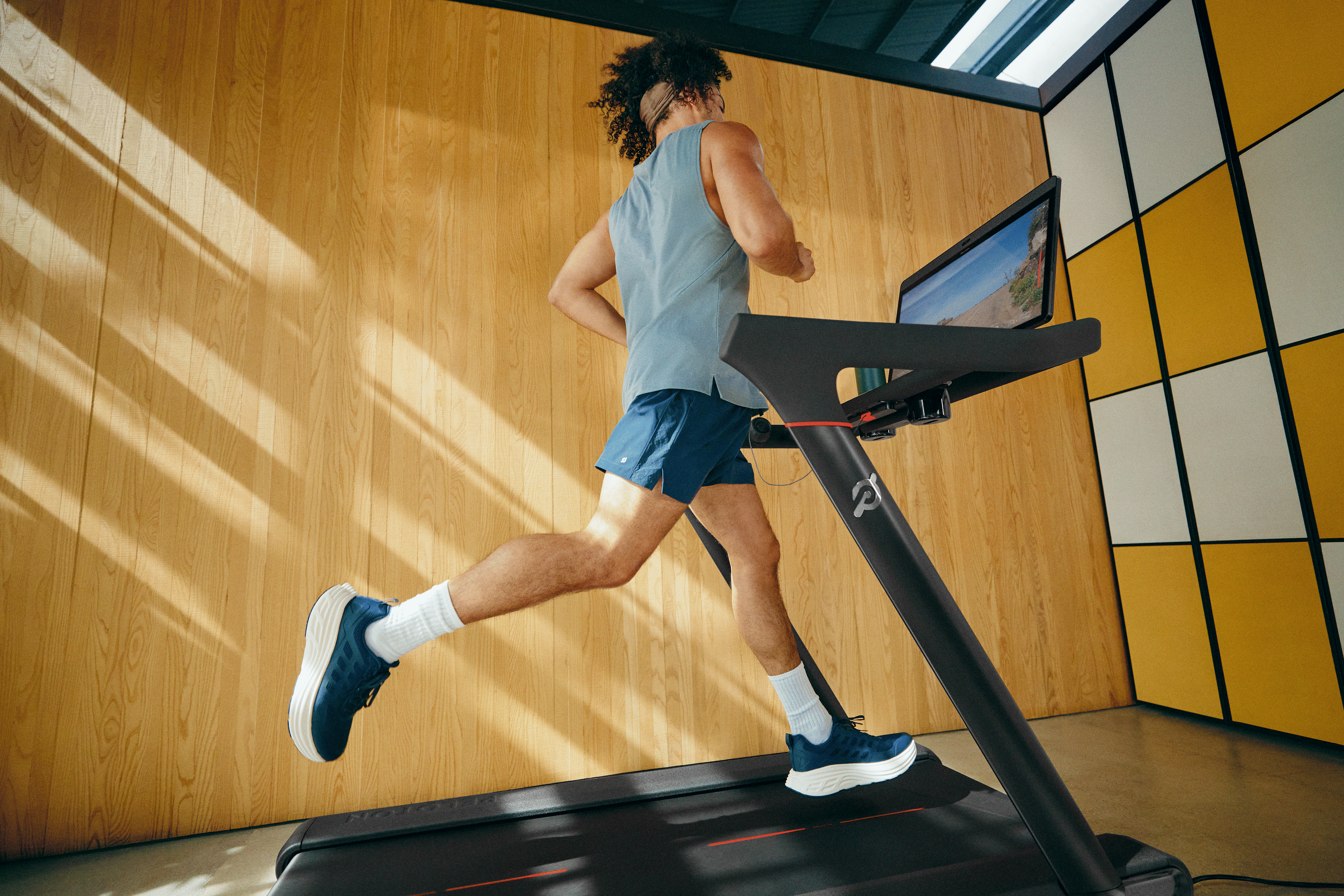
Running on a treadmill is unique compared to running outside. When you run outdoors, your body can naturally alter its gait or speed, not having to modify it to fit onto a machine with set paces. While getting used to running on a treadmill may take time, it’s best to set good habits from the start. For example, use the handrails sparingly, says Goldthorp, who explains that you’ll get more out of your workout if you allow your arms to swing. If you’re still getting used to running on a treadmill, especially without using handrails, Goldthorp recommends first practicing walking hands-free on the treadmill and weaning off of relying on them this way. If you’re especially unsure, try to release only one hand at a time before letting them both swing naturally by your sides.
When you progress to running, you’ll want to make sure you’re in the right spot on the treadmill. Ideally, your body isn’t crowding the front console, so you have ample space for your legs to move freely through their natural running gait. And, while you’re at it, do a double check on your posture—with a screen in front of you, you might find yourself hunching forward. You want to aim for a long, tall spine, but with a slight forward lean to shift your hips over your ankles. Aim to take short, quick strides to increase your running cadence (i.e., steps per minute) rather than overstriding.
4. Cranking Up the Incline
Contrary to old-school beliefs, boosting the incline to 1 percent doesn’t necessarily replicate outdoor running, Schaeffer says. In fact, for new runners, this might be counterproductive and overtax your Achilles tendon and calf muscles, which get a ton of action on the treadmill, she adds. When these muscles are overworked, new runners might experience shin splints, stress reactions, or various types of tendonitis, depending on the person, she says.
With that, Schaeffer recommends skipping logging full runs at incline if you’re a beginner or returning to running after a break. Over time, as you build strength on the treadmill, you may be able to lengthen the bouts of running at an incline to simulate hill training.
6. Cool Down Properly
The jury is still out on whether cooldowns have a significant impact on post-run soreness or recovery. Regardless, they can be beneficial in helping calm your body down after your workout. “Taking time in a cool down to gradually lower the heart rate is important and is the best preparation for a more extensive stretching routine,” Jon says. Rather than hitting the stop button and jumping off the treadmill immediately post-run, gradually reduce your speed and walk for a few minutes. This can help you transition more comfortably and safely from running on the treadmill back to walking on solid ground, and help prevent lightheadedness after your workout.
And don’t forget to stretch. Running is a full body workout, and with that, Jon emphasizes that you shouldn’t solely stretch your lower body after a treadmill run. Instead, he likes to also focus on stretching his back and hips as well. Goldthorp agrees that stretching across all types of movement directions (horizontal versus forward and backward) can also “restore tissue length,” he says. On the Peloton Tread, Tread+, or App, consider cueing up a Cool Down Run or Walk, then a Post-Run Stretch class.
Try a Running Cooldown on the Peloton App


7. Consider What You’re Doing Off the Tread
If you’re excited to start running regularly (whether on a treadmill or outdoors), keep in mind that it shouldn’t be the sole star of our workout routine. While huge gains can be made on the treadmill, what you do off the tread can help you continue to show up to your running workouts healthy and feeling good.
When doing a sport that involves repetitive motion (such as running), the muscles used in that motion can get tons of attention, while other muscles may be overlooked, causing muscular imbalances. Enter: cross training.
Cross-training workouts include anything other than running, and may range from Pilates to yoga to strength training. Cross training workouts not only strengthen muscles used in running, but also the secondary muscles that support the running movement. For example, Schaeffer recommends Pilates to her clients, which helps to build lateral hip and glute strength—something “pretty much all runners need to work on,” she says.
Exactly how much cross training you do will depend on your personal goals and needs. For some general guidance, consider doing two (or more) days of muscle-strengthening activities like resistance training or Pilates per week, in line with the Office of Disease Prevention and Health Promotion’s exercise recommendations for adults.
The Takeaway
Whether you’d like to train for a race or just get more cardio minutes in, a treadmill can be a valuable tool in your running routine. By eliminating factors like weather and route planning, they “make running far more accessible for beginners,” Jon says. Treadmills “allow runners to focus on more on technical aspects of running (like stride length and cadence), and make it very easy to monitor mileage and stick to pace—allowing for more precise control over speeds, distances, incline, and other metrics like heart rate management.”
By paying attention to your body, gradually building up fitness, and approaching your workouts with intention, you can learn to love—and excel at—treadmill running in no time.


This content is for informational and educational purposes only and does not constitute individualized advice. It is not intended to replace professional medical evaluation, diagnosis, or treatment. Seek the advice of your physician for questions you may have regarding your health or a medical condition. If you are having a medical emergency, call your physician or 911 immediately.

Level up your inbox.
Subscribe for a weekly dose of fitness, plus the latest promos, launches, and events.
By providing your email address, you agree to receive marketing communications from Peloton.
For more about how we use your information, see our Privacy Policy.