
FatCamera / E+ via Getty Images
10 Ways to Make Your Workout More Efficient and Maximize Your Time
Make the most of your training with these clever strategies from fitness pros.
By Jennifer Heimlich•
1. Go In With a Plan—and a Goal
2. Don’t Overdo the Warm-Up
3. Do Both Cardio and Strength
4. Prioritize Proper Form
5. Embrace Repetition
6. Do Compound Exercises
7. Try Intervals
8. Embrace the EMOM
9. Minimize Rest Periods
10. Choose the Right Weights
We get it—finding time to exercise isn’t always easy. Between work, family obligations, and, well, the rest of life, fitting in a workout can sometimes seem nearly impossible. But it doesn’t have to be—you might just need to get a little more strategic about it.
“A lot of people think, ‘Working out is going to take me an hour and a half by the time I get to the gym, work out, then come home,’” says exercise physiologist Rachelle Acitelli Reed, PhD. If this sounds familiar, we’ve got some news: You don’t actually need to dedicate that much of your day to working out. “If you can be really efficient for 20 minutes, that still leads to the adaptations most people are looking for,” Reed says.
For anyone who’s looking to see better results in less time, here are 10 expert tips on how to work out efficiently.
1. Go In With a Plan—and a Goal
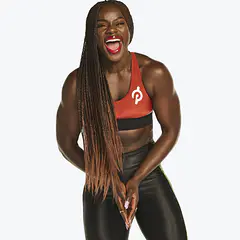
One of the biggest things that slows down a workout: Starting to exercise without knowing exactly what you’re planning to do or what your goal is for the session, says Peloton instructor Tunde Oyeneyin. “I always give myself at least a 5-minute planning period right before I start to make sure I get the most out of my time, especially on days when I know my workout window is limited,” she says.
Taking that moment to clarify the purpose of the day’s workout and map out exactly what you’re going to do to accomplish that means you won’t waste extra minutes (or mental energy) mid-exercise deciding whether you should do burpees or jump squats, or figure out how long or hard you want your next HIIT interval to be.
Alternatively, instead of creating your own plan, you can outsource one to the experts. “This is one of the many reasons Peloton classes are so beneficial,” Tunde says. “They help plan the workout for you, so you can just focus on moving your body, which can be a big mental relief.” Peloton’s Personalized Plans feature can even create a customized, well-rounded weekly workout lineup for you so you don’t have to guess how often to do which kinds of classes in order to reach your fitness goals.

Peloton App
Access thousands of classes with no equipment needed.
2. Don’t Overdo the Warm-Up
To be sure, a proper warm-up is essential to activate the muscles you’re about to use and get your heart pumping blood through your system. But you don’t need to linger too long on this phase of the workout—especially if you’re watching the clock.
“All the time I see people doing these very long warm-ups where it's not really relevant to what they’re about to do,” Reed says.
If you’re short on time, rather than spending 10 minutes of a 20-minute workout warming up, she suggests narrowing it down to a 3-minute dynamic warm-up focused on a couple different exercises that target the muscle groups and movement patterns you plan to use in your workout. For instance, a smart way to warm up for loaded squats would be to do a set of slow, controlled air squats that go through the same range of motion without the added weight, she says.
3. Do Both Cardio and Strength
One of Tunde’s go-to strategies for working out more efficiently? Combining cardio and strength into one training session. You can check off both fitness boxes at once instead of having to dedicate separate days (and post-workout showers) to each one.
“For the average person who generally wants to feel better and improve their fitness, combining both in a session is usually a very good idea because it’s more realistic,” Reed says. She just suggests doing the workout you want to prioritize first. For instance, if building muscle is your primary goal, start with a strength session; if you’re training for a half marathon, do your run first. This way your body will be fresh and full of energy for the workout that matters most to you.
Whether you prefer to tackle cardio first or kick things off with strength instead, the Peloton Cross Training Series makes the process simple. A Swivel Screen that rotates in each direction allows you to seamlessly transition from a cycling, running, or rowing workout to a strength. yoga, or Pilates session on the mat right next to it.

Peloton Treadmills
Two treadmills. One Peloton experience.
4. Prioritize Proper Form
Doing every movement with proper technique will help you get the most out of any workout. “If you spend half the session using incorrect form, you’re really just wasting energy,” Tunde says. Getting your body in the right position will ensure that you’re targeting the muscles that the exercise was designed for, and it’ll help protect your body from an injury that could leave you sidelined.
“If you’re taking a Peloton strength class in particular, I recommend pausing it if you’re unsure about a movement,” Tunde says. “Fix your form in real time before finishing the set.”
If you have a Bike+, Tread+, or Row+, take advantage of the Form Feedback tool that gives you corrections to help you do each rep correctly. Using the Movement-Tracking Camera, Peloton IQ can give you individualized audio cues to, say, straighten your back or squat lower.
5. Embrace Repetition
Rather than always trying to mix up your workouts, doing the same exercises over and over again can be a more efficient strategy, according to Reed.
“Sometimes we have the tendency to try to do something different every day,” she says. While it’s smart to make strategic adjustments to your training plan every so often, it certainly shouldn’t be happening every time you exercise. “We know from science that’s not needed, and actually, that might make your workouts less efficient,” Reed says.
Repetition allows your body to master good form, to safely increase the load over time, to improve your range of motion, and, at the end of the day, to get the adaptations that you’re after, Reed says. It’s the basis underpinning the exercise-science principle of progressive overload, which is proven to lead to steady and consistent improvement.
6. Do Compound Exercises
Compound movements that use several muscles at once are one of the most powerful ways to quickly challenge your body. “They call on multiple muscle groups to be worked on at the same time, which allows you to train efficiently and maximize on time,” Tunde says.
Rather than isolating one muscle, you'll simultaneously hit many of what Reed calls “the major movers”—the main muscle groups in your lower body, upper body, and core—all at once. She gives the example of a squat to overhead press, which works your quads, hamstrings, glutes, calves, core, chest, shoulders, and triceps in one fell swoop. Moves like these ensure that even if you’re only working out once or twice a week, you’re building strength throughout your body.
7. Try Intervals
To make the most of a short cardio session, Reed recommends challenging yourself right from the get-go (after a proper warm-up, of course). A smart way to do that is by pushing the pace with harder intervals.
“HIIT (high-intensity interval training) is a great way to make your cardio more efficient,” Tunde says. Research shows that alternating high bursts of energy with recovery periods can lead to similar or greater fitness adaptations than doing moderate-intensity steady-state cardio, despite HIIT workouts taking less time to complete.
If you want, you can also use interval training to combine cardio and strength, Tunde adds. “For example, you can pair squats with overhead presses, or burpees with push-ups, lunges, or kettlebell swings, to work multiple muscle groups while keeping your heart rate up and the clock ticking.”
Plus, Reed says the challenge of tackling intervals can feel surprisingly compelling. “We see adherence to high-intensity interval training actually is pretty good in research studies,” she says. “Even though it’s really tough while you’re doing it, it’s easier to stick with it because it’s so time-efficient.”


8. Embrace the EMOM
One way that both Tunde and Reed love to “gamify” short workouts is to do an EMOM, which stands for “every minute on the minute.” An EMOM is “a set of movements created to be completed within a designated amount of time, typically one minute, the incentive being the sooner you finish the more recovery you get,” Tunde says. This framework is a smart way to essentially trick yourself into working really hard to make the most of each of those minutes, Reed adds.
9. Minimize Rest Periods
To keep your body in a “working zone” for an entire workout, Reed suggests minimizing the amount of rest you’re taking between different exercises or between each set. This strategy can challenge your muscular endurance and keep your heart rate up. (This is why many group exercise classes are programmed with minimal rest, she explains.) Just be sure you’re giving your muscles enough recovery to move with proper form.
10. Choose the Right Weights
Choosing the right load for each move you do is key to getting the results you’re after. “If the weight is too light (depending on the modality and movement), you might not be challenging your muscles enough,” Tunde says. “On the other hand, if the weight is too heavy, you risk losing proper form, which can waste energy or, in the worst-case scenario, lead to injury.”
This is another area where Peloton’s Cross Training Series can help. On the Bike+, Tread+ or Row+, a virtual Weight Rack will keep track of which weights you’ve used in the past, and then enables Peloton IQ to make personalized suggestions based on how you’ve performed a certain lift in previous workouts and what weights you have available. Once Peloton IQ sees you’re regularly hitting the rep targets with proper form, it will prompt you to level up so that you can keep making the fitness gains you’re after—no guesswork required.
Related Articles


This content is for informational and educational purposes only and does not constitute individualized advice. It is not intended to replace professional medical evaluation, diagnosis, or treatment. Seek the advice of your physician for questions you may have regarding your health or a medical condition. If you are having a medical emergency, call your physician or 911 immediately.
Level up your inbox.
Subscribe for a weekly dose of fitness, plus the latest promos, launches, and events.
By providing your email address, you agree to receive marketing communications from Peloton.
For more about how we use your information, see our Privacy Policy.