You’re Probably Missing Hip Internal Rotation In Your Mobility Routine. Here Are 7 Moves to Try
Experts explain how these simple exercises can keep things moving smoothly.
By Michele Ross•
What Is Hip Internal Rotation?
Which Muscles Are Worked By Hip Internal Rotation?
Why Internal Hip Rotation Is Important
Benefits of Internal Hip Rotation Exercises
7 Hip Internal Rotation Exercises to Boost Mobility
How to Know If You’re Lacking Hip Internal Rotation
The Takeaway
Many people don’t prioritize hip strength or mobility—at least until hip pain or limitations appear. And when dedicated hip exercises finally make it onto their radar, there’s a solid chance they focus on hip external rotation, which often shows up in moves like clamshells or fire hydrants. However, whether you’re an athlete looking to improve your performance or a desk worker looking to prevent lower back pain, it’s crucial to complement those moves with dedicated hip internal rotation exercises, as well.
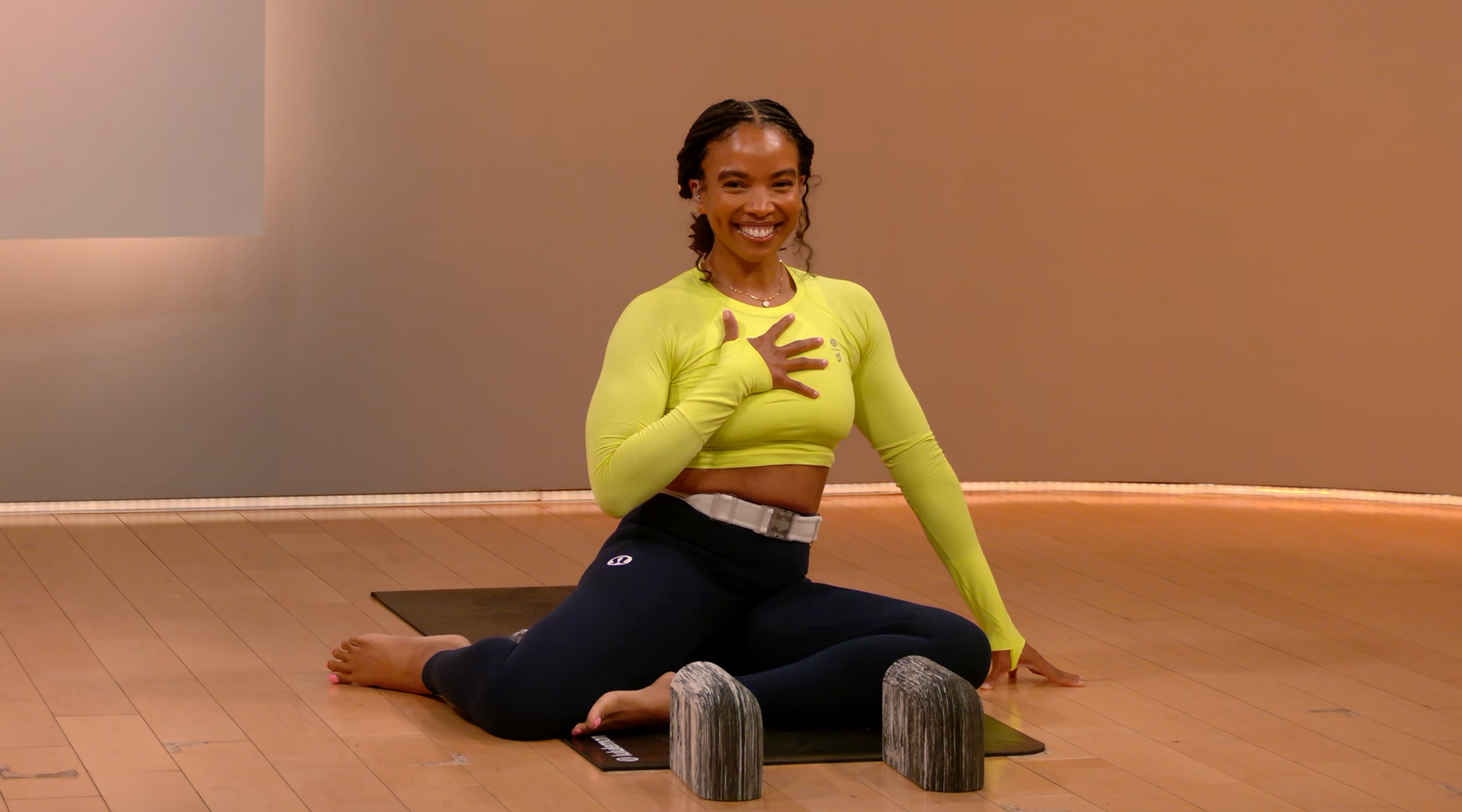
What does that mean, exactly? Keep reading for a complete guide to hip internal rotation—including the best exercises and their benefits—as informed by physical therapists and Peloton instructor Chelsea Jackson Roberts.
What Is Hip Internal Rotation?
Hip internal rotation happens whenever you twist your thigh towards the midline of the body. You likely use hip internal rotation daily: Walking, putting on shoes, crossing your legs, and pivoting in sports all involve this movement pattern.
Hip internal rotation allows the femur (thigh bone) to rotate inward, which is necessary for proper gait mechanics, hip stability, and joint alignment, explains Raymond Agostino, a doctor of physical therapy, sports performance coach, and the owner of Agostino Athletics.
Which Muscles Are Worked By Hip Internal Rotation?
According to Agostino, hip internal rotation primarily engages deep muscles that often go untrained, including the tensor fasciae latae (TFL, on the front of your hip), gluteus medius (especially the front-most fibers), and portions of the gluteus minimus.
In some positions, especially when the hip is flexed (think: thigh moving closer to your chest), the adductors (aka inner thighs) and even parts of the piriformis (a small, deep glute muscle) can contribute, he continues. The core, pelvic floor, and hip flexors also play a role in stabilizing the pelvis during these movements.

Peloton App
Access thousands of classes with no equipment needed.
Why Internal Hip Rotation Is Important
Internal hip rotation is essential for healthy movement throughout your daily life. From a lifestyle standpoint, being able to perform this movement pattern without pain or compromise will allow you to get up and down from chairs, walk down the stairs, and sit in a cross-legged position with ease. It’ll also permit you to pivot while walking or running without placing stress on the knee. “If the hip is lacking internal rotation range of motion and you go to turn quickly, that force can be passed down to the knee and ankle, leading to more rotational force there, which can lead to injury,” says W. Zach Smith, founder and owner of HIDEF Physical Therapy.
That said, in their fitness routine, most people focus on external hip rotation (when your thigh bone rotates outward). That’s also important for healthy, mobile hips, but balancing both types of movement is crucial. Most people naturally have more external rotation mobility, not to mention it’s more frequently strengthened and stretched, says Smith—especially if squats, figure-4 stretch, or hip-opening yoga poses as varied as Warrior 1 Pose (Virabhadrasana 1) and Pigeon Pose (Eka Pada Rajakapotasana) are staples in your routine. However, Agostino warns that neglecting internal hip rotation runs the risk of creating muscle imbalance and joint dysfunction. “It’s like training only one half of a joint’s potential,” he shares. “Over time, this can contribute to movement compensations, reduced mobility, and an increased risk of hip impingement or lower back strain.”
While hip internal rotation is an important movement pattern for everyone, Smith notes that it’s especially key for training that includes sprinting, cutting, throwing, and kicking. Poor internal rotation can also limit stride length, disrupt balance, and reduce fluidity and power during rotational sports like tennis or golf, adds Agostino.
All things considered, hip internal rotation is equally important as hip external rotation. Both can help you build or maintain strong, resilient hips, facilitate smooth athletic mechanics, and minimize the risk of injury.
Benefits of Internal Hip Rotation Exercises
Internal hip rotation exercises are a great preventive practice that supports healthspan and overall range of motion, Chelsea says. These moves are also worthy antidotes to sedentary lifestyles and seated office work. “Typically, human beings are often in seated positions that tighten the hip flexors, lower back, and IT band. As a result, it’s important to have daily exercises to mitigate the long lasting effects of sitting in one position for a long period of time,” she explains.
On top of helping the lot of us with tight hips, they’re also helpful for those experiencing low back pain, as “improving internal rotation often helps redistribute forces and relieve stress on surrounding joints,” Agostino says. While internal hip rotation exercises can offer relief in the moment, they’re also key for any pro-aging protocol. “Joint rotation tends to decline with inactivity or arthritis, so maintaining this range can reduce fall risk and preserve independence,” he continues.
Last but not least, improving internal hip rotation can enhance performance across a range of modalities—including but not limited to running, strength training, yoga, and pickleball—by promoting more efficient movement patterns.
7 Hip Internal Rotation Exercises to Boost Mobility
Below, check out eight exercises that drill hip internal rotation. If you’d rather follow along in real time, try a hip-focused mobility or yoga class on the Peloton App. “Our yoga library has an extensive collection of Hip Focus Flows that are designed to support hip mobility,” Chelsea says.
1. Seated Internal Rotation Drill
To scale down this move, Smith suggests placing a towel under your foot for a smooth glide. To scale up, he recommends strapping on light ankle weights.
Sit tall at the edge of a chair with a neutral spine and knees bent at 90 degrees, both feet planted on the floor hip-width distance apart.
Keeping your torso and knees still, and your knees in line with your hips, lift one foot out to the side so the thigh turns inward.
Slowly return the foot to neutral and lower it to the floor. That’s one rep.
Do 10–15 reps, then repeat on the other side.

2. 90-90 Hip Internal Rotation Lift
For more support during this exercise, Smith says you can lean back and support your torso with your hands. For an added challenge, strap on light ankle weights.
Sit on the floor in a 90-90 position. Your front leg is bent at 90 degrees in front of you, knee directly in front of your hip and shin parallel with the front of your mat. Your back leg is bent is also bent at 90 degrees, but your knee is directly out to the side of your other hip, and the shin is parallel with the side of your mat.
Keeping your knee on the floor and without moving your torso, lift the back foot and ankle off the floor. Aim for control, not height.
Slowly lower the foot to the floor. That’s one rep.
Do 8–12 reps, then repeat on the other side.
3. Prone Internal Rotation Windshield Wipers
Smith says you can place a pillow (or yoga blanket) under your hips for comfort. To increase the challenge, place a resistance band around your ankles.
Lie on your stomach with knees bent to 90 degrees and your feet above your knees (as if doing a hamstring curl).
Slowly let your feet drift out to the sides, which rotates the hips inward. Keep your hips and pelvis glued to the floor.
Once you can’t go any further, hold for 2 to 3 seconds, then return back to start. If you feel your hips start to lift off the floor, don’t go as far.
Repeat for 10–12 controlled reps.

4. Table Top Hip Circles
Recommended by Chelsea, this exercise is beneficial since it includes both hip internal rotation and hip external rotation.
Start on all fours (hands under shoulders, knees under hips), with your spine long and core engaged.
Draw a large circle with your knee: Keeping your hips level and knee bent at 90 degrees, lift your left leg up behind you so your knee is at hip height, foot kicking up toward the ceiling. Slowly rotate your knee out to the side. Keep your shin level with the floor as you circle your knee forward toward your left shoulder, then lower it down next to your right knee.
Then make a circle in the opposite direction: Lift the left knee directly out to the side (like a fire hydrant). Pause and rotate your thigh to lift your foot higher than your knee. Keep the foot high as you sweep the knee backward, then lower it to the starting position.
That’s one rep. Do 5–8 reps, then repeat on the other side.

5. Revolved Pyramid Pose
“This pose works on the range of motion of hips into internal rotation, with a thoracic [middle spine] rotation component that’s important in hip mobility as well,” explains Adrianne Vangool, a physical therapist, yoga therapist, and owner of Vangool Wellness. To increase the internal rotation, you can choose to turn your back foot slightly inwards, though a neutral back foot or one pointing out slightly (as shown above) may be an easier starting point, she says. If needed, grab a yoga block to bring the ground closer to your bottom hand.
Stand on a may with your right foot about 2–3 feet in front of your left, feet hip-width distance apart with toes on both feet pointing forward.
Keeping your hips square to the front of the mat, hinge at the hips to fold your torso over your front leg. Place your left hand on the floor a few inches away from the inside of your right foot, and lift your right hand up toward the ceiling, opening your chest to the right.
To emphasize hip internal rotation, gently press your back heel down and roll your back thigh slightly inward.
Hold for 3–5 rounds of breath. Gently release and repeat on the other side.

6. Warrior 3 to Half Moon
“This exercise works hip stability, range of motion, and internal rotation of the hip,” says Vangool. Hip internal rotation occurs during the transition from Half Moon (Ardha Chandrasana) to Warrior 3 (Virabhadrasana III), as your back leg naturally rotates inward to square your hips and shoulders to the floor.
If you’re a beginner or need extra support, she suggests lightly placing your front hand on a wall. This can help with balance and stability without minimizing the mobility work for your hip.
Stand tall on a mat. Step your right foot forward as you hinge forward from the hips and lift your left leg straight behind. (Your body should make a T-shape.)
Reach your arms forward or by your sides.
Rotate into Half Moon by bringing your right hand to the mat as you rotate your body open to the left side and reach your left arm to the sky.
Slowly return to Warrior 3.
With control, repeat the rotation for three to four rounds. Repeat on the other side.
7. Standing Banded Hip Internal Rotation Exercise
To make things easier, Smith says you can skip the band. To advance this move, do it in a mini squat or while balancing on a single leg.
Anchor a long resistance band at about knee height, and loop it around your right leg just above knee height. Stand so the anchor is directly to your right, and step away until there’s enough tension on the band that it’s pulling your thigh outward.
With knees slightly bent and feet shoulder-width distance apart, rotate your right thigh inward against the band, then slowly return to the starting position. Maintain control as you rotate in and out.
Repeat for 8–10 reps per side.


How to Know If You’re Lacking Hip Internal Rotation
According to Agostino, restricted hip internal rotation often shows up in subtle yet impactful ways. “You might notice difficulty with basic functional movements like walking, squatting, or rotating your body during exercise,” he shares. “You may also feel stiffness in the front or side of the hip, or notice your knees collapsing inward during squats.”
Another common red flag: asymmetrical motion. For example, this could look like one leg turning out more than the other during lunges or step-ups.
More obvious signs that you’re lacking hip internal rotation include:
Difficulty sitting cross-legged or doing Lotus Pose (Padmasana)
Restrictions or difficulty performing rotational movements (e.g., golf swings, yoga twists)
Localized pain or tightness
If you suspect that your hip internal rotation is compromised, consult a physical therapist. They’ll be able to pinpoint if this is actually at play, and if so, help you come up with a treatment plan to get back to baseline.
The Takeaway
Hip pain and mobility issues are common but not inevitable. This rings especially true if you stay proactive with hip mobility exercises (incorporating strength, flexibility, and range of motion) that work on not only external but also internal rotation.
Hip internal rotation is key for strong, mobile hips and smooth, pain-free movement—not only on your runs, while playing sports, and on strength training days, but even for sitting at your desk and doing chores around the house. Keeping this range of motion intact and strong over time also supports joint health, reduces fall risk, and helps you stay independent and active for years to come.
Fortunately, there’s a variety of hip internal rotation exercises to choose from—no matter if you prefer to do some seated or laying down during your active recovery days or pick a few to seamlessly add onto your yoga flow. No matter which way you go, know that your hips (and even surrounding areas, like your lower back and glutes) are bound to appreciate the extra TLC.
Related Articles

Stretching + Mobility
Cranky QL? These 9 Stretches and Exercises Can Help Release (and Reinforce) Your Lower Back

Yoga
The 13 Most Popular Types of Yoga—And How to Choose the Right One for You

Stretching + Mobility
Tight Hips? Try These 9 Hip-Opening Stretches for Relief

Strength Train
Why You Should Be Working Your Gluteus Medius—Plus the Best 8 Exercises to Target It
This content is for informational and educational purposes only and does not constitute individualized advice. It is not intended to replace professional medical evaluation, diagnosis, or treatment. Seek the advice of your physician for questions you may have regarding your health or a medical condition. If you are having a medical emergency, call your physician or 911 immediately.

Level up your inbox.
Subscribe for a weekly dose of fitness, plus the latest promos, launches, and events.
By providing your email address, you agree to receive marketing communications from Peloton.
For more about how we use your information, see our Privacy Policy.