RealPeopleGroup / E+ via Getty Images
Seasonal Allergies Don’t Have to Sabotage Outdoor Workouts. Here Are 8 Tips for Moving Comfortably
Keep sneezing and congestion from getting in the way of a good training session with these expert tips.
By Kathleen Ferraro•
Can You Exercise with Allergies?
Tips for Exercising with Allergies
Does Exercise Help Allergies?
Is It Ever Unsafe to Exercise with Allergies?
The Takeaway
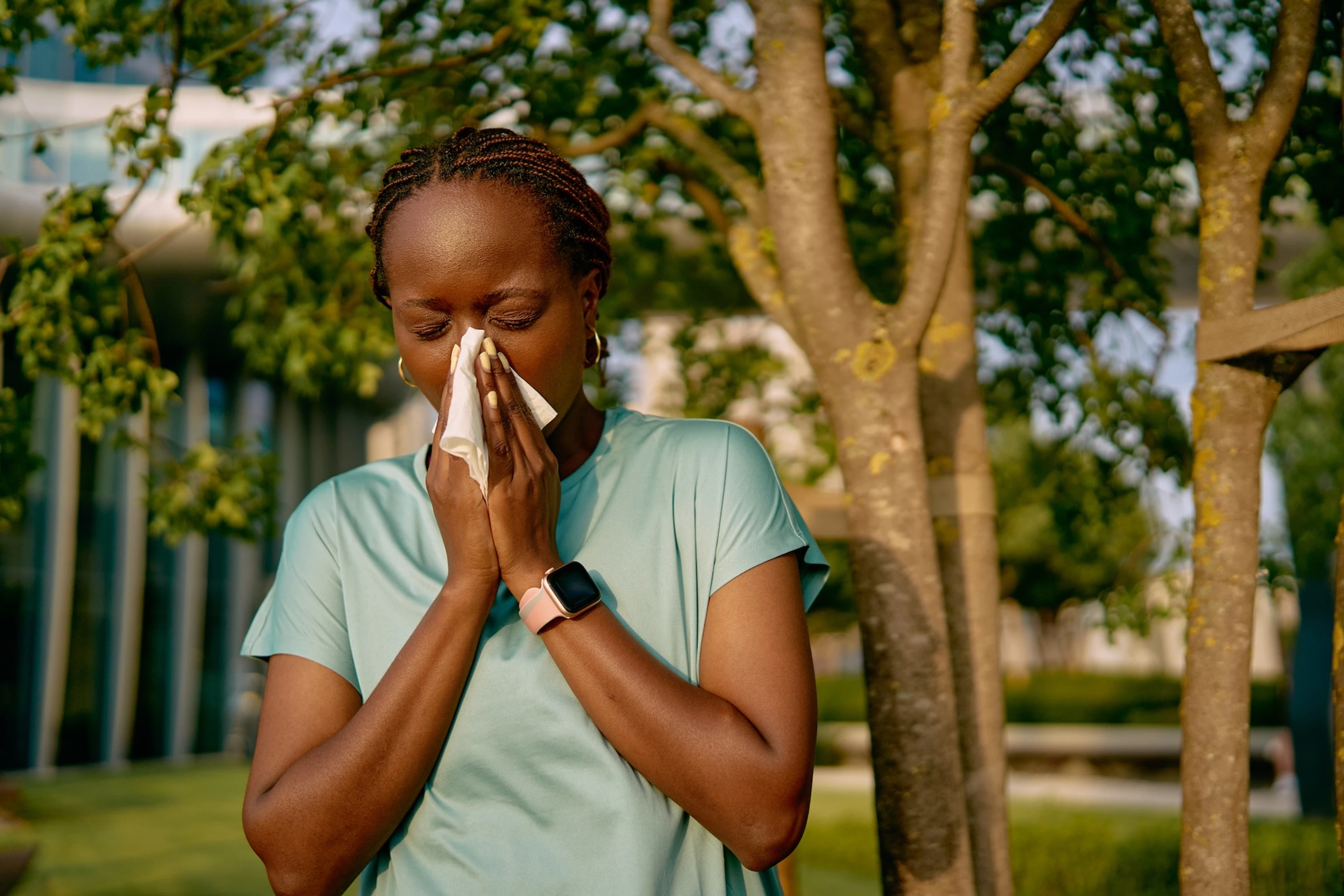
Few things ruin a peaceful outdoor workout faster than a sneezing fit or a sudden sinus surge. For the millions of us who deal with seasonal allergies, pollen and other triggers can make fresh-air fitness feel like a battle between lungs and landscape. But before you throw in the towel on outdoor workouts for good, know this: Exercising with allergies is often not only possible, but can even offer some relief—if you approach it the right way.
Experts say that with a few smart adjustments (like moving your workouts earlier, protecting your airways, and monitoring pollen levels), you can still move comfortably outside without aggravating your symptoms. Here are their recommendations for managing allergy symptoms while staying active outdoors.
Can You Exercise with Allergies?
In most cases, yes, you can absolutely exercise with allergies, according to Mariam Zakhary, DO, a sports medicine physician at Mount Sinai. “It is generally safe to exercise when experiencing symptoms from seasonal allergies if your symptoms are mild, such as sneezing, congestion, or watery eyes,” she says.
That said, those same symptoms can also make your workouts feel tougher than usual. Seasonal allergies can inflame your nasal passages and sinuses and make it harder to breathe comfortably, including during cardio workouts like running or cycling. You may notice your nose running more or find yourself mouth-breathing to compensate for the congestion.
For most people, that’s more of an inconvenience than a danger. But if certain symptoms appear or elevate, it’s time to scale back.
“If you’re wheezing heavily or experiencing tightness in the chest when you try to run, it’s time to stop,” says Elizabeth Moffett, a registered respiratory therapist and certified asthma educator with Omhale. “Exercise induces an increase in breathing rate, and if you’re already inhaling a lot of allergens with each breath, exercise can push manageable symptoms into dangerous territory.”
In these cases, it’s best to move your workout indoors or rest until your symptoms improve, Dr. Zakhary says. (Psst: There are thousands of great indoor and outdoor workouts you can do with Peloton.)
But with mild to moderate seasonal allergies (when you’re not experiencing those red-flag symptoms), movement can actually help you feel better. The key is understanding your own limits and adjusting your workouts accordingly.

Peloton App
Access thousands of classes with no equipment needed.
Tips for Exercising with Allergies
Working out with allergies doesn’t have to mean endless tissues and teary eyes. With a few smart adjustments, you may still be able to exercise outdoors without feeling miserable. Here’s how to stay comfortable and make the most of your workouts during allergy season.
1. Check the Pollen and Air Quality Forecast
Before you lace up, get a quick read on your local conditions. “Checking the pollen forecast and air quality conditions can help you plan when and where to exercise,” Dr. Zakhary says. “If pollen levels are high, move your workout indoors or reschedule for another day.”
You can check pollen data through weather apps or the American Academy of Allergy, Asthma & Immunology’s National Allergy Bureau. Air quality also matters, since pollution and pollen together increase inflammation and exacerbate seasonal allergies. If the Air Quality Index (AQI) creeps above 100 or pollen counts spike, it’s best to train indoors that day.
2. Time Your Workouts Strategically
Once you’ve checked the forecast, pick an exercise window that works with—not against—your allergies. A little timing adjustment can mean the difference between a refreshing outdoor workout and one that leaves you sniffling the whole way home.
“Midday and early evening hours (especially 2 PM to 6 PM) can see pollen counts surge 25–40 percent above morning levels,” Moffett says. “A better time to exercise outdoors is in the early morning, before 8 AM, when pollen levels are often lower.”
3. Hydrate
Drinking enough water is important round-the-clock, but especially so when you’re exercising with allergies. Why? “Allergies can cause dehydration because you lose more fluid through nasal discharge,” Dr. Zakhary says. Plus, staying hydrated keeps mucus thinner, which helps clear allergens more easily from your airways, she adds.
4. Protect Your Eyes and Airways
A few lightweight accessories can have a profound impact on your comfort levels when exercising with allergies. “Wear sunglasses, a hat, and consider a lightweight mask or nasal filter if pollen is high,” Dr. Zakhary says.
These sorts of accessories will decrease allergen exposure significantly, Moffett says, and “that can often make the difference between whether you can finish a run or not.”
5. Rinse Off and Change Right After Your Workout
If you’ve been training outside, don’t lounge around in your workout gear when you get home.
“Immediately after outdoor exercise, shower and change clothes to remove pollen from your skin and hair,” Dr. Zakhary recommends. Otherwise, you’ll just keep exposing yourself to the allergens.
If you can’t shower right away, at least change into clean clothes and wipe down exposed skin with a damp cloth. A saline nasal rinse afterward can also help clear pollen from your airways to prevent more irritation, Moffett adds.
6. Try Different Outdoor Activities
Certain workouts are naturally more allergy-friendly than others. On high-pollen days, moderate-intensity exercise (like walking or yoga) may feel better than a strenuous workout (like running sprints or hill repeats).
That said, if something like running is your go-to, small adjustments can go a long way. Choose shaded paths or trails away from fields and freshly cut grass, and keep your pace moderate, Moffett suggests.
7. Pay Attention to Your Breath
“Monitoring your breathing closely can be a very effective guide to the safety of exercising in certain conditions,” Moffett says. So if your breathing feels strained early in a workout, it’s a sign to slow down or head indoors.
8. Keep Indoor Air Clean
When allergy season peaks, you’ll recover better if your home is as allergen-free as possible. “Use air purifiers and keep windows closed during allergy season,” Dr. Zakhary recommends. HEPA filters can trap pollen and dust particles, while running an air conditioner on recirculate mode keeps outdoor irritants out.


Does Exercise Help Allergies?
It might seem counterintuitive, but yes, exercise can ease seasonal allergy symptoms.
“Physical activity can temporarily open nasal passages to help improve breathing for some time,” Dr. Zakhary says. One small study also suggests that aerobic exercise can temporarily increase airflow and even reduce congestion in people with allergic rhinitis.
There may be longer-term benefits as well. “Consistent exercise can support the immune system and reduce inflammation, which may lessen the intensity of allergy symptoms over time,” Dr. Zakhary says. “Aerobic activity also promotes the release of natural anti-inflammatory hormones and improves circulation, both of which help clear allergens from the body.”
The catch? You shouldn’t go all out when exercising with allergies. “Overexertion when having allergies or inflammation can have the opposite effect and worsen symptoms,” Dr. Zakhary says. So if your nose is stuffy, your energy’s low, , or you’re dealing with other stubborn allergy symptoms, scale it back—because when it comes to supporting allergy relief through exercise, consistency beats intensity every time.
Is It Ever Unsafe to Exercise with Allergies?
Even if you’re used to powering through a tough workout, there are times when it’s smarter to move things inside or take a rest day entirely. The key is learning to tell the difference between “just annoying” symptoms and ones that signal your body’s working too hard to breathe.
“If you experience chest pains, wheezing, dizziness, or swelling around your eyes or throat, seek medical care immediately,” Dr. Zakhary says. “These symptoms could signal an asthma flare or a more serious allergic reaction that requires intervention.” Those symptoms can escalate quickly, especially for anyone with allergy-induced asthma.
But more subtle warning signs matter too. If you notice you’re coughing more than usual, feeling unusually winded, or struggling to recover between intervals, it’s worth pausing.
“Moderate-intensity activity is key for safety,” Moffett says. “If you’re unable to complete a workout without a lot of difficulty breathing, and antihistamines aren’t doing the trick, that’s a clear indicator that you need to visit your provider.”
If your symptoms persist for hours after exercise or get in the way of a good night’s sleep, that’s another sign it’s time for a check-in, Moffett adds. Ongoing inflammation can make breathing harder and slow recovery from both allergies and workouts, according to Dr. Zakhary.
Bottom line: Movement should help you feel better, not worse. Stop and seek medical care if you notice any red-flag symptoms like the ones mentioned above. And remember, there’s no loss in moving a workout indoors if it means keeping you safe, healthy, and comfortable.
The Takeaway
Seasonal allergies don’t have to derail your workouts—they just require a little planning. Check pollen and air quality readings, time your sessions for low-count hours, and protect your eyes and airways so you can reduce exposure and breathe easier outdoors. Regular, moderate exercise can even help by supporting circulation, easing inflammation, and opening up airways. But if your breathing feels strained or symptoms flare, it’s time to scale back or move indoors so you can keep moving safely and comfortably.


This content is for informational and educational purposes only and does not constitute individualized advice. It is not intended to replace professional medical evaluation, diagnosis, or treatment. Seek the advice of your physician for questions you may have regarding your health or a medical condition. If you are having a medical emergency, call your physician or 911 immediately.
Level up your inbox.
Subscribe for a weekly dose of fitness, plus the latest promos, launches, and events.
By providing your email address, you agree to receive marketing communications from Peloton.
For more about how we use your information, see our Privacy Policy.