
Westend61 / Westend61 via Getty Images
Seasonal Depression Kicking In? Here’s How Exercise Can Help
Seasonal affective disorder can make it hard to feel motivated to work out, but moving more can help your mood.
By Sarah Klein•
What Is Seasonal Affective Disorder (SAD)?
How Exercise Can Improve SAD Symptoms
Best Types of Exercise for SAD
How Much Exercise Do You Need to Improve SAD?
The Takeaway
Many of us start to feel a little gloomy when the days get shorter and the temps get chillier. But for about 3 percent of the population, the changing of the seasons can pose real problems, according to the National Library of Medicine (NLM). For these millions of people, a form of depression called seasonal affective disorder (SAD) makes them feel hopeless, tired, listless, and unmotivated.
Working out may be the last thing on your mind if you have a form of seasonal depression, which can occur in both the winter and the summer. But seasonal affective disorder and physical exercise go hand-in-hand: Working out regularly can help counteract the impacts of SAD, according to the NLM.
Keep reading for more about the effects of SAD, how exercise can help, and what else to try for seasonal mood concerns.
What Is Seasonal Affective Disorder (SAD)?
Seasonal affective disorder, or SAD, is a type of depression. It brings about feelings of sadness, emptiness, hopelessness, lack of energy, restlessness, difficulty concentrating, and more in a seasonal pattern, with symptoms lasting around four or five months of the year, according to the National Institute of Mental Health (NIMH).
It’s most common in winter months in areas that don’t get much sunlight, explains Rebecca Wadlinger, DO, a primary care sports medicine physician and assistant professor of orthopaedic surgery at Duke University School of Medicine. (Think: Alaska and New England versus Florida and Texas.) It’s also more common in women than men, and in people with other types of mental health conditions, such as anxiety, depression, bipolar disorder, or attention-deficit/hyperactivity disorder (ADHD), according to the NIMH.
Not getting enough vitamin D may also make SAD symptoms worse, and, in a bit of a vicious cycle, getting enough vitamin D from the sun is harder during darker winter months, per the NIMH.
How SAD Affects Your Mind and Body
SAD during colder, darker months is often linked with sleeping longer, eating more, and withdrawing socially, according to the NIMH, almost as if you were “hibernating.” It’s possible there was some evolutionary advantage to these shifts in prehistoric times, but it can become problematic in our modern society where life doesn’t necessarily slow down just because it’s winter, says sport psychologist Judy L. Van Raalte, PhD, professor emerita of psychology at Springfield College.
Summertime SAD, on the other hand, often brings about sleep difficulties, restlessness, anxiety, and even aggressive or violent behavior, according to the NIMH.
Experts don’t fully understand what causes SAD yet. But there are some notable changes happening in your brain if you experience seasonal depression. For starters, people with SAD have lower-than-normal levels of the neurotransmitter serotonin, which helps regulate mood, per the NIMH. And shorter days can mess with your circadian rhythm, leading to disruptions in your natural sleep-wake cycle and your mood too.
People with wintertime SAD may have higher-than-normal levels of the sleep-related hormone melatonin, while people with summertime SAD may have less-than-normal amounts, although more research is needed to test these theories. We need more research on SAD in general, but the existing research so far has focused on people with wintertime SAD, so even more studies are needed to understand why people get summertime SAD, the NIMH notes.
Oleg Breslavtsev / Moment via Getty Images
How Exercise Can Improve SAD Symptoms
While there’s still a lot we don’t know about seasonal affective disorder, it’s pretty clear getting a little more physical activity is one tool that can deliver relief from SAD symptoms and address some of those shifts in brain chemicals. “Exercise in general increases certain neurotransmitters in our brain, such as dopamine, serotonin, and endorphins, and those increase our positive mood, reduce anxiety, and reduce stress,” Dr. Wadlinger says.
Research has repeatedly shown that people with winter-pattern SAD report improvements in their symptoms after participating in exercise programs, especially when combined with light therapy (more on that below). Scientists still aren’t exactly clear why exercise seems to help, though.
But compelling research might not be convincing enough to motivate you to stick to a fitness routine if you’re living with SAD. “The challenge with depression is that people don’t feel like doing things,” Van Raalte says. “Trying some different types of exercise to see what you would be able to do is really the thing that’s going to be helpful.”
And remember, while exercise may be one supportive tool in easing SAD symptoms, it’s not the only tool available. It’s also not a replacement for any mental health treatments your doctor recommends. (More on that later.)
Best Types of Exercise for SAD
There isn’t one “best” workout to alleviate symptoms of seasonal affective disorder. The specific type of activity you do doesn’t matter so much as long as you’ll do it, and do it consistently, Dr. Wadlinger says. “The main thing is just moving,” she says. Van Raalte agrees: “The workout that you can do is the best workout [for SAD].”
Take some time to experiment with different types of workouts to see if you can find something you enjoy, which will naturally motivate you to exercise, Dr. Wadlinger says. For example, you don’t have to become a runner if you hate running; rather, you can consider any number of workouts, such as rowing, cycling, hiking, dancing, strength training, or yoga.
You might also decide to do different types of workouts depending on how your symptoms are affecting you on any given day, Van Raalte adds. “If you’re feeling like you can’t leave the house, then that might be the case where online yoga is good for you,” she says. If you feel like you can’t get out of bed, maybe you can try some gentle stretches without getting up. If you feel agitated, frustrated, or unmotivated by repeating the same workout more than once, perhaps you can try group fitness classes where instructors vary each routine, she adds.
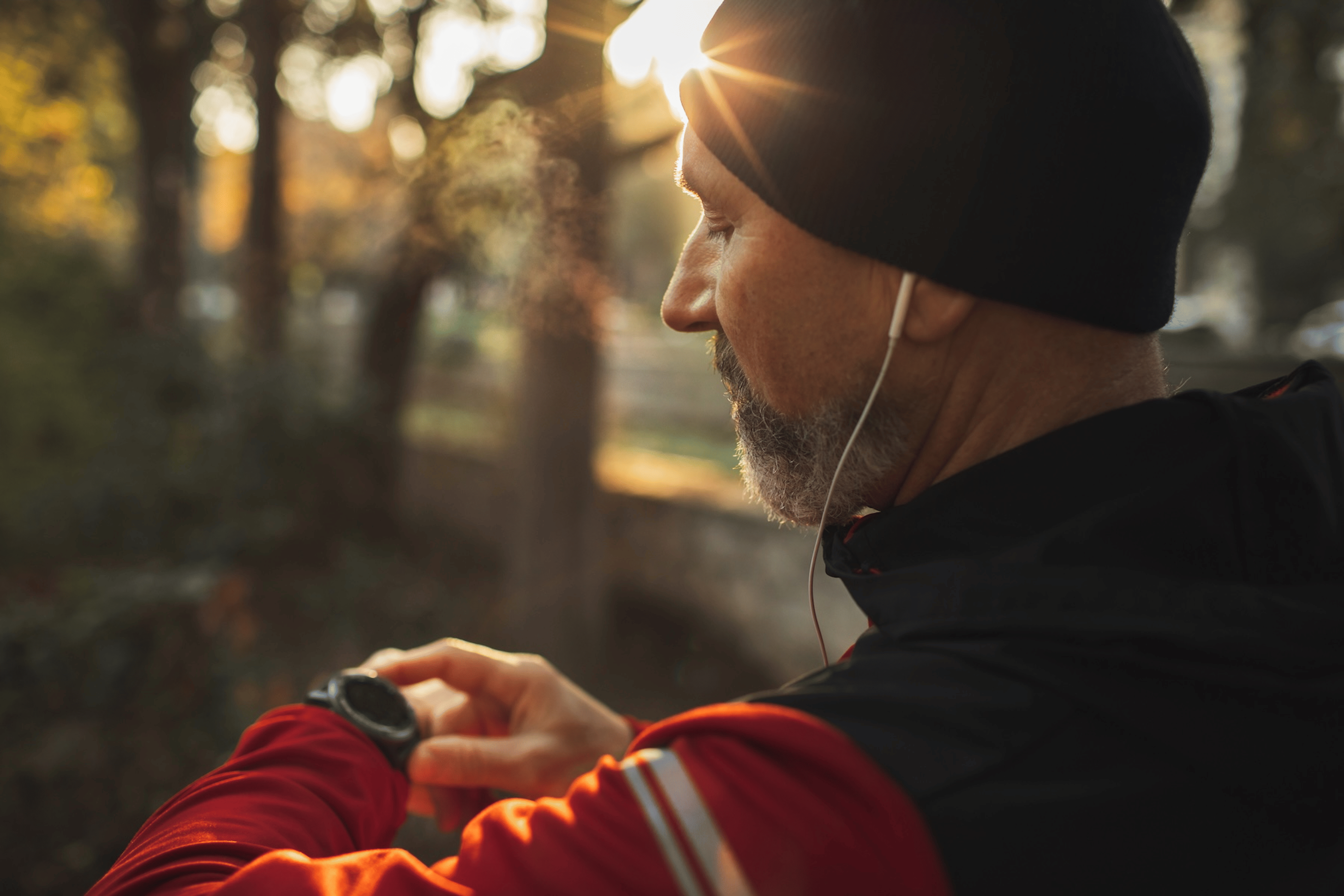
Bonus points if you can get at least some of your activity outside. “If you can exercise in the direct sunlight, that’s even better,” Dr. Wadlinger says. Sunshine regulates your circadian rhythm, improves your mood, and helps you generate some vitamin D, all of which may ease SAD symptoms. Of course, “sometimes you don’t have much sunlight during those months,” she acknowledges.
But even if it’s dark and gray out, you’ll get the benefits of being out in nature, Van Raalte says, including potentially reduced feelings of anxiety and depression. You might also incidentally interact with neighbors, your doorman, or a crossing guard, depending on who is in your environment—and that’s another advantage, as finding ways to cultivate social connection can help with SAD too, according to the Anxiety & Depression Association of America. Even just saying a quick “hi” could have some helpful mood effects, Van Raalte says.
Regardless of what you’re currently in the mood to do, whether you want to exercise indoors or outdoors, or which types of workouts you enjoy most, Peloton has you covered with thousands of different classes you can follow along with.


How Much Exercise Do You Need to Improve SAD?
In general, adults should aim for at least 150 minutes of moderate-intensity cardio exercise and two strength training sessions each week. And that might be a helpful benchmark if you’re hoping for mental health benefits too, Dr. Wadlinger says. “But I think with seasonal affective disorder, it certainly is beneficial to do something every day,” she adds.
Working out every day doesn’t have to require a major time commitment or even breaking a sweat: Getting just 10 minutes of physical activity has mood-improving perks, and that includes low-intensity exercise like walks as well, according to a 2024 review in the journal Physical Activity and Nutrition. (Side note: Peloton offers guided workouts ranging from 5–120 minutes across modalities, giving you options no matter what time window you have available.)

Peloton App
Access thousands of classes with no equipment needed.
Keep tabs on how you feel at various levels of activity and experiment with the right amount of exercise for you and your mood. But if you’ve given consistent exercise a try and your SAD symptoms still aren’t improving, reach out to a healthcare professional, Dr. Wadlinger says. There’s no need to delay talking to someone. “People who get help sooner get better faster and stay better longer,” Van Raalte says.
A physician may recommend antidepressants, working with a therapist or counselor, taking vitamin D supplements, or trying light therapy if SAD affects you in the winter, Dr. Wadlinger says.
Light therapy (also called phototherapy) involves sitting in front of a special lamp (usually called a light box or sometimes a SAD lamp) that emits light that’s 20 times brighter than normal indoor light, usually for about 30–45 minutes a day, according to the NIMH. This makes up for some of the missing natural sunlight during darker months and can help get circadian rhythms back on track and stabilize your mood. It can take about two to three weeks for the effects of light therapy to kick in, and you can keep using a light box until your symptoms go away (usually when spring rolls around).
The Takeaway
Seasonal affective disorder (SAD) is a type of seasonal depression that most commonly affects people during darker months. It can cause feelings of sadness, hopelessness, and restlessness. Research suggests that exercise can improve mood, including in people with seasonal affective disorder. Experts recommend sticking with a type of exercise you enjoy and trying to get some movement every day. Exercising outside might be even more helpful. Talk to a healthcare provider if your mood doesn’t improve with exercise alone, as you may be a candidate for light therapy, talk therapy, or medication for SAD.
Related Articles

Health
‘Happy Hormones’ Boost Your Mood Naturally—Here’s How to Activate Them

Health
Why Morning Sunlight Is So Good for You (and How to Make the Most of It)

Run
The Many Benefits of Running In the Morning—and How to Make It Happen

Mental Health
Does Exercise Really Improve Your Mental Health? These 9 Benefits Prove It
This content is for informational and educational purposes only and does not constitute individualized advice. It is not intended to replace professional medical evaluation, diagnosis, or treatment. Seek the advice of your physician for questions you may have regarding your health or a medical condition. If you are having a medical emergency, call your physician or 911 immediately.
Level up your inbox.
Subscribe for a weekly dose of fitness, plus the latest promos, launches, and events.
By providing your email address, you agree to receive marketing communications from Peloton.
For more about how we use your information, see our Privacy Policy.