Galina Zhigalova via Getty Images
How to Find a ‘Neutral Spine’ During Exercise—and Why It Matters
Here's what it means when a Peloton instructor cues you to maintain a neutral spine during your workout.
By Alyssa Sparacino•
What Is a Neutral Spine?
The Importance of a Neutral Spine
How to Find Your Neutral Spine
Exercises to Help You Practice Maintaining a Neutral Spine
How to Use a Neutral Spine During Exercise
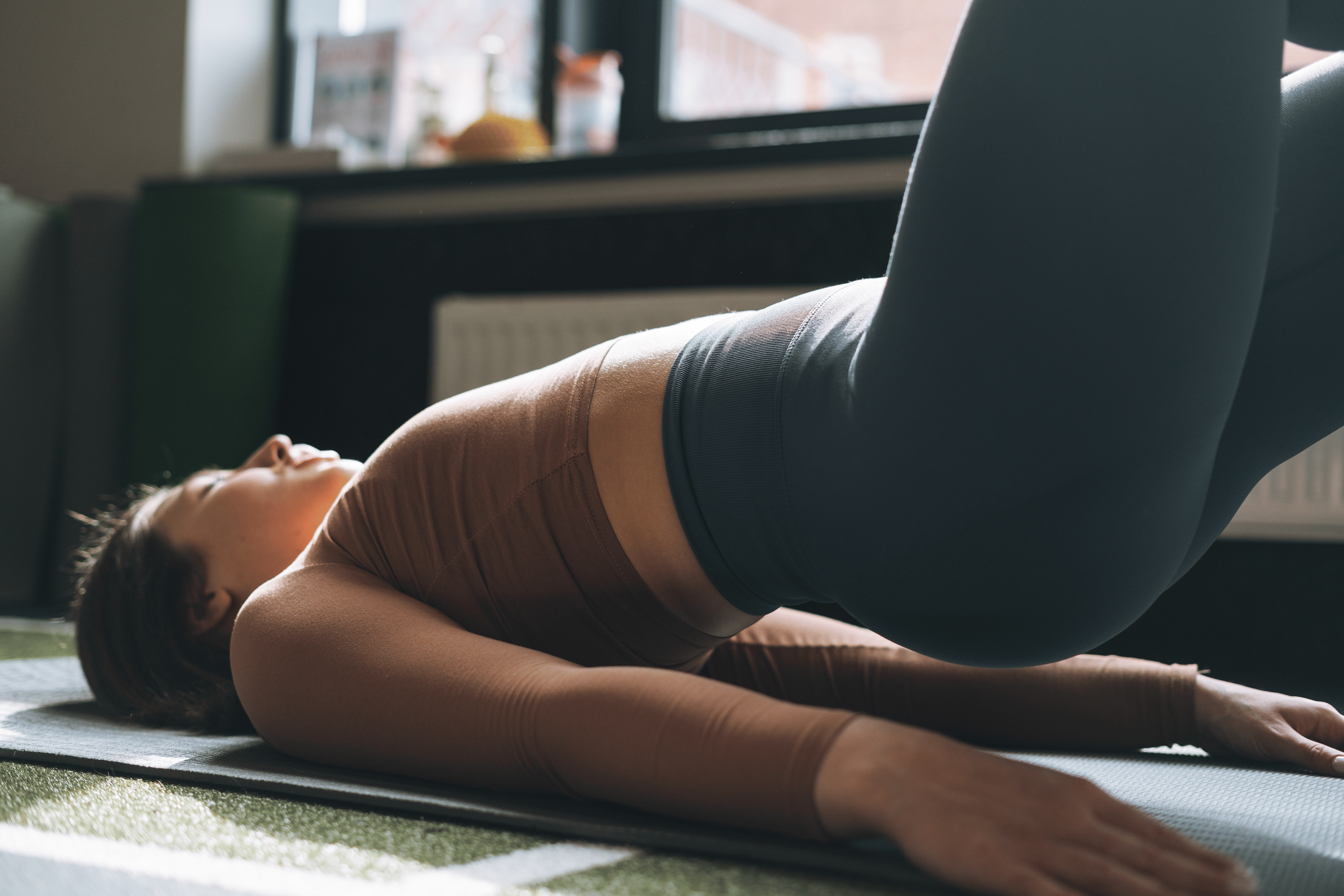
In fitness, “finding neutral” has nothing to do with a car’s gear shift or being Switzerland at your next family dinner. When a Peloton instructor asks you specifically to “find a neutral spine,” they’re looking for you to land in that sweet spot between an arched back and too-tucked hips.
If you’ve ever felt a pinch in your lower back during a glute bridge or caught a glimpse of your rounded shoulders during a deadlift, you are likely working outside of your neutral. That said, neutral spines look and—especially important—feel different for everyone, so landing in the Goldilocks spot takes some practice.
Unsure how to find your neutral spine and why it’s so important? We get it. Here, a Peloton instructor and an exercise scientist get into the nitty-gritty about all things neutral spine.
What Is a Neutral Spine?
To understand more about the idea of a neutral spine, it helps to think about the spine’s range of motion. Picture yourself doing a Cat Cow stretch, suggests Peloton instructor Kirra Michel. As with other joints in the body, your spine moves through flexion (forward rounding like a cat) and extension (back-bending like a cow).
“A neutral spine is somewhere between the two extremes,” she says. It’s “the position when your spine is long without excessive curving or extending. Use a mirror to see the difference from the front and side to help you understand what a neutral spine feels like.”
Some instructors may cue this position as “straight spine,” but your spine is never truly “straight,” so it’s a bit of a misnomer, says Kirra. “The spine has natural curves that you can see when looking at a body from the side—specifically, the lordotic curve of your neck and lower back, and the kyphotic curve around your shoulder blades.” Looking at a neutral spine from the side, it will form a gentle “S” shape.

Peloton App
Access thousands of classes with no equipment needed.
The Importance of a Neutral Spine
Finding and maintaining neutral helps protect your spine and defend against injuries throughout the body. “When in alignment, you can distribute the compressive forces of lifting a heavy load evenly and reduce undue stress,” says Heather Milton, a board-certified clinical exercise physiologist at NYU Langone’s Sports Performance Center. Conversely, an unfavorable position loads the spine in a way that can cause extra weight, pressure, or pulling on the joints, muscles, or fascia, as well as muscle imbalances over time, Kirra says.
That’s because being out of neutral and then adding load “can create greater tension at each joint of the spine,” Milton explains. (The spine has seven cervical, 12 thoracic, and five lumbar vertebrae with an intervertebral disc between each forming the joints of the spine, she further explains.) The additional stress can lead to strain, pain, and degeneration of a joint or disc, she says.
It’s not just about finding neutral during your workouts, either. Everyday life requires awareness of your alignment and movement patterns, as well. You want to have a neutral spine during any pressing (think, pushing a lawn mower) or pulling movements (such as, opening a heavy door), or lifting something overhead (e.g. putting clean dishes away), Milton says.
It can help to think about the relationship between your spine and core. A neutral spine keeps the abdominal muscles in a healthy “length-tension relationship,” says Milton. This means the core is not overly flexed nor stretched when in neutral. This helps the muscle fibers in your core engage and contract more effectively, she says.
Picture reaching up to get your luggage out from the overhead bin in an airplane; if your back is arched, your lower abs are likely stretched or disengaged. If you think about pulling your abs up to activate your lower core muscles, your spine will naturally come closer to neutral, she says.
This isn’t to say you need to walk around like a toy soldier. Bodies are meant to move, and not all of the movements you make are going to be optimal or in perfect alignment. Still, building this awareness and habit can help you stay injury-free while moving through life. “A handful of times in an unfavorable position is fine for the body—humans are resilient—but many repetitions over a long time, and adding weight, may potentially end with an injury,” Kirra explains.
How to Find Your Neutral Spine
First, know that everyone’s individual “neutral” is different because the degree to which your spine can move forward and backward varies, says Milton.
“Anatomically, we all have various joint ranges of motion,” Milton says. “One person may have slightly more or less curve forward and back by nature. You may also develop more or less curvature based on a sport you play or a habit you have.” For example, gymnasts tend to have a much greater lower back curve than the average population.
Pelvis size and position also play a role in your unique neutral “sweet spot,” as this can change how your spine sits in neutral, says Milton.
Ready to find your neutral spine? Here’s how, step by step, according to Kirra.
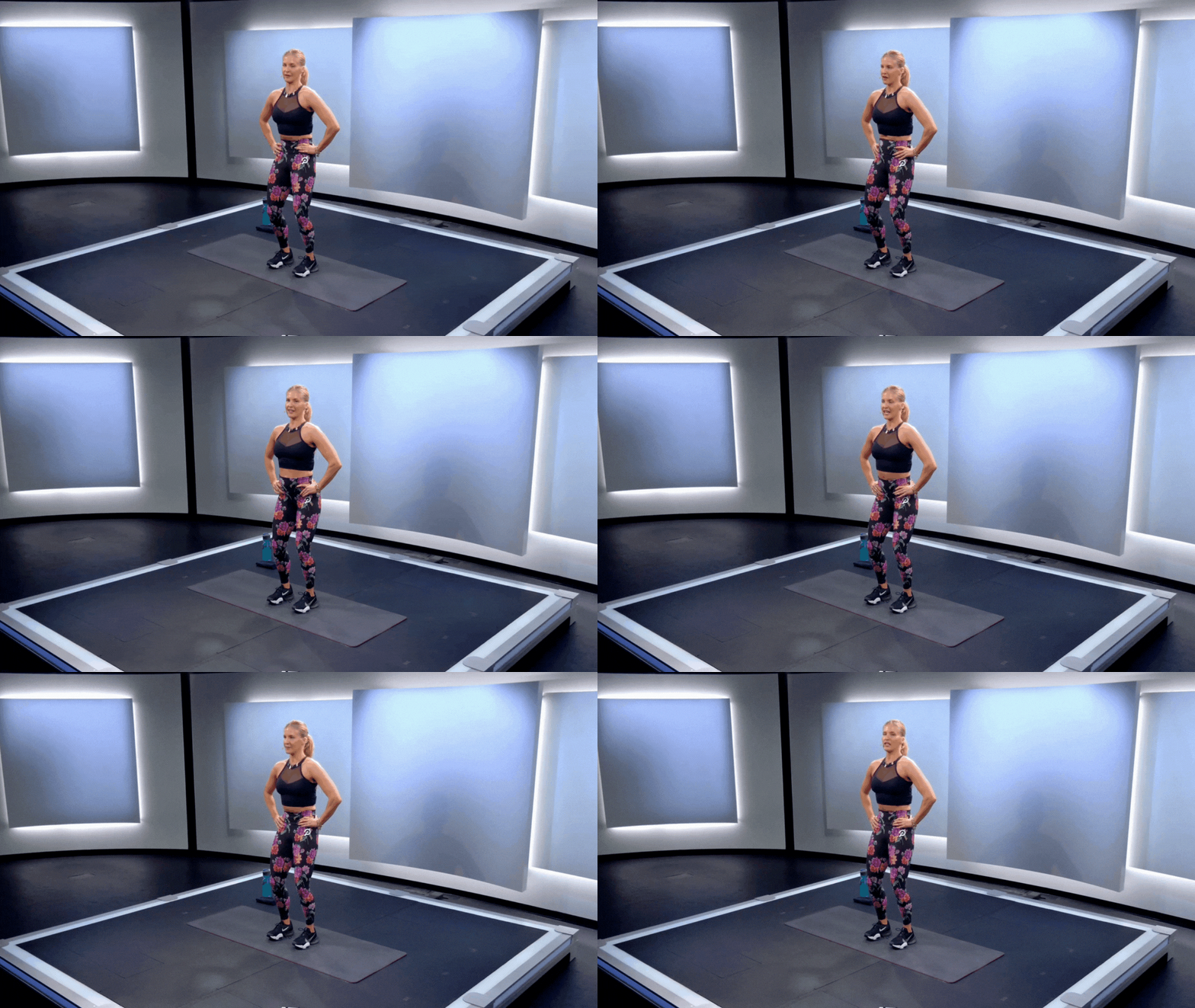
1. Begin Standing
Start by standing tall, with your feet grounded. Distribute your weight evenly through both feet. Lengthen through the crown of your head.
2. Be Mindful from Head to Toe
Allow your shoulders to sit naturally along your back without overly tugging them down or lifting them too much. Your ears, shoulders, hips, and heels should roughly be in one line. Notice that your ribs are not flaring open, and that your spine isn’t rounding forward.
3. Become Aware of Your Pelvis
Imagine your pelvis was a bowl full of water. Don’t allow the water to spill forward out of the front of the bowl (an anterior pelvic tilt), nor backward (a posterior pelvic tilt). Find a ‘neutral’ position between the two. This is your neutral spine.
4. Find Neutral In Other Positions
Once you understand how it feels to be in a neutral spinal position while standing, try changing your relationship to gravity. Quadruped position (on all fours) or a high or forearm plank is a good option.
Milton guides you through how to do this on all fours: Press your hands down into the floor and perform some Cat Cows to find both ends of the spinal movement range. Curl your lower back up toward the ceiling, which tucks the pelvis, then allow the belly to hang down toward the floor, which will arch your low back. Finally, find the halfway point between those positions.
Finding neutral in various positions can take practice and some getting used to, says Milton. “If you naturally tend to sit and stand in extension, this may feel like you are 'flattening' your back,” she says. “If you naturally sit or stand with your back curved like a C, this will feel a bit uncomfortable or hard to maintain. It is a gradual adjustment to correct.”
Exercises to Help You Practice Maintaining a Neutral Spine
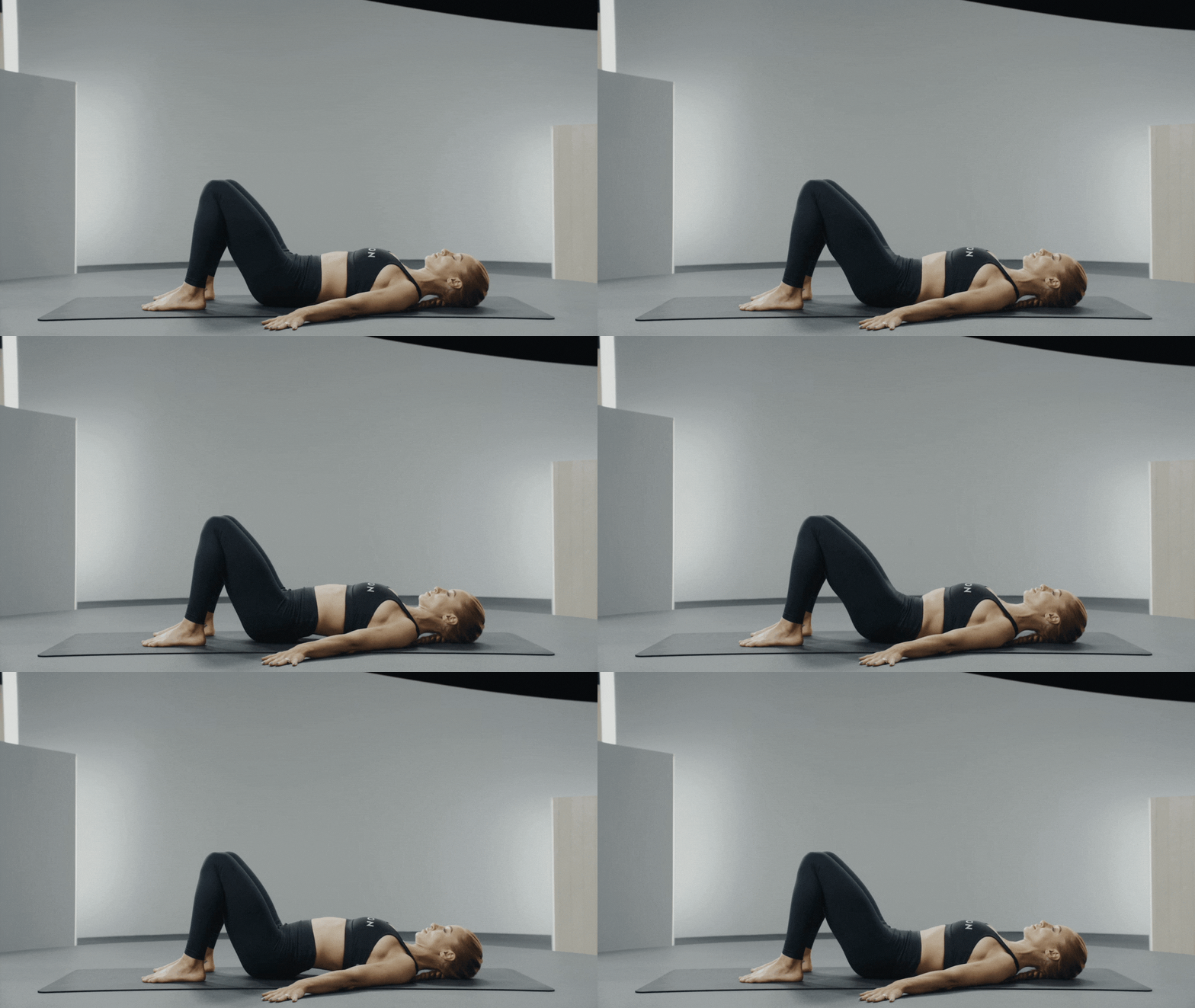
Want to practice body awareness and spinal alignment? First, try exercises that move through your range of motion, suggests Milton. This could include:
Pelvic tilts (shown above)
Lateral side bends
Spinal articulation
Hollow- and arched-body rocks
Next, try movements that require you to stabilize and maintain a neutral spine while moving other parts of your body, she says:
Scapula push-ups
Pallof press
Try a Class with Kirra on the Peloton App


How to Use a Neutral Spine During Exercise
While a neutral spine is often the safest place to be during workouts, some exercises naturally require spinal mobility. For example, during running or sprinting, the pelvis tilts forward and back throughout each leg stride, and these movements require torso rotation for balance and acceleration, Milton explains. Not to mention, entire modalities such as yoga or Pilates often ask the spine to move fluidly between exercises or flows. Other sports, such as martial arts, gymnastics, and cheerleading, also require a great deal of spinal mobility, says Milton.
So, how do you know when you want to hold neutral or stay nimble? Well, if you’re taking a class with a Peloton instructor—whether it’s strength, mobility, stretching, yoga, Pilates, or other type of workout—they’ll often cue you to maintain a neutral spine exactly when it matters most. If you’re doing a movement-tracking enabled strength workout with the Peloton Cross Training Bike+, Tread+, or Row+, Peloton IQ can also help by offering form feedback in real time, including detecting an arched or rounded back and nudging you to maintain a neutral spine.
In general, “consider any exercise where you are lifting a heavy load as a good one to keep a neutral spine,” says Milton. “That enables muscles to be at optimal length without being stretched or shortened too much to produce correct forces or stabilize as needed.” This not only produces the most power but also protects you from injury.
However, “in more complex athletic tasks or agility work, your body will move in and out of neutral as you perform the task,” she says. “This is totally OK.”
This content is for informational and educational purposes only and does not constitute individualized advice. It is not intended to replace professional medical evaluation, diagnosis, or treatment. Seek the advice of your physician for questions you may have regarding your health or a medical condition. If you are having a medical emergency, call your physician or 911 immediately.

Our Products
Level up your inbox.
Subscribe for a weekly dose of fitness, plus the latest promos, launches, and events.
By providing your email address, you agree to receive marketing communications from Peloton.
For more about how we use your information, see our Privacy Policy.