What Is Functional Threshold Power (FTP) In Cycling? Experts Break It Down
Cycling pros dish about this data point and how to use it to dial in your training.
By Karla Walsh•
What Is Functional Threshold Power In Cycling?
Why FTP Matters
How to Calculate Your FTP
What’s Considered a “Good” FTP?
How to Increase Your FTP
The Limitations of FTP
How Often Should You Test Your FTP?
When you hop on a bike, there are several ways to estimate how hard you’re working. Some cyclists rely on heart rate. Others rock with rate of perceived exertion (RPE). Then there’s the crew that simply lets their ability to breathe—and the feeling in their muscles—be their cue. But perhaps the most accurate and effective of all is functional threshold power (FTP).
It sounds technical, true. However, Peloton instructor Sam Yo likes to lighten things up with a metaphor: “Imagine you’re riding a bike in a scene from a zombie show. A herd of zombies is chasing you, and to survive to the next episode, you’ve got to keep a steady pace for an hour without collapsing—or becoming zombie dessert. That’s basically what your FTP is in cycling.”
Now that you have a general idea of how functional threshold power plays out in an imaginary scene, let’s dive into FTP IRL. Ahead, experts reveal why FTP matters, how to find yours, the benefits and drawbacks of using FTP in your cycling training, and how often to retest to keep pedaling your way to progress.
What Is Functional Threshold Power In Cycling?
FTP, or functional threshold power, is the maximum average power (measured in watts) that you can maintain for 60 minutes, Sam says: “Think of it as your cycling superpower baseline.”
Power data is the most accurate way to quantify cycling workload, progress your fitness, and adapt your training, adds Maddison Russell, a pro cycling coach with CTS. And FTP is one of the key power metrics Russell and other pros track.
This data point was originally popularized by exercise physiologist Andy Coggan, PhD, who has since been deemed “the father of FTP.” It’s a peek into what researchers call our “metabolic steady state,” or an estimation of how much intensity a cyclist can sustain for a fairly long period. FTP is an approximation of another term you might hear tossed around in cycling communities: lactate threshold, or when your body shifts from aerobic to anaerobic mode.
A higher FTP allows cyclists to pedal at a conversational pace for longer, ride uphill faster, and maintain a moderate pace for more hours because those sustainable efforts are below their FTP, Russell explains.

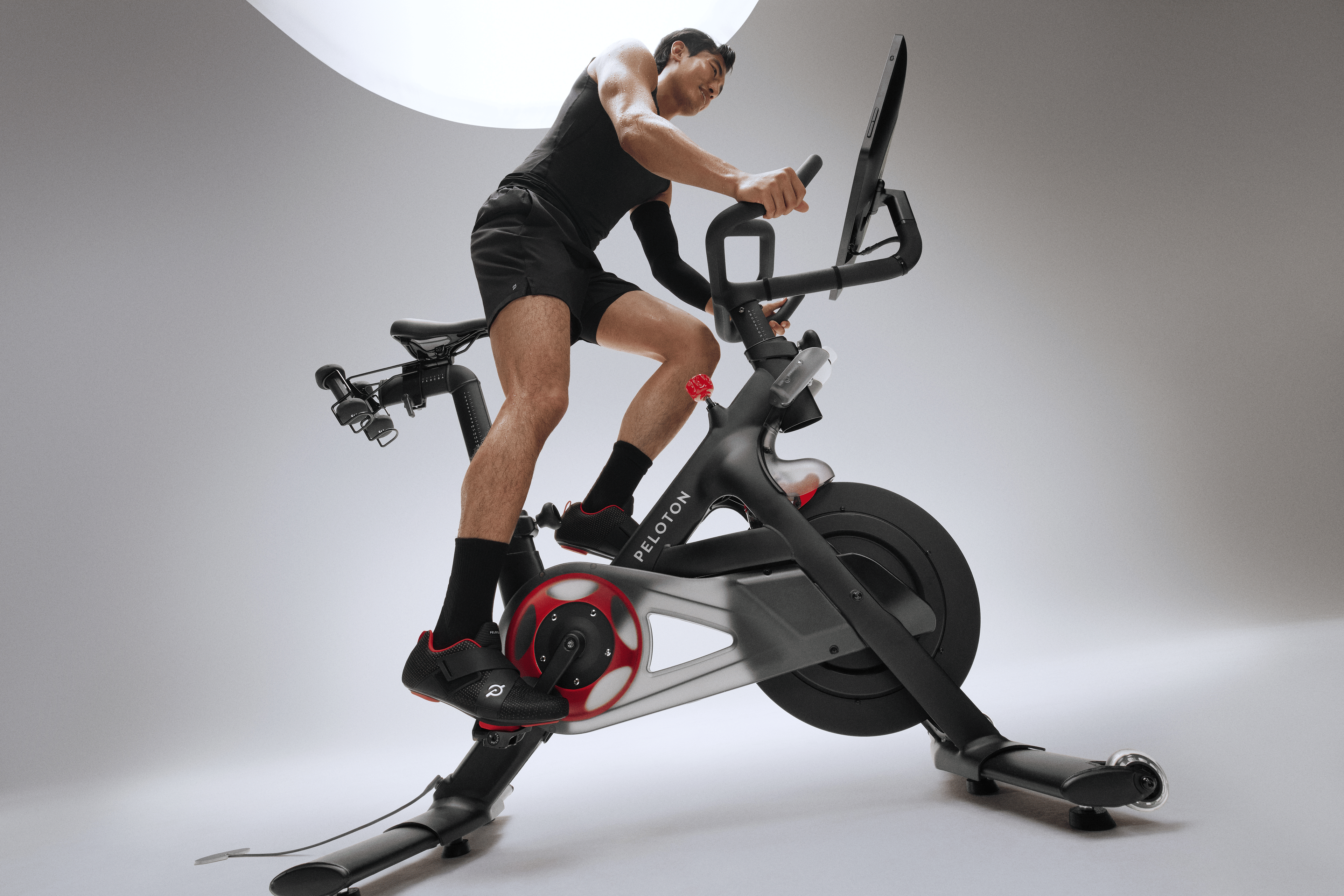
Peloton Bikes
Two bikes. One Peloton experience.
Why FTP Matters
FTP is helpful to know because “if a person pushes beyond this point for too long, they will run out of energy and will not be able to keep up with the effort,” explains Heather Baker, a physical therapist at Swedish Hospital—Endeavor Health. “FTP is commonly used in cycling, but is starting to be used in running as well.”
Functional threshold power is one of the best metrics for cyclists to focus on because you can use it to calculate your power zones and get more specific and intentional with your training. In addition to offering a snapshot of your current cardio fitness, FTP also gives you a clear marker to measure progress over time and makes it possible to personalize your training plan, Sam says.
“When you have accurate power zones, you can ensure that you’re working at the right intensities at the right times to avoid burning out and keep progressing,” Russell says.
With your FTP in your sights, “your training becomes more targeted, intentional, and efficient—no guesswork, just smart measurable effort,” Sam explains. “Think of the FTP test as your starting point, so you know where you’re beginning and how far you’re about to go.”
Sam tips his cap to fellow Peloton instructor Matt Wilpers, who often shares that “power is a universal language.” Similar to how a one rep max displays how you’re getting stronger at squats, your FTP displays improvements in cardio fitness over time.
Although tracking FTP involves testing (and retesting—more on this later), Sam prefers using it to monitor cycling effort and fitness over other metrics. Heart rate, for example, “lags behind your actual effort, especially in intervals,” Sam says. It can be thrown off by “loads of things,” he says, including stress, sleep, caffeine, climate, hydration, or even watching a plot twist in a dramatic show. “Same with cadence,” he adds. “Spinning faster doesn’t mean you’re working harder. Pedaling at 110 RPM with no resistance is like running downhill with a tailwind and pretending it’s a marathon.”

How to Calculate Your FTP
Buckle up… or, more accurately, clip in. Sam admits that an FTP test is “a tough ride. Remember, FTP is your max sustainable power for an hour, which means by the end of the test, all you’ll want to do is crawl into an ice bath and then take a nap,” he says. “Luckily on Peloton, our FTP test takes just 20 minutes.”
It may not be quite as accurate as an FTP test done in a lab, but “the 20-minute FTP test is my favorite because it’s simple to execute, easily replicable, and doesn’t require a physiology lab,” Russell says.
This is one of three fairly accurate ways to estimate your FTP at home, Baker confirms. Each of these is “much more doable than an hour-long FTP ride, yet are still spicy,” Sam says. Any indoor or outdoor bike outfitted with a power meter (including the Peloton Bike or Bike+) can be used for your functional threshold power test.
Here are the three most reliable ways an athlete can establish FTP, according to Baker:
20-minute test: During this test, you aim to ride with the highest possible average power output for 20 minutes straight. Then, you multiply your average power by 0.95 to get your FTP (or, on a Peloton Bike, it’ll be calculated for you). This is the FTP test you’ll do during any of Peloton’s 20-minute FTP Test Ride classes. (Just make sure you warm up first! You’ll also find 10-minute FTP Warm Up classes on Peloton.)
Ramp test: This is a test to failure. You begin by riding at 100 watts (on a Peloton Bike, that's an output of 100), increasing by 20 watts (or output points) every minute until you can no longer pedal. When you’re at failure, multiply the power measurement during the final stage of the test by 0.75 to get your FTP.
8-minute test: Warm up, then perform two 8-minute time trials pedaling at maximum power with an easy 10-minute recovery spin between. Once the test is complete, find the average of the two power outputs from each time trial, then multiply that value by 0.9 to get your FTP.


What’s Considered a “Good” FTP?
“FTP isn’t about comparing yourself to anyone else. It’s about knowing your own ‘base camp’ before you start the climb,” Sam says. “The most powerful thing you can do is train based on your number. That’s where real progress happens.”
Individual FTP values depend on experience, training, body weight, and genetics, Russell verifies, so there isn’t one set threshold that is deemed a “good” functional threshold power number. That said, it’s somewhat possible to level the playing field by looking at power-to-weight ratio (PWR). To find yours, divide your FTP by your weight in kilograms.
“A strong recreational cyclist could have an FTP around 3 watts per kilogram, while a strong amateur racer would be around 4 watts per kilogram. A higher watts per kilogram ratio is ideal. This means you’ll be able to climb hills faster and produce more power relative to your size, resulting in faster riding overall,” Russell explains.
You might experience a few blips along the way, but on average, “your individual FTP will go up as you gain fitness, and decrease when you lose fitness or if you are overtraining,” Baker explains.
How to Increase Your FTP
There are a handful of proven ways to increase your functional threshold power.
Ride More
True, some cyclists may clip in with certain genetic factors and a base level of fitness that gives them an advantage. But the fittest folks in the world have gotten there by putting in the reps. “The pros excel because they spend hours each week on their bike. The more fit a rider is, the more power they will be able to generate,” Baker says. Sam echoes that, adding “the gains come from showing up regularly, not going all-out once in a while.”
Train with Intention
Following a structured plan is where FTP training really shines. Sam suggests Peloton’s Power Zone programs, like Discover Your Power Zones or Build Your Power Zones, which are designed to align with your current fitness level and gradually push your limits. “It’s like strength training, but for your cardiovascular system,” Sam says. Plug in your FTP, and you have a tailored workout in zones that challenge but don’t overwhelm you, he explains.
Spend Time at or Near Your FTP
The best structured FTP cycling training plans include progressive workouts that continue to build base fitness and push an athlete at and above their established threshold, Baker says. Similar to how lifting heavier dumbbells will generate more muscle over time, providing a greater stimulus to your body on the bike (by riding in a more challenging fashion), will increase your FTP.
Don’t feel like you must push it to the limit for your entire sweat session, though. “Interval work is a great way to build time around FTP. Try three rounds of 10-minute intervals at 95 percent of your FTP with 5 minutes of rest in between,” Russell says. When he’s working with clients, Russell likes to start with shorter intervals, then progress to longer intervals before adding additional intervals to the mix.
Prioritize Rest and Recovery
Recover just as hard as you push, Sam advises. “Your FTP doesn’t increase during the ride; it increases during recovery,” he says. Integrate at least one recovery day between each interval workout, Russell recommends, and aim to incorporate one or two FTP sessions per week max. Focus on rest (both active and passive), sleep, and “periodic step-back or rest weeks to allow the gains to materialize,” Baker says. Peloton’s training programs are mapped out to allow for this. If you’d like personalized guidance, consult with a cycling coach or personal trainer.


The Limitations of FTP
FTP is a solid way to gauge progress, but it’s not an indicator of performance. The person with the highest FTP doesn’t always win the race, Baker confirms.
“FTP is unique because it’s fluid. It goes up and down based on training and fitness, and is a snapshot of performance on the day of the test,” Baker says. As such, “the test can over- or underestimate the FTP value based on the athlete’s performance that day. If an athlete is well rested, fueled, and hydrated, he or she will typically perform higher than a fatigued, hungry, or thirsty athlete.”
In addition, the pros admit that FTP can’t capture:
Short bursts of power, such as sprints
Fatigue during very short rides or durations longer than an hour
Mental fitness
How fast you recover
Your actual lactate threshold (this requires a lab test)
Even so, functional threshold power “is the best metric compared to others,” Sam says. “My best advice is to train smart, stay consistent, take the FTP test, and let the results surprise you on your journey.”
How Often Should You Test Your FTP?
The answer varies based on your training consistency and goals. As a general rule, though, aim to take a FTP test every 6 to 12 weeks.
“Think of the FTP test like a season finale,” Sam tells us. “You build the story with your training over time, and every couple of months, you check in to see how far the plot—your fitness—has progressed.”
A good clue that it’s nearing the time to retest: the workouts that used to feel challenging start to feel easier. Sam believes this is your body’s way of saying, “It’s time to level up and test again!”


This content is for informational and educational purposes only and does not constitute individualized advice. It is not intended to replace professional medical evaluation, diagnosis, or treatment. Seek the advice of your physician for questions you may have regarding your health or a medical condition. If you are having a medical emergency, call your physician or 911 immediately.

Level up your inbox.
Subscribe for a weekly dose of fitness, plus the latest promos, launches, and events.
By providing your email address, you agree to receive marketing communications from Peloton.
For more about how we use your information, see our Privacy Policy.