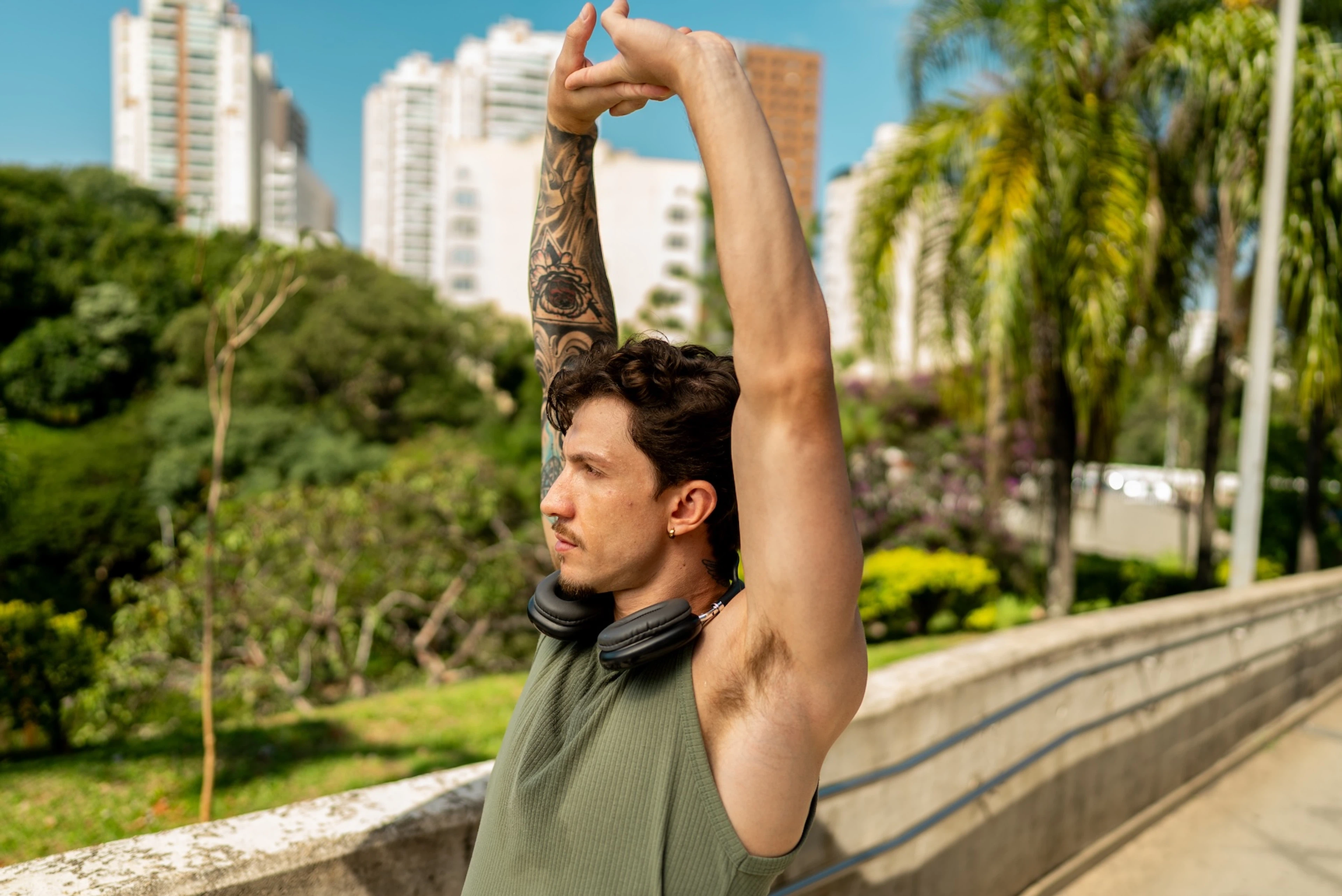
FG Trade / E+ via Getty Images
What’s the Best Time to Exercise for Better Sleep? We Asked the Experts
Here’s what to know if you want to maximize your workout routine for better rest.
By Sarah Klein•
How Exercise Affects Your Sleep
What’s the Best Time to Exercise for Sleep?
More Workout Tips for Better Sleep
The Takeaway
No matter what we do, a lot of us feel like we never get quite enough sleep. And that means a lot of us will also go to great lengths to figure out small but powerful ways to get a little bit more rest, like buying blackout curtains, trying sleep meditations, or debunking the best time to exercise for sleep and planning all of our workouts accordingly.
Ultimately, everyone is different, and what’s most important is that you find the sleep and exercise routines that work best for you. But if you’re hoping to optimize your rest as best as possible, here are a few things to know about exactly when (and how) to sweat it out.
How Exercise Affects Your Sleep
It makes some amount of intuitive sense: If you work out regularly and with some intensity, you’ll probably be more tired at the end of the day. But that’s not the only reason why exercise improves sleep.
A consistent workout routine also helps regulate your circadian rhythm, alleviate stress, and improve symptoms of sleep-related health conditions, meaning you may sleep more deeply at night and feel more energized and alert during the day.
“Research consistently demonstrates the positive effects of exercise on sleep duration, sleep quality, and even the management of sleep disorders,” says Terry Cralle, a registered nurse, certified clinical sleep educator, and representative of the Better Sleep Council. “In fact, exercise is often referred to as a ‘natural sleep aid.’”
And it works fast: If you can get in 30 minutes of moderate exercise today, you just might sleep better tonight, according to Johns Hopkins Medicine. (Jackpot!)
Exercise can even help if you have certain sleep conditions. Low- to moderate-intensity exercise can lessen some of the urges to move your legs if you have restless legs syndrome, says Caitlin Hunt, lead exercise physiologist of cardiac rehabilitation at OSF HealthCare Sacred Heart Medical Center. Regular exercise can also help people with insomnia get better rest and help reduce symptoms in folks with sleep apnea, according to the American Academy of Sleep Medicine.


What’s the Best Time to Exercise for Sleep?
As convenient as it would be to come up with one specific time everyone should exercise if they’re hoping to get better shut-eye, working out will help your sleep whenever you get around to it. “Exercise in general will help with sleep quality, whether exercise is performed in the morning, afternoon, or evening,” Hunt says. Rather than focus on a specific window for your training, “it’s more of a personal preference,” she adds.
And that’s a good thing! You’ve got more opportunities to squeeze in a workout rather than confining your sweat sessions to only one part of the day, and you’re more likely to stick to a fitness routine when it actually cooperates with your schedule.
With all that in mind, there are a few unique benefits of various workout windows to consider. For starters, morning workouts may improve nighttime blood pressure and sleep quality in people at risk of high blood pressure, Cralle says. And if you exercise outside in the AM, you’ll also get some morning sunlight, which helps regulate your circadian rhythm, making it easier to fall asleep at night, she adds. And remember Hunt said exercise can help improve symptoms of restless legs syndrome? Research suggests that’s especially true if you exercise in the morning.
Exercising at night has its own perks too. For one, some research suggests an evening workout could increase the amount of time spent in the restorative deep sleep stage. It might also help you clear your head and burn off some steam from the day. And if you like to take in-person classes, you might find a little more availability compared to some more in-demand earlier time slots.
The only time window you may want to avoid is exercising too closely and too intensely right before bed. “It is generally recommended to not exercise (especially avoiding high-intensity interval training) one to four hours before bedtime because your body releases endorphins during exercise that make you feel more awake,” Hunt says. That means you might have a harder time falling asleep if you exercise at night, she adds. If you notice evening workouts mess with your sleep, try to move them a little earlier if you can. Even avoiding exercise one to two hours before bedtime could help, according to Johns Hopkins Medicine.
Or, you could try something less strenuous closer to bedtime, which may still support good rest. “Stretching is a great alternative to cardio workouts at night because it can help your body relax and signal your body to be ready for sleep,” Hunt says. Walking, yoga, and light or low-impact resistance training could also fit the bill, Cralle says. You can find bedtime yoga flows and short stretching workouts on the Peloton App to perfectly complement your evening wind-down routine.


That said, if you find you fall asleep just fine even after a challenging evening workout, go for it! And remember that getting the exercise is still better than skipping it. “If people have to do their cardiovascular exercise or strength training workouts in the evening based on their schedules, it is better to do them for general health than to not do them at all,” Hunt says. Plus, if you’re a night owl, evening exercise may not bother you at all, Cralle says.
But even more important than when you exercise is how often you do so. “Some research has demonstrated that the consistency of workouts is more important than the timing,” Cralle says. In fact, a 2025 study in the journal Medicine & Science in Sports & Exercise found that having more consistent daily activity patterns and getting active earlier in the day were both associated with better cardio fitness among older adults. “The optimal time to exercise is when you can make it a regular habit,” she says.
More Workout Tips for Better Sleep
The most important thing to remember is some exercise is better for your sleep than none. “I would encourage readers to get regular exercise as it fits their schedules best, because exercising in general is going to help promote better sleep rather than no exercise at all,” Hunt says. Ideally, you’d get at least 30 minutes of moderate-intensity aerobic exercise each day you exercise to maximize the sleep-promoting perks of working out.
Also remember that what works for your friend, partner, or someone you follow on social media may not work for you—and that’s OK! For example, exercising at night because it fits your schedule better definitely isn’t the end of the world, and you shouldn’t force yourself to switch to morning workouts if that’s not your style. Just implement some tried-and-true tactics that help if you have trouble sleeping after a late workout, like taking a hot shower, creating a calming bedtime routine to help you relax, and eating some sleep-promoting post-workout snacks.
You should also make sure you’re following all the classic sleep hygiene tips, no matter when you’re exercising, if you want to get better rest. That means:
Keep your bedroom cool, dark, and quiet
Avoid screens in the hour or so before bed
Limit caffeine and alcohol before bedtime
Try to go to sleep and wake up at roughly the same times every day
Ultimately, you know better than anyone when your best time to exercise is, and that’ll also be your best time to exercise for sleep. So listen to your body and plan your workout intensity and routine accordingly to “something that suits [your] schedule and sleep quality,” Hunt says, whenever in the day that may be.
The Takeaway
There isn’t one specific best time to exercise for sleep; rather, regular exercise any time of day is linked with quality rest. “There are going to be pros and cons to both morning and evening workouts when it comes to sleep, but the most important thing is to get sufficient physical activity and get sufficient sleep for the best of both worlds,” Cralle says.
Find a time that works best for your schedule, personal preferences, and internal clock, and then make working out a habit if you really want to see results for your shut-eye. Even though evening workouts get a bit of a bad reputation when it comes to falling asleep, they don’t bother everyone, and helpful practices like warm showers or calming bedtime routines can help you nod off if that’s your only time to squeeze in a sweat session. And no matter when you exercise, practice healthy sleep hygiene to get better rest.

Peloton App
Access thousands of classes with no equipment needed.
This content is for informational and educational purposes only and does not constitute individualized advice. It is not intended to replace professional medical evaluation, diagnosis, or treatment. Seek the advice of your physician for questions you may have regarding your health or a medical condition. If you are having a medical emergency, call your physician or 911 immediately.
Level up your inbox.
Subscribe for a weekly dose of fitness, plus the latest promos, launches, and events.
By providing your email address, you agree to receive marketing communications from Peloton.
For more about how we use your information, see our Privacy Policy.