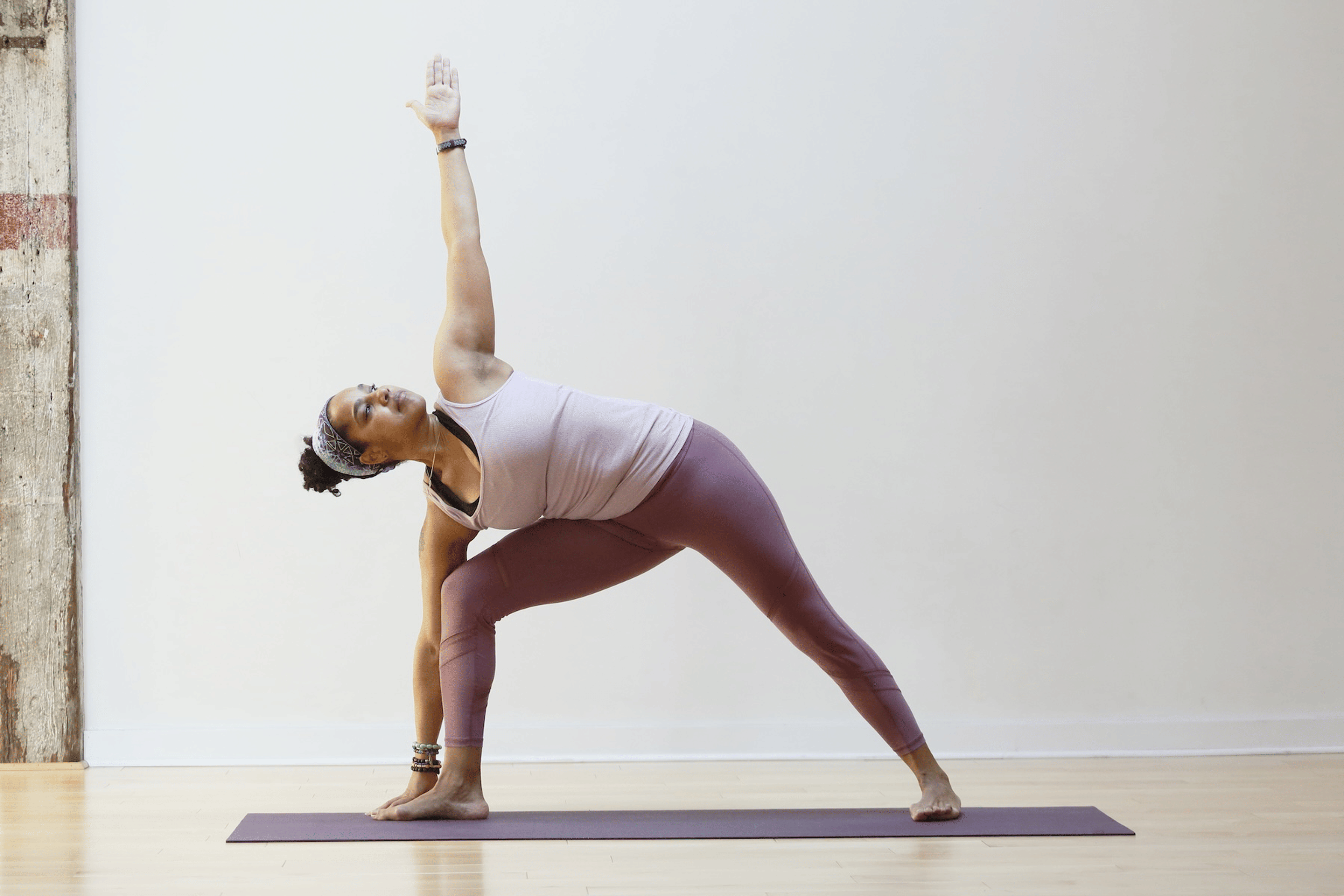
Mireya Acierto / DigitalVision via Getty Images
3 Reasons Why Yoga Is So Beneficial for Longevity—and How to Practice Safely as You Age
Improved balance, increased strength, and reduced frailty are just some of the advantages.
By Kathleen Felton•
How Yoga Supports Longevity and Aging
Are Certain Types of Yoga More Beneficial for Longevity?
Tips for Practicing Yoga as You Age
The Takeaway
All types of exercise improve wellbeing as you age, helping you live both longer and healthier. While any type of workout can boost vitality and build resilience as you get older, there’s one modality in particular you might want to keep on your radar: yoga.
“Yoga can be used for the promotion of health and longevity,” says Helen Lavretsky, MD, a geriatric integrative psychiatrist and professor in-residence in the department of psychiatry at UCLA who has studied the relationship between healthy aging and yoga.
Keep reading to learn about the connection between yoga and longevity, plus the types of yoga to consider for the greatest longevity benefits and how to do the practice safely as you age.
How Yoga Supports Longevity and Aging
Yoga is a healthy-aging superstar, namely because it helps improve both your physical and mental health, Dr. Lavretsky says, “ultimately resulting in a longer, healthier life.” With a regular yoga practice, you can expect to notice the longevity-focused benefits below.
Increased Strength and Reduced Frailty
Frailty affects quality of life with age, and maintaining strength through exercises like yoga is an important way to combat weakness.
“Through controlled, full-range movements and sustained loading, yoga improves muscle quality, supports range of motion, and strengthens connective tissue, helping prevent injury and age-related decline,” says Anna Erat, MD, PhD, an internal and sports medicine doctor focusing on preventive medicine and longevity at University of St. Gallen in Switzerland.
Combining a form of balance training like yoga with aerobic and resistance workouts is a winning combination, science suggests: Some research, including a large 2018 umbrella review, has found that a blend of these kinds of exercises improves muscular strength, gait speed, and physical performance in pre-frail and frail older adults. These advantages are a big deal for your longevity, as they can help you stay physically resilient as you age.
Boosted Balance and Flexibility
Age-related changes make people more prone to falls, which can in turn impact quality of life. Research has found that yoga boosts balance and flexibility, possibly helping to reduce fall risk. “By maintaining muscle health, full range of motion, and neuromuscular control, yoga helps prevent the loss of mobility and resilience that leads to injury [and] falls,” Dr. Erat says.
“Especially for an aging population, yoga is really important for helping with balance and fall prevention,” adds Peloton instructor Aditi Shah.
Improved Cognitive and Mental Health
In addition to your physical health, yoga supports your mind too, “improving mental health and wellbeing through stress reduction, improving sleep quality, and enhanced cognitive function and brain health,” Dr. Lavretsky says—outcomes that are all really, really important for supporting longevity.
In one recent randomized controlled trial, researchers found that a regular Hatha yoga practice was linked to a slew of cognitive benefits for older adults, including improved attention, memory, and reasoning. More broadly, other research has observed that yoga can help support mental wellbeing and health-related quality of life in older adults.
“[Yoga’s] calming, breath-regulated nature reduces chronic low-grade inflammation, an important hallmark of aging,” Dr. Erat adds.


Are Certain Types of Yoga More Beneficial for Longevity?
You’ll see different types of yoga offered on the Peloton App and at your local gym or studio. Each has its own unique benefits, but certain styles might be better for supporting longevity at various points in your fitness journey:
Vinyasa, Ashtanga, and Power yoga: These yoga practices are characterized by dynamic flows and challenging poses. While they might not be right for older adults or anyone with limiting physical conditions, Dr. Lavretsky says, they’re “excellent for building strength.” These styles also offer some “cardiovascular, strength, flexibility, and mobility benefits as well,” Aditi notes.
Yin and restorative yoga: If you crave a slower pace, one of these yoga practices may be a good fit. These styles are good for improving your deep flexibility and mobility, Dr. Lavretsky says. “Yin yoga is really helpful because it stretches connective tissues and that can help relieve stiffness and enhance flexibility,” Aditi adds. Meanwhile, “restorative yoga can help release tension and can help with stress reduction because it’s a sort of relaxation modality.”
Hatha yoga: “This is the most common type practiced in American gyms,” Dr. Lavretsky says. Hatha yoga classes often involve holding poses for longer periods of time, which can support strength and mobility goals, she adds.
Iyengar yoga: Precise alignment is a focus in this type of yoga. “It builds body awareness [and] reduces stress and chronic pain, especially back pain,” Dr. Lavretsky says. It’s also accessible for all levels and those recovering from injuries, she adds, making it a good option for beginners. There’s science to support it too: One 2013 study found that a 12-week Iyengar yoga program improved balance and mobility in older adults.
Kundalini yoga: This practice, which emphasizes breathwork practices and connecting with your inner self, may offer helpful cognitive benefits. A 2017 randomized controlled trial that Dr. Lavretsky co-authored found that participating in 12 weeks of Kundalini yoga was linked to short- and long-term improvements in memory and executive functioning among older adults with mild cognitive impairment.
Chair yoga: Those with mobility challenges can still benefit from adapted yoga styles such as chair yoga; early research has found that these types can still improve physical function and support social and mental wellbeing in older adults. But make no mistake: While chair yoga is great for folks with limited mobility, anyone can benefit from this practice, from office workers to busy parents to folks who spend a lot of time sitting during their commute.


Tips for Practicing Yoga as You Age
Even if you’ve been practicing yoga for years, you may need to make some adjustments as you get older, particularly if you’re dealing with any new health challenges. Here’s what to keep in mind before getting started:
Always warm up. Yoga involves lots of deep, stretchy poses, but it’s still smart to ease your body into a practice. Before jumping into deeper, more challenging postures, make sure you’ve prepared your joints and muscles with some gentler stretching movements, Dr. Lavretsky suggests.
Don’t rush through it. Some types of yoga do involve faster flows, which are great for many folks—but you can also reap yoga’s healthy-aging benefits by incorporating slower, more deliberate movements into your practice. “Emphasizing eccentric movements—slowly lowering into poses—builds muscle strength, tendon resilience, and balance,” Dr. Erat says.
Listen to your body. This is “key for maintaining mobility, strength, and overall longevity,” Dr. Erat says. At times, this might mean using modifying poses or working with props, Dr. Lavretsky says, such as holding on to the wall for balance or using blocks or straps. Gentler forms of yoga, such as chair yoga or restorative yoga, can be good options if you want to continue practicing yoga but aren’t currently up for faster-paced flows. And if a pose ever causes you to feel pain, take a break. “If you’re newer, if you have an injury, if you’re not ready to jump into a power class or even a flow class, I think it’s important to start with beginner-level classes, start with slow flows,” Aditi says. From there, you can gradually ramp up the intensity or duration of your practice.
Prioritize strength. If your doctor says it’s safe and you feel up for it, work to supplement your yoga practice with resistance training such as weights or Pilates. This will help “build muscle and core strength, which declines with age,” Dr. Lavretsky notes, and is an important part of combating those risks of frailty and falls.
Consistency is the goal. “Regular, even short, practices are more beneficial than infrequent intense sessions,” Dr. Lavretsky says. Much of the current research on the benefits of yoga for aging focus on longer-term practice, so find an instructor or style of yoga that inspires you to continue over time. (There are tons of great options on the Peloton App to explore.)
If you’re a beginner, try some starter poses. Gentler moves such as Mountain Pose (Tadasana), Cat Cow (Marjaryasana Bitilasana), and Legs Up the Wall (Viparita Karani), as well as hip openers such as Butterfly Pose (Baddha Konasana) and seated or reclined twists are excellent for easing your body into yoga, Dr. Lavretsky says.
One more important note: If you haven’t practiced yoga before or have any health conditions, get your doctor’s OK before starting any new routine. Most people can do yoga safely, but your practitioner may have some specific recommendations, Dr. Lavretsky points out. It’s also key to work or follow along with qualified instructors to prevent injury, Aditi adds.
The Takeaway
Along with strength training, mobility work, and cardio exercise, yoga is an excellent way to support longevity. The practice can be particularly beneficial for both your mind and body, as it helps you maintain physical strength, supports your cognitive and mental health, and boosts flexibility and balance.
“It’s never too late to start a yoga practice,” Aditi says. “Yoga is such a holistic kind of a practice that it’s really incredible to jump into it any time… It’s a really powerful tool for us at any age.”
Want to connect with others who are focused on improving longevity through movement? Join the Move for Life Team on the Peloton App.

Peloton App
Access thousands of classes with no equipment needed.
This content is for informational and educational purposes only and does not constitute individualized advice. It is not intended to replace professional medical evaluation, diagnosis, or treatment. Seek the advice of your physician for questions you may have regarding your health or a medical condition. If you are having a medical emergency, call your physician or 911 immediately.

Level up your inbox.
Subscribe for a weekly dose of fitness, plus the latest promos, launches, and events.
By providing your email address, you agree to receive marketing communications from Peloton.
For more about how we use your information, see our Privacy Policy.