
Catherine Falls Commercial via Getty Images
10 Essential Spinal Mobility Exercises That Unlock More Ways to Move
These simple moves will give your back some TLC from head to tailbone.
By Michele Ross•
Why Spinal Mobility Is So Important
Reasons Why Your Spinal Mobility Might Be Lacking
10 of the Best Spinal Mobility Exercises
How to Incorporate Spinal Mobility Into Your Routine
The Takeaway
Between hours spent hunched over laptops, leaning into your Bike’s handlebars, and scrolling on your phone, modern life puts our spines into a near-constant state of flexion. Before long, that rigidity can show up as back pain, poor posture, tight hips, and a body that simply feels stuck. But there’s good news: Spinal mobility exercises can help offset some of that damage by restoring the spine’s ability to move the way it was designed to.
Ahead, you’ll find some of the best spinal mobility exercises to include in your routine. Plus: why virtually everyone could stand to benefit from doing them—no matter your age, activity level, or preferred forms of movement.
Why Spinal Mobility Is So Important
Spinal mobility is the quiet connector between every ride, run, and strength session you do on the Peloton App—not to mention a vital contributor to how you feel and function through daily life.
“Your spine is the central highway of your body and influences your posture, how you move, balance, and breathe,” says Peloton instructor Kirra Michel. “When your spine is mobile, it allows muscles and ligaments to distribute load efficiently.” It lets key movement patterns—like allowing your back and neck to fold forward, bend back, lean sideways, and twist—happen without gripping or overworking certain muscles or joints. According to Suzy Pachtman, a doctor of physical therapy and certified health and wellness coach, limited mobility in one area of the spine often leads to overusing other areas, contributing to symptoms such as pain, stiffness, and instability.
On top of offsetting these issues, Pachtman says that good spinal mobility and alignment allow for the following benefits during sports or training:
Better lifting mechanics
Greater range of motion
Increased power
Improved breathing capacity
Reduced risk of injury
Spinal mobility plays an important role in everyday activities, too—including everything from turning your head and bending down to put on your shoes to lifting groceries. It’s also involved in helping maintain an upright posture, which helps with balance (a key consideration especially as you age to maintain independence and help prevent falls). Since the ribs are connected to the spine, spinal mobility directly affects breathing, Pachtman says. “Restrictions in spinal movement can limit lung expansion, leading to faster fatigue and reduced athletic performance,” she warns.
In sum, good spinal mobility is crucial for stability and to allow your body to move more efficiently and without pain, no matter if you’re physically active or not.

Peloton App
Access thousands of classes with no equipment needed.
Reasons Why Your Spinal Mobility Might Be Lacking
Poor posture—especially from prolonged sitting or an overall sedentary lifestyle—is one of the key culprits driving limitations in spinal mobility. “Over time, slouching and poor posture places excessive stress on the spine, contributing to muscle tightness, joint stiffness, restricted movement, pain, and even reduced lung capacity,” says Pachtman.
Age-related changes could also be at play. Intervertebral discs—which provide cushioning, absorb shock, and allow the spine to bend and twist—lose hydration and flexibility over time, Pachtman says, thus leading you to be less mobile than you once were. Joint issues, including arthritis, could also exacerbate stiffness and discomfort.
Acute injuries—such as falls, car accidents, or sports injuries—as well as chronic conditions like herniated discs could all significantly impair spinal mobility, Pachtman adds.
10 of the Best Spinal Mobility Exercises
Being proactive is the best way to ensure that your spine moves well and allows you to feel good in your body. With that in mind, consider adding the following spinal mobility exercises, each recommended by Kirra, into your movement routine.
The first six will work on mobility in the cervical spine (aka the neck region). “They’re such simple exercises that we often overlook, but we can get so much out of,” says Kirra. They’re especially worth doing if you’re prone to tech neck and use your devices too much. Be sure to move slowly and within pain-free ranges, and pare them back or skip entirely if you have neck issues. Exercises 7 and 8 focus on mobility in the thoracic spine (aka the middle section that starts at the base of your neck and ends at the bottom of your ribs), and exercises 9 and 10 will enhance mobility in the lumbar spine (aka the lower back region).
“These are all low lifts, and ideally feel-good exercises,” says Kirra. In other words, they should feel gentle and inviting—not jarring or activating—and you should come out of them feeling better than when you started. Bonus: It should take no more than 10 minutes to complete them all.
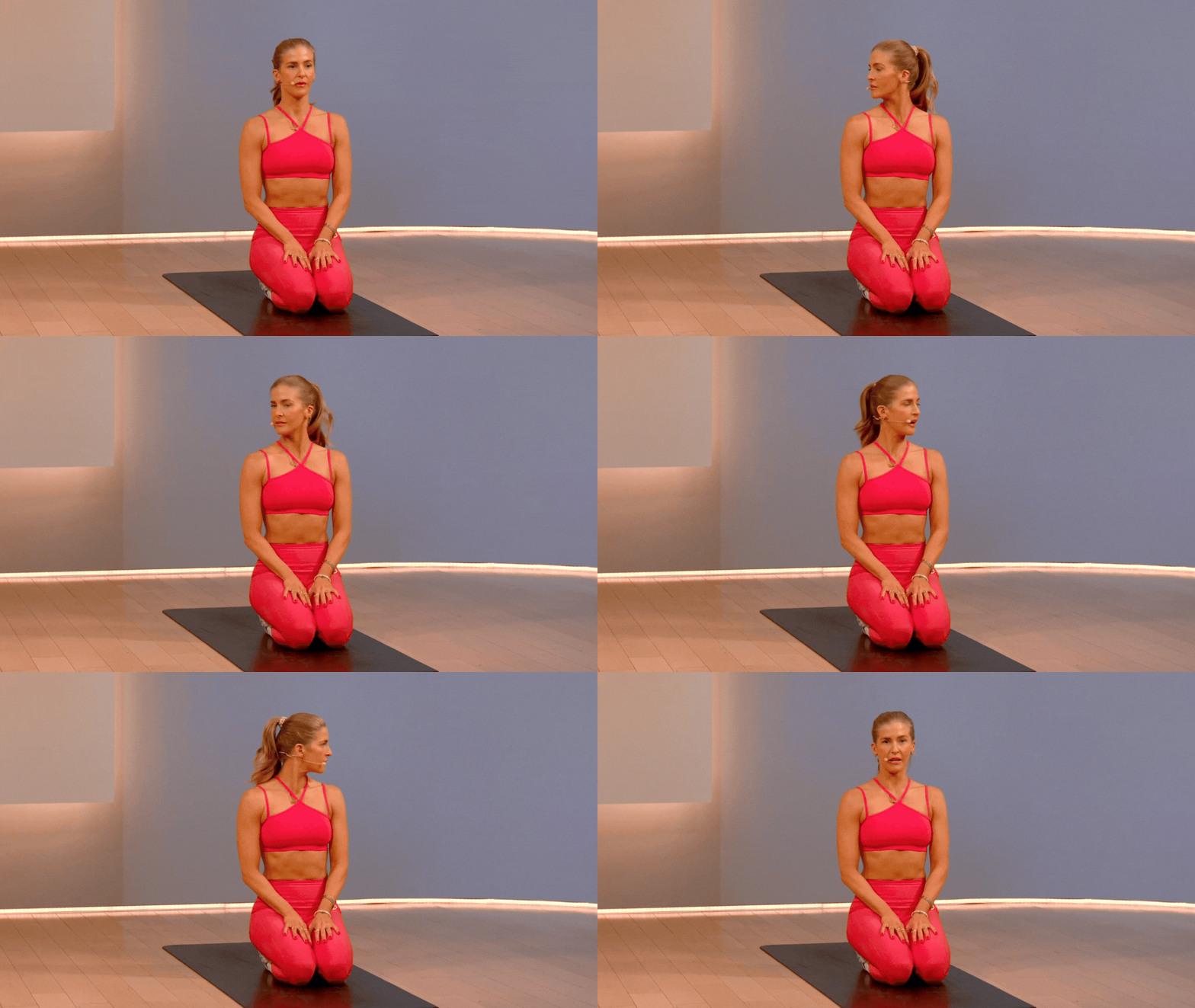
1. Head Turn
This spinal mobility exercise rotates your cervical spine, which can help with basic movements like looking sideways and picking something up from behind you.
Stand up or sit tall in a sturdy chair. Keep your shoulders still and relaxed, but avoid rounding forward.
Turn your head to the left—enough so that it challenges your comfort level but isn’t painful—then return to the center.
Then repeat, turning to the right.
Continue for 30 seconds.
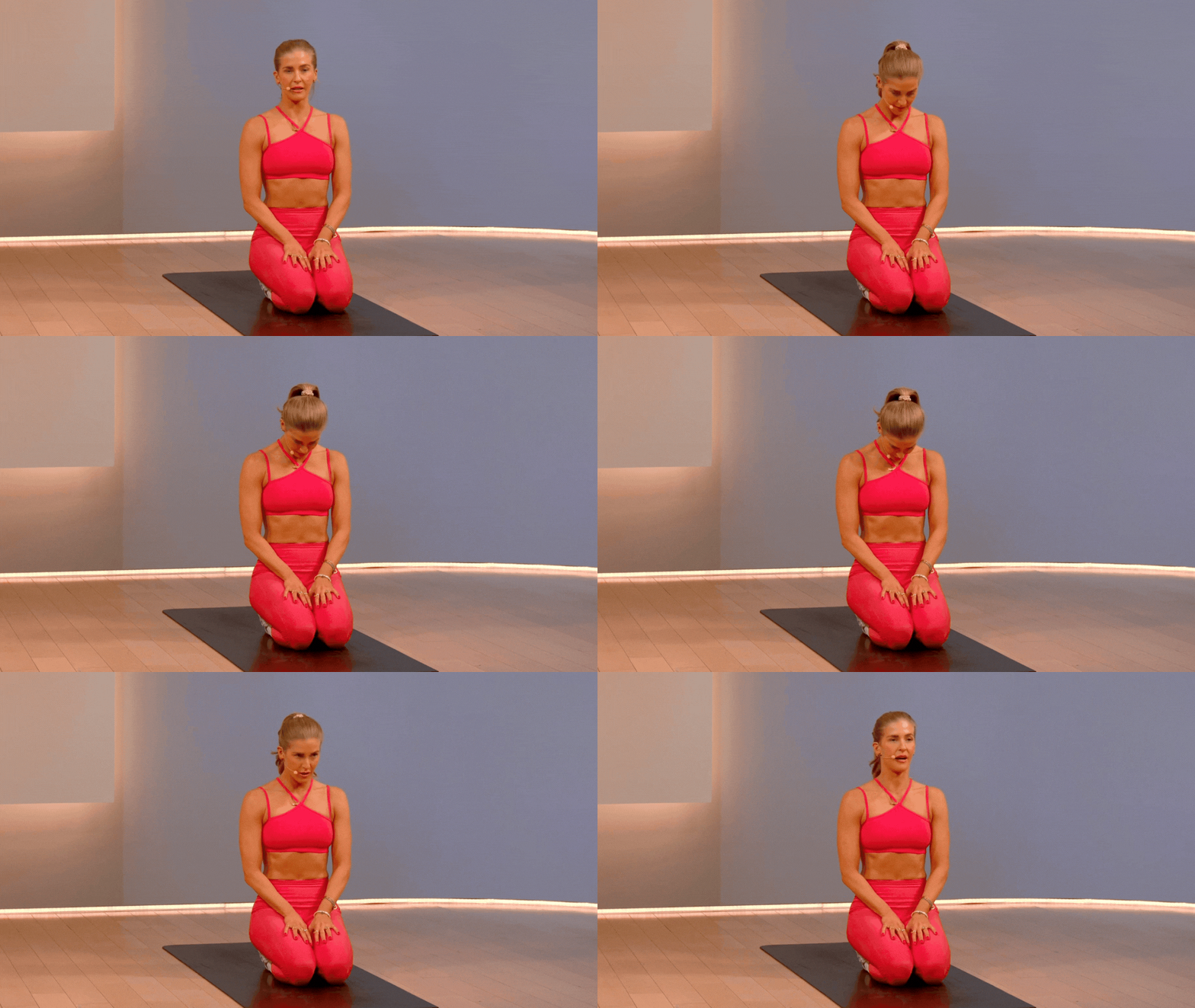
2. Nod
Similar to the head turn, the nod will focus on the range of motion in your cervical spine—this time on extension and flexion.
Stand up or sit tall in a sturdy chair. Place your hand on your chest to keep it from moving.
Lift your chin up to tilt your head backward—enough so that you feel a stretch in the front of your neck, but it isn’t painful—then return to center.
Tilt your chin down toward your chest, feeling a stretch in the back of your neck, and then returning to center.
Continue for 30 seconds.
3. Head Tilt
This exercise works wonders to stretch the sides of your neck, which often don’t get enough TLC. Just be sure that your neck stays neutral and doesn’t tilt forward or backward. The longer you hold on each side, the deeper the stretch and release you’ll get. (Optional: Place your hand on the opposite side of your head to gently guide—not pull—your head toward your shoulder, as shown above.)
Stand up or sit tall in a sturdy chair. Keep your shoulders still and relaxed, but avoid rounding forward.
Drop your right ear to your right shoulder. Lengthen through the left side of your neck and think about lifting your left ear to the ceiling. Hold for 1 to 3 rounds of breath.
Return to center and repeat on the opposite side.
Continue for 30 seconds.
4. Chin Tuck Drill
This spinal mobility exercise might look silly, but it’ll help restore balance from frequent forward-tilts and scrolling on your phone.
Stand up or sit tall in a sturdy chair.
Pull your chin back as if creating a double chin.
Extend your neck and head as far forward as possible.
Continue for 30 seconds.
5. Head Glide
According to Kirra, this spinal mobility exercise mimics Janet Jackson videos from the ’90s.
Stand up or sit tall in a sturdy chair. Look straight ahead.
Tuck your chin to pull your head back slightly, then glide your head (without tilting it) to the left, back to the center, then to the right. Keep your chin parallel to the floor throughout the movement.
Continue for 30 seconds.
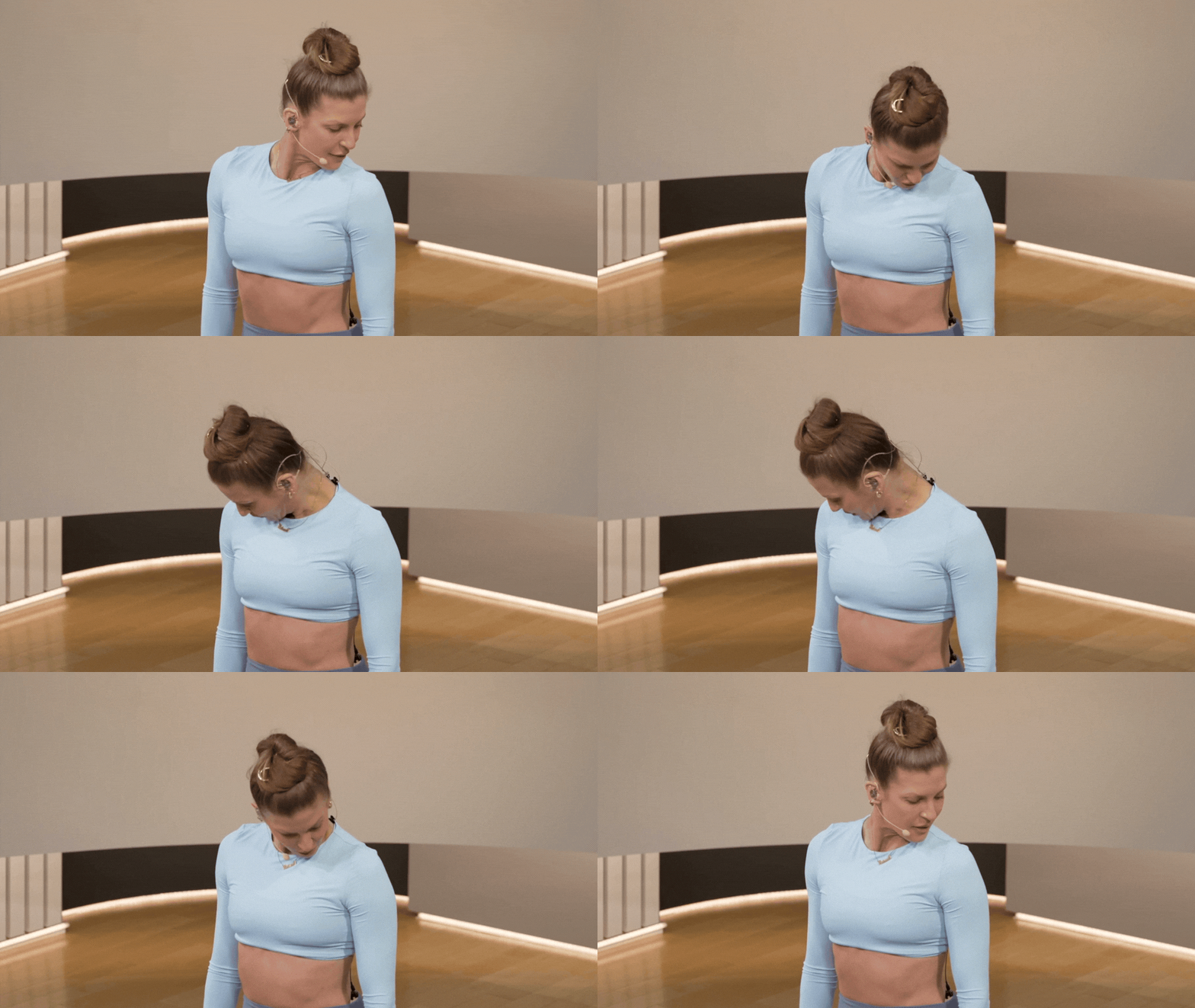
6. Half Neck Rolls
Half neck rolls are pretty much guaranteed to come with a smooth, satisfying release. Just be sure to move slowly and gently.
Stand up or sit tall in a sturdy chair. Look straight ahead.
Tilt your head to the right, tuck your chin in and lower your head toward your chest, then tilt your head to the left to make a semicircle.
Slowly repeat going in the opposite direction.
Repeat for 30 seconds.
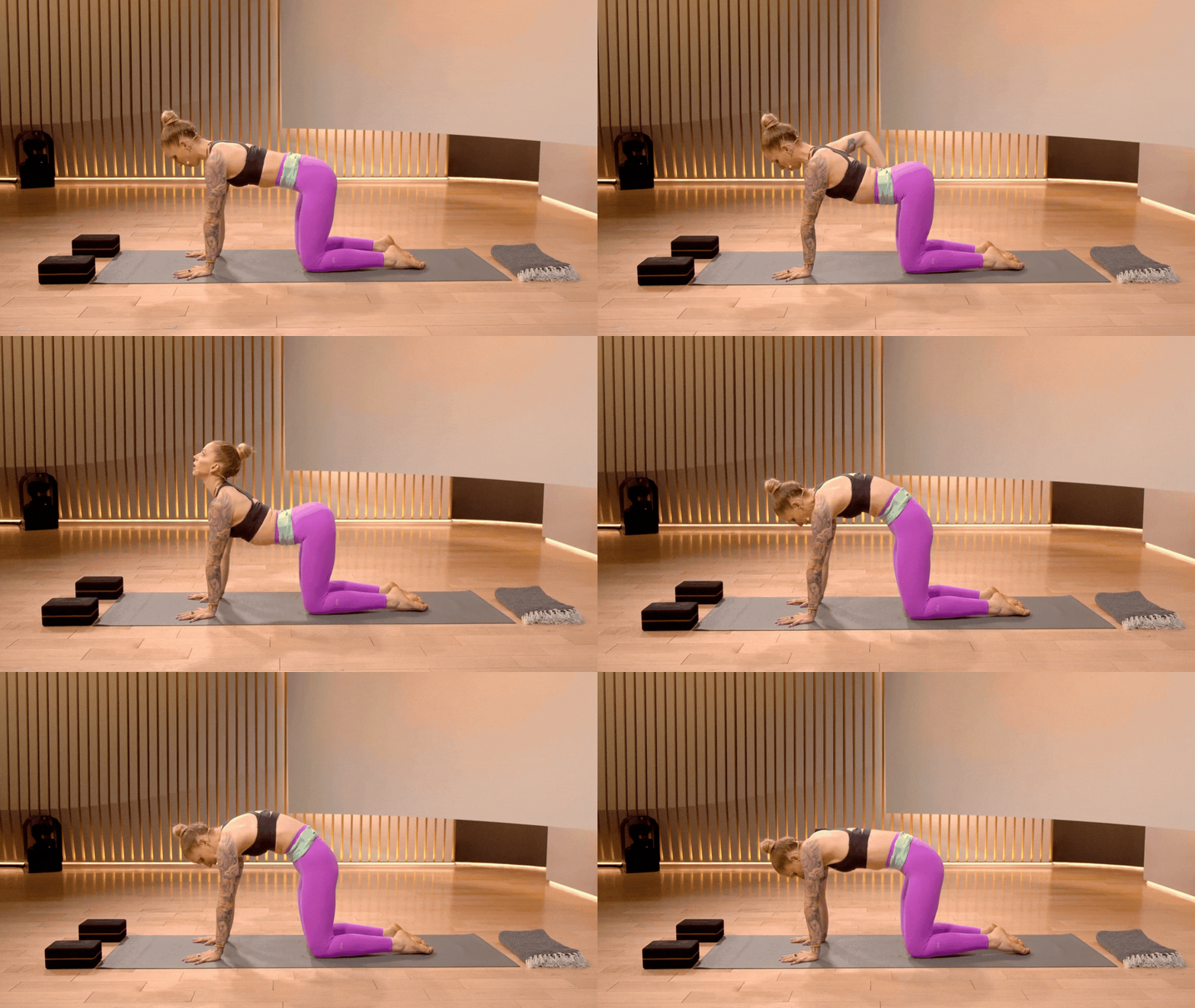
7. Cat Cow Stretch
This famous yoga pose and stretch won’t just loosen up your back. Cat Cow also opens up your chest, stretches your abs and hips, and builds strength in the wrists and arms.
Start on all fours on a mat, stacking your hands under your shoulders and your knees under your hips.
On an inhale, drop your belly towards the floor and arch your tailbone and chest upwards. Gaze up and broaden through your chest.
On an exhale, pull your navel in and up as you round up through your entire spine, lifting your mid-back high to the ceiling, and tucking your chin in towards your chest.
Continue to move through Cat and Cow, staying aligned with your breath.
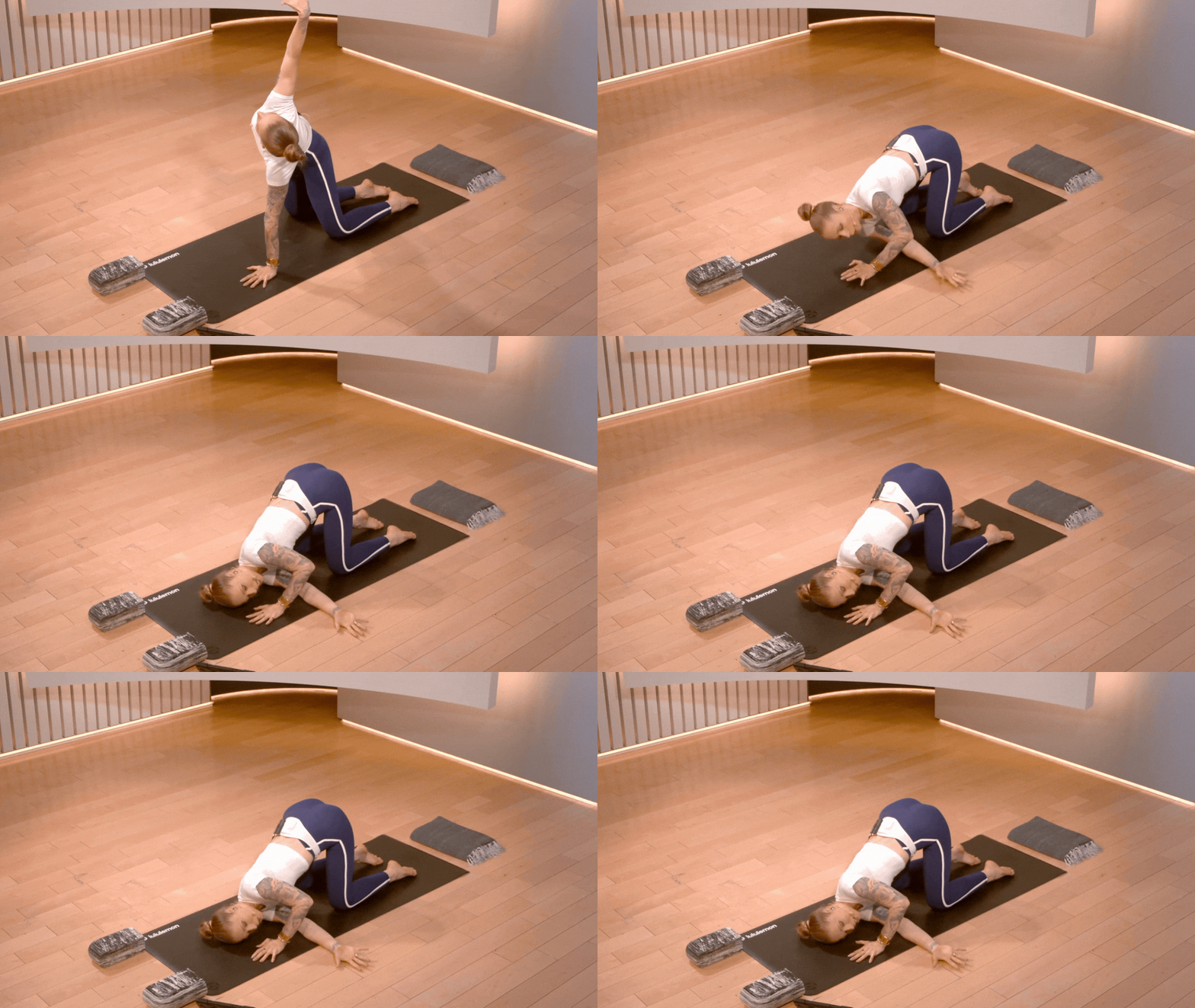
8. Thread the Needle
This juicy mobility exercise helps to release the spine and loosen up tension in tightness-prone areas like the neck, shoulders, and back. Thread the needle can also help improve your posture.
Start on all fours on a mat, stacking your hands under your shoulders and your knees under your hips.
On an inhale, extend your right arm up to the ceiling.
On an exhale, thread your right arm between your left arm and leg, through to the left side of your body until your right shoulder and the right side of your head touch the floor. (If your head won’t reach the floor, you can place a yoga block or blanket underneath it for support.)
Press down firmly through the left hand. Pull your left hip back a few millimeters so your hips are squared. Work to elongate the left side of your body.
Stay for 5 even rounds of breath. On each exhale, twist deeper if it feels good.
Slowly unwind and return to starting position. Repeat on the opposite side.

9. Windshield Wiper Knees
This dynamic stretch can help loosen up your lower back. It’s a perfect antidote to a long day spent sitting.
Lie on your back with your knees bent and feet flat on the floor, hip-width distance apart.
Gently drop your knees to the right, then draw them back to center.
Gently drop your knees to the left, then draw them back to center.
Continue for 20 to 30 seconds. On your last rep, hold the stretch on each side for 30 seconds.
10. Pelvic Tilts
Pelvic tilts aren’t just a mobility exercise for the lumbar spine; they also double as a sneaky strengthener for your deep core muscles and can help you find a neutral spine.
Lie on your back with your knees bent and feet flat on the floor.
On an inhale, tuck your tailbone to tilt your pelvis backward and press your lower back into the floor.
On an exhale, push your glutes into the floor to tilt your pelvis forward and create an arch in your lower back.
Keep the movements small, trying to isolate the movement in your pelvis (i.e., not lifting your ribs).


How to Incorporate Spinal Mobility Into Your Routine
You should view spinal mobility exercises as an investment in your long-term plan for functional movement and healthy aging. Even a single session could yield palpable relief from aches, though the magic lies in consistency over time.
Here are some parting tips and FYIs about spinal mobility exercises, according to the experts.
Aim for 3 Sessions a Week (or More)
According to Pachtman, this is the minimum cadence you should target for mobility work. (There’s also no harm in choosing a few favorites to perform daily.) If you’re already active, she says you can easily add them to the end of your workout warm-up or as part of your cooldown stretch. Another great time to include spinal mobility exercises into your day is first thing in the morning. “They allow your muscles, fascia tissue, and joints to awaken and warm up, supporting you for the day ahead,” Kirra says.
That said, any time of day is a good time to do some gentle mobility stretches—and it could be ideal to time it with when you need relief the most. This could be after a tough workout, in the afternoon for a midday reset, or after you get home after a long day at work.
Go Slow
Again, spinal mobility exercises aim to reduce and prevent pain—not cause it. Be sure to listen to your body as you perform them. If you’re in good physical health, you can gently test your limits and scale back if sharp sensations or tensions arise.
Try a Spinal Mobility Class
To stay motivated and take out any guesswork, you can always turn to the Peloton App. “Many of these movements (or similar ones) show up in our yoga and mobility classes,” says Kirra, “so make sure you check those out to help incorporate spinal mobility into your routine.”
Some of Peloton’s stretching and mobility classes are as short as five minutes—perfect for a quick reset when time is tight—while others are up to 20 minutes long for deeper work.
Focus on Daily Movement Patterns
It’s worth prioritizing spinal mobility and integrity throughout the day—not just when you’re doing the exercises shared above. After all, your daily habits have a huge bearing on overall spine health; they can either help or hinder your quest to improve mobility in your spine and entire body.
“Be mindful of your posture, lift and move with intention, stay physically active, and change your position regularly throughout the day,” Pachtman advises.
Consult a Professional As Needed
Those with certain limitations should take caution before starting. “If you have pain, weakness, an injury, or a pre-existing medical condition, it’s important to consult a healthcare provider or physical therapist before beginning any exercise program,” says Pachtman.
She also advises working with a physical therapist if you’re new to mobility training and want some extra support. They can offer cues on proper alignment and modifications tailored to your individualized needs and goals.
The Takeaway
If your spine can move through its full range of motion without pain or stiffness, your spinal mobility is likely in tip-top shape. By doing spinal mobility exercises on the regular, you’ll be in a great position to maintain this status or gradually inch towards it.
If you feel your spinal mobility is lacking, take heart that consistently working on spinal mobility will help to improve your posture, reduce pain and tension, enhance performance, and support your overall quality of life in the present and as you age. Prioritizing it is an investment in your body’s functioning and your long-term health—and there’s no better time than now to start building that wealth.
Related Articles

Stretching + Mobility
How to Find a ‘Neutral Spine’ During Exercise—and Why It Matters

Stretching + Mobility
How to Stretch Your Upper Back: 7 Satisfying Moves to Try

Strength Train
6 Exercises for Stronger and Healthier Hips

Health
How Much Exercise Do You Need to Improve Longevity? (Hint: It's Not As Much As You Think)
This content is for informational and educational purposes only and does not constitute individualized advice. It is not intended to replace professional medical evaluation, diagnosis, or treatment. Seek the advice of your physician for questions you may have regarding your health or a medical condition. If you are having a medical emergency, call your physician or 911 immediately.

Level up your inbox.
Subscribe for a weekly dose of fitness, plus the latest promos, launches, and events.
By providing your email address, you agree to receive marketing communications from Peloton.
For more about how we use your information, see our Privacy Policy.