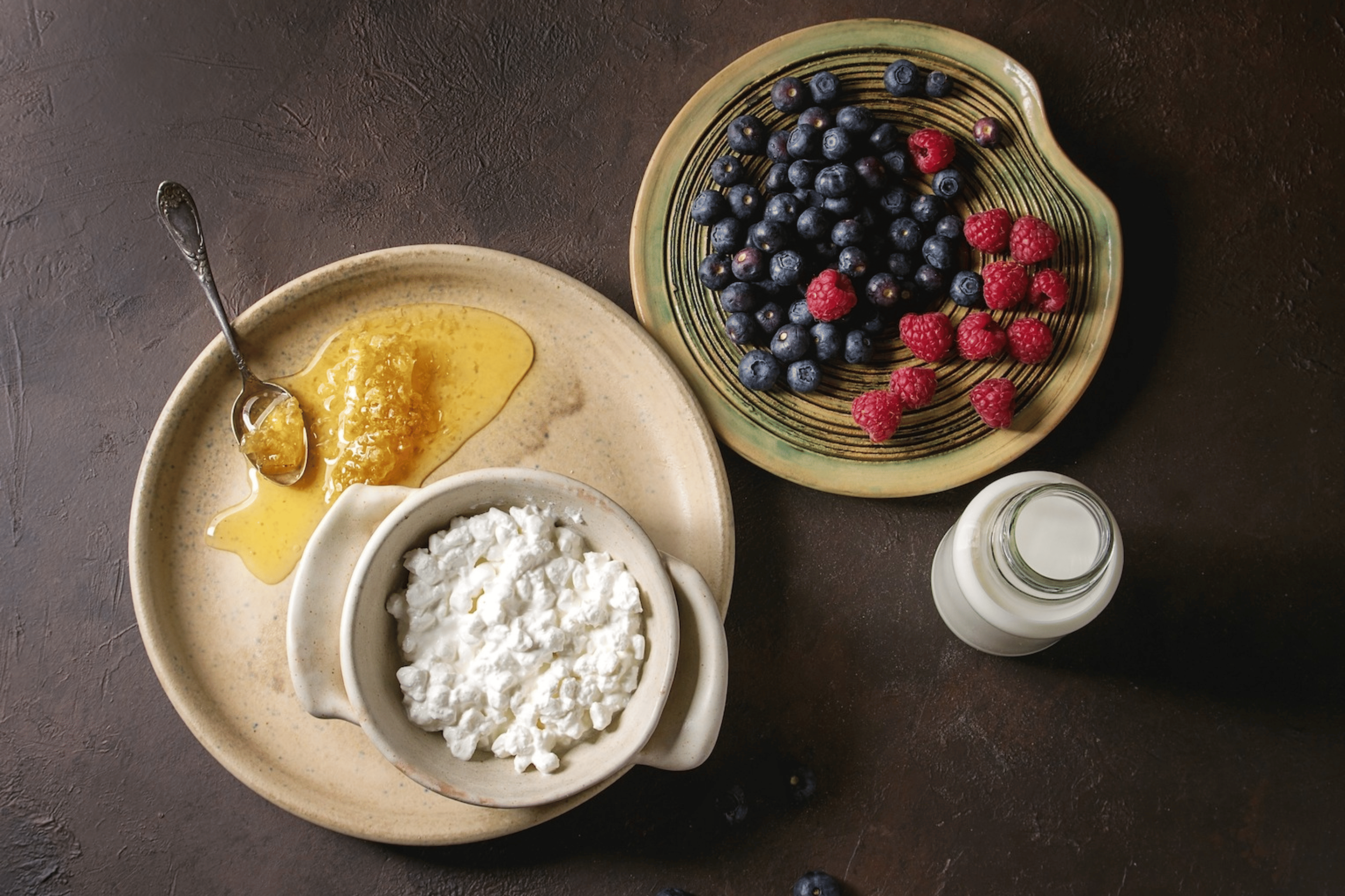
Is Cottage Cheese Really the Ideal Post-Workout Food?
If you’re looking for a post-exercise protein boost, it could be time to add cottage cheese to your rotation.
By Michele Ross, Chrisanne Grise•
Is Cottage Cheese Good for You?
How to Add Cottage Cheese to Your Diet
Why Cottage Cheese Is So Good As a Post-Workout Snack
Potential Drawbacks and Considerations
Cottage cheese may not be the first cheese you pick for your charcuterie board, but it may be the first one you reach for after a workout. This mild, soft white cheese, made by adding an acid to pasteurized milk to create curds, is beloved by many for its protein content and versatile flavor. But just how good is cottage cheese for you, really?
We dug into the research and spoke with registered dietitian Maddie Pasquariello, RD, to discover if the benefits of cottage cheese are as impressive as they’re cracked up to be—and whether it’s worth it to have cottage cheese after a workout.
Is Cottage Cheese Good for You?
“Cottage cheese can be a very nutritious addition to your diet from both a macro- and micronutrient standpoint,” Pasquariello says. Here are some of the benefits you can expect when you make it part of your diet.
1. It Provides Balanced Nutrition
A single serving of cottage cheese usually equates to a half-cup. “This is the amount I’d recommend folks stick to in order to get optimal benefits, especially if you’re introducing this food for the first time,” Pasquariello says. With that mind, the US Department of Agriculture (USDA) says a half-cup serving of full-fat cottage cheese packs around:
113 calories
13 grams of protein
4.6 grams of total fat (about 2.9 grams of which are saturated fat)
5 grams of carbohydrates
Prefer a low-fat option? According to the USDA, you’ll get approximately the following in a half-cup serving:
93 calories
12.5 grams of protein
2.5 grams of total fat (1.5 grams of which are saturated fat)
5 grams of carbohydrates
Among other micronutrients, cottage cheese is also a source of vitamin A (which is key for vision, immune health, and more) and vitamin B12 (which is important for making DNA and keeping nerves and blood healthy).
2. It Helps Build Muscle and Repair Tissue
Cottage cheese is a protein-rich food that’s great for many people, particularly those who are trying to build muscle. “It provides a lot of bang for your buck in terms of the ratio of protein to total calories, without being a high source of fat or carbohydrates,” Pasquariello says.
The high protein content in cottage cheese is one of the main reasons it’s garnered such popularity. Protein is crucial because:
It’s a building block of muscles, bones, cartilage, skin, hair, and nails.
It helps build and repair tissue.
It oxygenates red blood cells to nourish your body with nutrients.
It helps regulate hormones.
It supports the production of enzymes used to digest food and create new cells.
It helps repair and build muscle.
In addition, cottage cheese offers around 170 milligrams of phosphorus per serving. That makes a solid dent in the 700-milligram recommended daily allowance of the mineral that’s needed to grow, maintain, and repair tissues and cells.
3. It Supports Bone Health
As far as cottage cheese’s micronutrients go, calcium is the star of the show: Each serving contains about 10 percent of the recommended daily value of the mineral.
“Dietary calcium helps prevent calcium loss from bone and also plays a role in maintaining the health of the nervous, cardiovascular, and muscular systems, as well as in hormone health,” Pasquariello explains.
4. It Helps Manage Blood Sugar
If you’re watching your blood sugar, good news: Plain cottage cheese is low in carbohydrates, which means it won’t cause high blood sugar spikes. Plus it contains casein, a slow-digesting protein that will help fend off spikes, according to the Cleveland Clinic. (Bonus: This protein also supports muscle recovery!)
5. It’s Good For the Gut
Some types of cottage cheese (but not all!) contain good bacteria that help balance your gut microbiome. Make sure you pick one that mentions “live and active cultures” on the label if you want your cottage cheese to deliver probiotics, the Cleveland Clinic notes.
Related Articles

Nutrition
18 High-Protein Breakfast Foods for a Satisfying, Fueling Start to Your Day

Nutrition
Cottage Cheese and Greek Yogurt Both Pack a Ton of Protein—So Which One Should You Pick?

Nutrition
11 Ridiculously Easy Ways to Bump up Your Protein Intake

Nutrition
17 High-Protein Snacks That Are Easy to Prepare and Loved by Dietitians
How to Add Cottage Cheese to Your Diet
To include cottage cheese as part of a larger, balanced meal, Pasquariello recommends pairing it alongside:
A starch
A fruit or vegetable
An additional source of healthy fat, such as avocado or olive oil
An additional source of protein
Want some more inspiration? Try this high-protein cottage cheese toast recipe from Peloton instructor Ash Pryor and Peloton nutritionist Dr. Jaime Schehr, RD.
Why Cottage Cheese Is So Good As a Post-Workout Snack
If you’re looking for a fitness-friendly snack, Pasquariello says cottage cheese makes a great pick after a workout. “When recovering from a workout, research suggests the importance of replenishing your nutrient stores with a source of protein and carbohydrates,” she says. “Cottage cheese can be a great addition to your post-workout meal, helping enhance muscle repair thanks to its protein content.”
With that said, cottage cheese is pretty low on the carb count, so you’ll likely want to pair it with another food to boost your intake of that macro. “If consuming cottage cheese as a post-workout snack, I’d recommend pairing it with a piece of fruit and some toast to add some extra carbs and micronutrients, keeping you satiated for longer,” she continues.
Pasquariello is careful to share another caveat: While cottage cheese’s aforementioned half-cup serving size and food pairings comprise a loose guideline, a range of personal factors will impact what foods (and amounts) will be best for your post-workout needs. (For instance, the dietary requirements of pro athletes will differ from individuals who prefer Pilates, yoga, or cycling to stay active—all of which, by the way, you can enjoy with the Peloton App.) Those factors include the type and length of your workout, your overall diet, and what you ate before exercising, she says.
Is Cottage Cheese a Good Pre-Workout Snack Too?
Cottage cheese can be a worthy source of fuel before a workout as well. “Generally speaking, a pre-workout snack or meal should also include some form of protein as well as easily digestible carbohydrates, making cottage cheese—perhaps paired with some fruit or a piece of toast for extra carbs—a great choice,” Pasquariello says.
She suggests opting for this snack about an hour before kicking off your sweat sesh. If you’re integrating cottage cheese into a larger meal, however, it’s better to wait 2–3 hours before working out. This extra buffer room will ensure that your body has enough time to start the digestive process (and fuel your muscles), as well as sidestep potential discomfort like cramps or sluggishness.
Potential Drawbacks and Considerations
Clearly, cottage cheese is a great source of fuel to add to your regular rotation. But there are a few potential considerations to keep in mind. For example, Pasquariello says that cottage cheese is relatively low in lactose (about 2.5 grams per serving), putting it on the “safer” end of cheese if you have mild difficulty digesting lactose—but “of course, those with a high sensitivity or allergy to dairy will still want to avoid it,” she cautions.
In addition, it’s important to be aware of its sodium content. “Store-bought cottage cheese can be somewhat high in sodium (around 400–500 milligrams per serving), so this is something to be mindful of,” Pasquariello says. As a reminder, the US Food & Drug Administration’s Dietary Guidelines for Americans caps sodium intake at 2,300 milligrams (about 1 teaspoon of table salt) per day.
Finally, although the dated myth that “all fat is bad” has fortunately been debunked, it’s still generally helpful to keep tabs on your intake. Since saturated fat—which cottage cheese packs at about 2.9 grams per serving—can increase total cholesterol and the more harmful LDL cholesterol, most experts suggest keeping your dietary intake of saturated fat to under 10 percent of your calories per day.

Peloton App
Access thousands of classes with no equipment needed.
This content is for informational and educational purposes only and does not constitute individualized advice. It is not intended to replace professional medical evaluation, diagnosis, or treatment. Seek the advice of your physician for questions you may have regarding your health or a medical condition. If you are having a medical emergency, call your physician or 911 immediately.
Level up your inbox.
Subscribe for a weekly dose of fitness, plus the latest promos, launches, and events.
By providing your email address, you agree to receive marketing communications from Peloton.
For more about how we use your information, see our Privacy Policy.