What to Know About Rowing Machine Workouts, Plus 6 to Try
The rowing machine is a strength- and endurance-building powerhouse. Jump in with these sample rowing workouts.
By Julia Sullivan, Team Peloton•
The Benefits of Rowing Machine Workouts
6 Rowing Machine Workouts to Try
What to Expect During a Rowing Class
How Long Should You Use a Rowing Machine During Each Workout?
How Often Should You Use a Rowing Machine?
Peloton Rowing Workouts
You might already be familiar with the classic exercise machines in your gym’s cardio room: treadmill, stairmaster, elliptical, bike, etc. One you might be less accustomed to? An indoor rowing machine.
Unlike a treadmill or elliptical, where the motion, physics, and workouts are fairly self-explanatory, you probably won’t get indoor rowing right the first time—or know exactly what you should be doing on the machine. Nailing down perfect rowing form takes some practice, but once you get the hang of the movement, you’ll tap into a load of health benefits from adding rowing machine workouts to your routine.
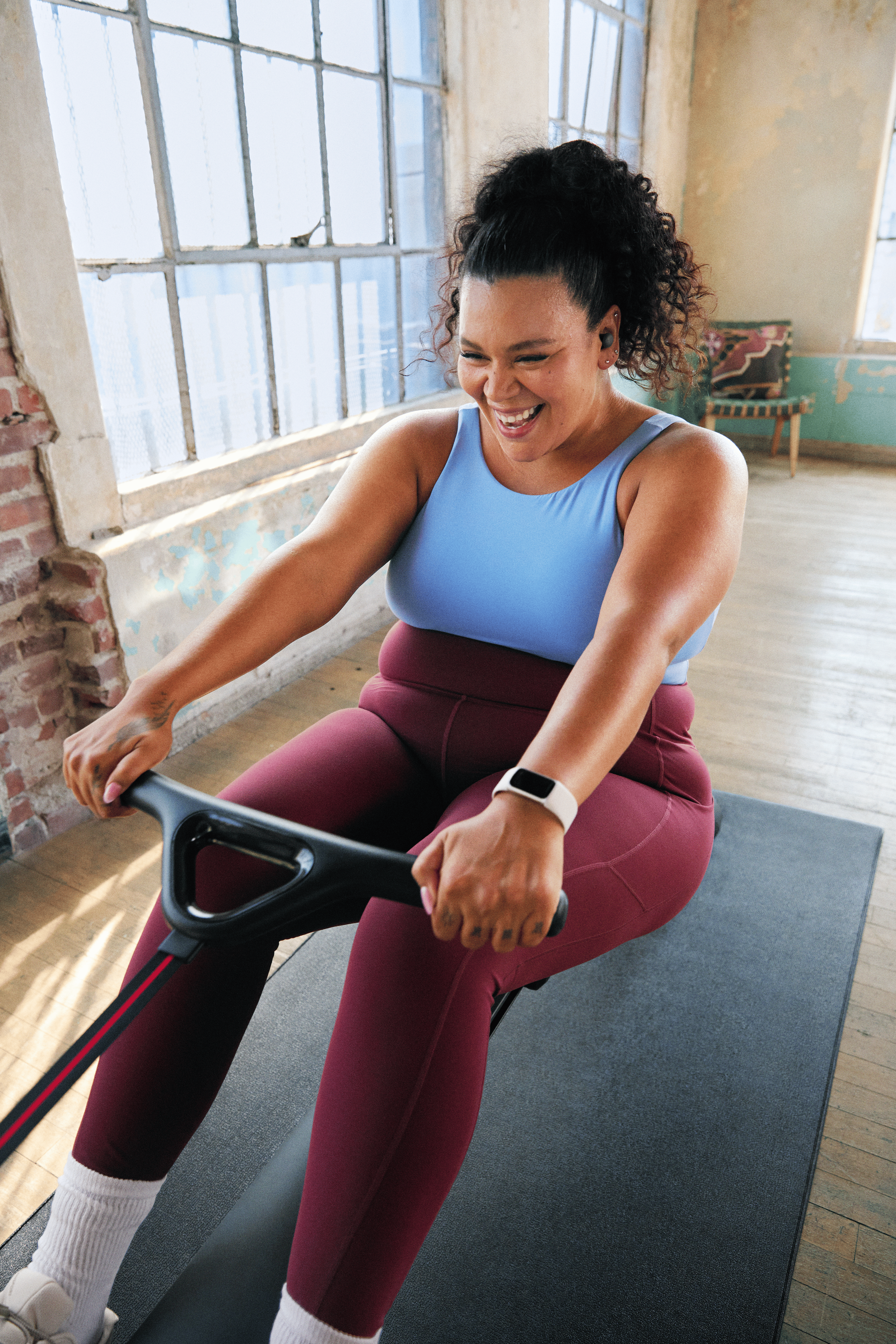
“Rowing is an excellent endurance and strength full body workout that has the added benefit of being low-impact,” says Peloton instructor Katie Wang. “This makes it an extremely efficient workout that’s manageable for a variety of fitness levels and ages.”
Wondering what, exactly, a rowing machine workout should look like? Do you just hop on and row, or is there more to it? Here’s everything you need to know about rowing machine workouts, including their benefits, a sampling of rowing workouts to try (for all levels), and how to incorporate them into your routine.
The Benefits of Rowing Machine Workouts
As Katie notes, rowing machine workouts offer a trove of benefits. And perhaps most importantly, rowing is easy on your joints, making it an accessible and safe cardiovascular exercise for most ages, body types, and ability levels. Here are a few other key benefits associated with rowing:
Boosts Heart Health: Rowing is an excellent way to improve your heart health and strengthen your cardiovascular system. If done consistently, rowing ensures that your heart, blood vessels, and blood are all benefiting, which keeps nutrients and oxygen pumping freely throughout your body. One 2023 study found that 12 weeks of rowing can significantly improve cardiorespiratory fitness.
Engages the Whole Body: Rowing engages a majority of the muscles in your body with every stroke, including your arms, legs, chest, shoulders, back, and core. Some studies have suggested that rowing can build muscle in untrained people, though it should be a complement to a strength training regimen, not the sole way you try to boost strength.
Increases Endurance: In fitness, endurance is the ability to sustain physical activity or exercise for a prolonged period. By engaging in rowing workouts, you’ll build your cardiovascular and muscular endurance as you push to maintain a steady pace (or just keep up the act of rowing) for an extended period of time, whether that’s 20 minutes or 60. This can help you perform other activities (such as walking, hiking, running, or cycling) for longer without tiring out.
Spares Your Joints: When you’re rowing, most of your weight is on your seat, and it’s positioned at the same level as your feet, which are in a fixed position. That’s important because it’s part of what makes rowing machine workouts low-impact; the joints that might feel the wear and tear (we’re looking at you, knees!) from high-impact cardio activities (such as running or dance cardio) are protected from bearing too much weight and enduring too much strain.

Peloton Row+
Work 86% of your muscles in just 15 minutes.
6 Rowing Machine Workouts to Try
Looking to do a self-guided rowing machine workout? Below, check out six different types of workouts for a range of experience levels.
Beginner Rowing Workout
“If you’re relatively new to rowing, I recommend starting with some 10- to 15-minute [sessions],” Katie suggests. Expect it to feel like a new skill—because it is. “Many of us have been lucky in this lifetime to have walked, run, or jumped on a bike since we were children,” Kate says. Few of us have rowed in our lifetime, so don't be discouraged if you feel a little uncertain on some of the cues, terminology, or movements after trying your first [session].” Spend a few minutes learning how to use a rowing machine and what strokes per minute (aka stroke rate) means, then try the beginner-friendly rowing workout below.
Here’s an example of a 15-minute beginner rowing workout:
Warm-up: 5 minutes at an easy effort (16–20 stroke rate)
Workout:
Row for 1 minute at an easy effort (16–22 stroke rate).
Row for 1 minute at a moderate effort (18–24 stroke rate; to increase the intensity, think about pushing harder, not just rowing faster).
Recover for 1 minute (keep rowing at a leisurely pace or take a break, drink water, etc.).
Repeat 3 times total.
Cooldown: Row for 1 minute, gradually decreasing the effort.
Interval Rowing Workout
If you want to get a quick and challenging cardio workout in, try a short and sweet high-intensity interval training (HIIT) workout. This workout style alternates high-intensity work intervals with periods of rest. To try an interval workout on a rowing machine, try the sample 20-minute routine below.
Here’s an example of a 20-minute interval rowing workout:
Warm-up: Row for 1 minute at an easy effort (16–20 stroke rate), then 1 minute at a moderate effort (18-22 stroke rate); repeat 2 times. Row for 20 seconds at a challenging effort (18-22 stroke rate), then recover for 1 minute.
Workout:
Row at a moderate effort (24–28 stroke rate) for 3 minutes, then a challenging effort for 1 minute (maintain the stroke rate; increase your pace). Recover for 1 minute. Repeat once more.
Row at challenging effort for 2 minutes. Recover for 1 minute. Repeat once more.
Cooldown: Row for 1 minute, gradually decreasing the effort.
Distance Rowing Workout
One great way to make rowing workouts a bit more advanced (and exciting) is by setting a distance goal. These can be lightning-fast 250-meter sprints or long-haul 2,000-meter races. Try the below 2,000-meter workout, note your finish time, and try to beat it after a few months of consistent rowing sessions.
Here’s an example of a 2,000-meter distance rowing workout:
Warm-up: Row for 3–5 minutes at an easy effort.
Workout: Row for 2,000 meters at a moderate pace (stroke rate 26–32), aiming to maintain a consistent pace.
Cooldown: Row for 1 minute, gradually decreasing the effort.
Endurance Rowing Workout
To build aerobic endurance, try a longer rowing machine workout of 30 minutes or more. While endurance rows might contain a handful of intervals, think of them like marathon training: You’ll stick to a steady-state split time (aka pace) that’s manageable, albeit slightly uncomfortable, for as long as possible. Typically, your stroke rate won’t vary dramatically throughout the workout.
Here’s an example of a 45-minute endurance rowing workout:
Warm-up: Row for 2 minutes at an easy effort (18–24 stroke rate), then row for 2 minutes at a moderate effort (maintaining the same stroke rate).
Workout:
Row at an easy effort for 3 minutes (18–24 stroke rate), a moderate effort (22–28 stroke rate) for 2 minutes, then an easy effort (18–24 stroke rate) for 1 minute. Recover for 1 minute. Repeat 3 times.
Row at an easy effort (18–24 stroke rate) for 4 minutes, a moderate effort (22–28 stroke rate) for 3 minutes, then an easy effort (18–24 stroke rate) for 1 minute. Recover for 1 minute. Repeat 2 times.
Cooldown: Row for 1 minute, gradually decreasing the effort.
Tabata Rowing Workout
Traditional Tabata workouts involve doing 20-second intervals of all-out work followed by 10 seconds of rest, then repeating this for eight rounds. This Tabata “set” takes four minutes total and can be an entire workout if you’re short on time, or you can rest for a few minutes then repeat the entire Tabata two to four more times for a longer (and seriously intense) workout. In the case of many rowing workouts, Tabata-style intervals may be included as part of a larger interval workout.
Here’s an example of a 20-minute Tabata-inspired rowing workout:
Warm-up: Row for 90 seconds at an easy effort (18–22 stroke rate). Row for 40 seconds at a moderate effort (20–28 stroke rate), recover for 20 seconds; repeat 3 times.
Workout:
Row for 40 seconds at a challenging effort (26–32 stroke rate), recover for 20 seconds. Repeat 4 times total, then recover for 90 seconds.
Row for 20 seconds at a maximal effort (23–29 stroke rate), recover for 10 seconds. Then row for 20 seconds at a challenging effort, and recover for 10 seconds. Repeat 3 times total.
Row for 1 minute at a moderate effort, then recover for 30 seconds.
Row for 1 minute at a challenging effort, then recover for 30 seconds.
Row for 1 minute at a max effort, then recover for 30 seconds.
Cooldown: Row for 1 minute, gradually decreasing the effort.
Power Drive Rowing Workout
Not all rowing has to be fast and furious. In fact, some of the most advanced rowing workouts rely on slow, powerful drives—between 20–23 strokes per minute. “Faster definitely doesn’t mean ‘better’ on the row,” Katie explains. “Rowing at a faster stroke rate can often lead to less power per stroke and form flaws, which overall means less efficiency. Working at a slower pace also allows for more time under tension, which is really where the strength portion of the workout comes into play.”
In a power drive workout, you’ll focus on making strong, powerful drives, attempting to bring down your split time with each pull. (Think of it like doing consecutive deadlifts: Your legs, back, and core go into hyperdrive for each strong pull.)
Here’s an example of a power drive workout:
Warm-up: Row for 3 minutes at an easy effort.
Workout: Do 10 powerful drives, then recover for 1 minute. Repeat 5–10 times.
Cooldown: Row for 1 minute, gradually decreasing the effort.


What to Expect During a Rowing Class
If you’re stepping into a rowing class for the first time—or cueing up a class on the Peloton Row or Peloton App—remember that there’s going to be a learning curve, and that’s OK. “Think back to the first time you rode a bike. It takes time, practice, and a willingness to learn,” Katie says. “And that’s the fun part—learning to move your body in a different way! There is something incredibly rewarding about mastering a new workout, so enjoy the journey.”
To give you an idea of what to expect, here’s what an instructor-led rowing class might look like:
Warm-Up: Rowing classes often include a short warm-up on the rower (about 3-5 minutes). You’ll start rowing at a low, slow intensity—perhaps working through a few form drills—to ease your body into the effort and prep it for the work ahead.
Main Workout: Next, you’ll progress into the meat of the workout, which will vary depending on what type of class you’re taking. If you’re doing an endurance row, you might lock into a steady pace and aim to hold onto that for the bulk of the class. If you’re taking a HIIT class, you’ll alternate powering through some high-intensity intervals, where you turn up the intensity for a set number of seconds or minutes, with recovery periods. During any rowing class, instructors will cue you to row faster or slower (that’s your stroke rate) or with more or less power in your stroke (measured by your pace) to change the intensity. They’ll offer cues to help you dial in your form, explain how hard each effort should feel, and explain which on-screen metrics you should be looking at, including stroke rate, split time (pace), distance, power output, and more.
Cooldown: At the end of the class, the instructor may cue you through a short cooldown (usually less than 5 minutes), where you row at a lower intensity before coming to a stop. To wrap up, the instructor may also lead you through a few stretches on the rower.
How Long Should You Use a Rowing Machine During Each Workout?
How long you should use a rowing machine depends on your personal fitness level and goals. For example, as Katie says above, beginners should start with shorter rowing workouts, ranging from 10–15 minutes. If you’re doing rowing machine workouts on the Peloton Row or using the Peloton App, the instructor-led classes range from five to 60 minutes.
If rowing is your main form of exercise, keep in mind that the World Health Organization (WHO) recommends adults get at least 150 minutes of moderate-intensity exercise or 75 minutes of high-intensity exercise (or an equivalent combination of the two) each week. So, for example, you may want to complete a 30-minute moderate-to-high-intensity rowing workout into your routine three or four times per week.
If you finish a workout and find you have a little energy left in the tank, Katie recommends trying Peloton’s Extra 5 rowing classes, which are designed to be tacked on to a workout after you’re already thoroughly warmed up. And no matter how long you decide to row for, just remember to save a few minutes before and after your workout for a warm-up and a cooldown.
How Often Should You Use a Rowing Machine?
You can use a rowing machine as often as you’d like—the best frequency for you will ultimately depend on your schedule, goals, current fitness level, and experience with rowing. As mentioned above, if rowing is your main form of exercise, you’ll want to do enough to hit the WHO’s recommended cardio quota of at least 150 minutes of moderate-intensity exercise or 75 minutes of high-intensity exercise (or an equivalent combination of the two) each week. You could hit that with one or two days of long endurance rows, or lots of shorter rowing workouts spread through four to six days per week.
If you’re a beginner or coming back to rowing after a break, you want to ease yourself in. Doing too much too soon can leave you susceptible to injury or super sore, which can get in the way of sticking with your routine. “Also, make sure that you’re supplementing with strength training and recovering properly—mobility work, foam rolling, and stretching will go a long way, especially when you're starting out with a new workout,” Katie says.
Finally, remember that there is such a thing as too much cardio; experts recommend taking at least one rest or recovery day per week, and watching for signs of overtraining, including persistent fatigue, insomnia, frequent illness, and mood disturbances.
Peloton Rowing Workouts
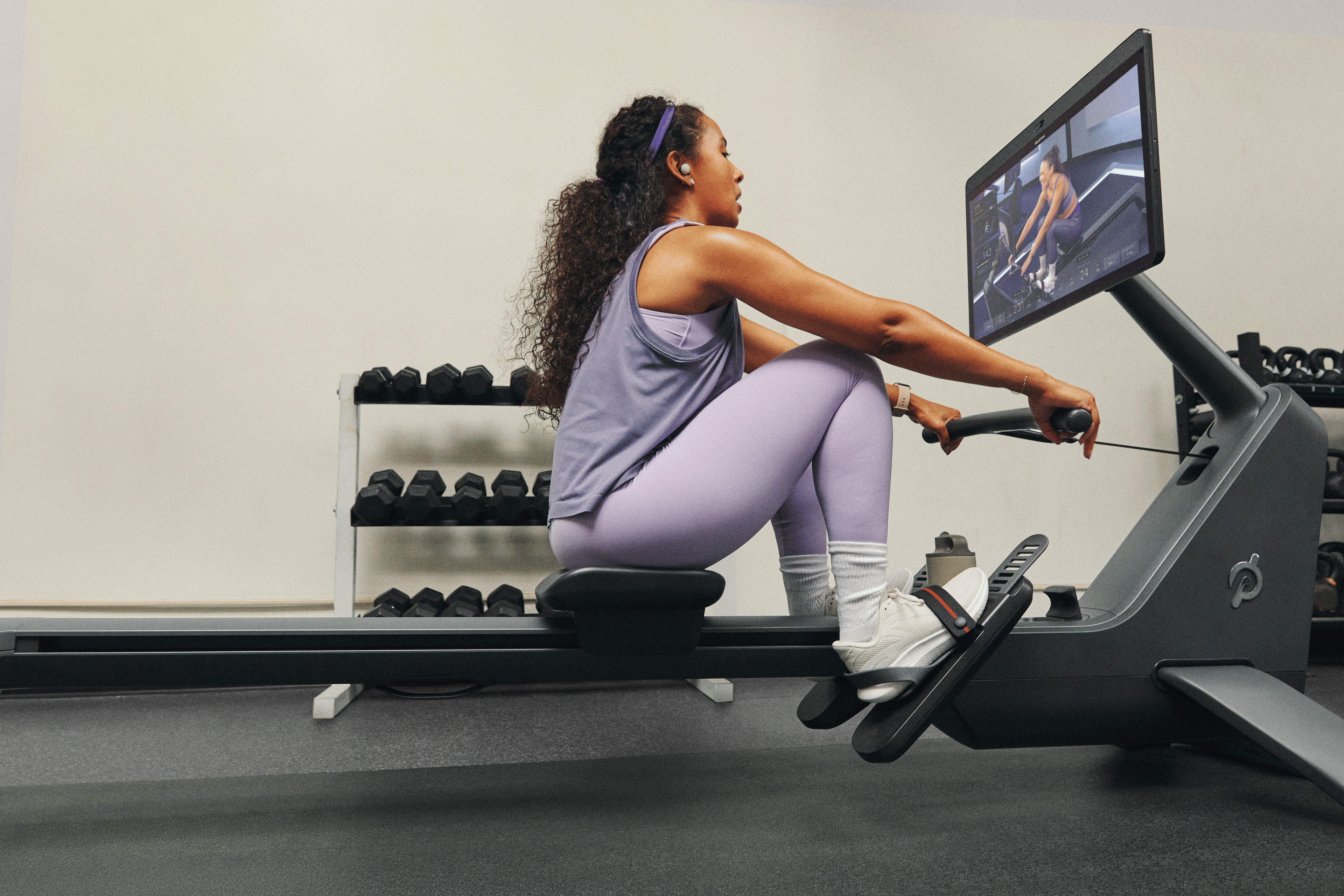
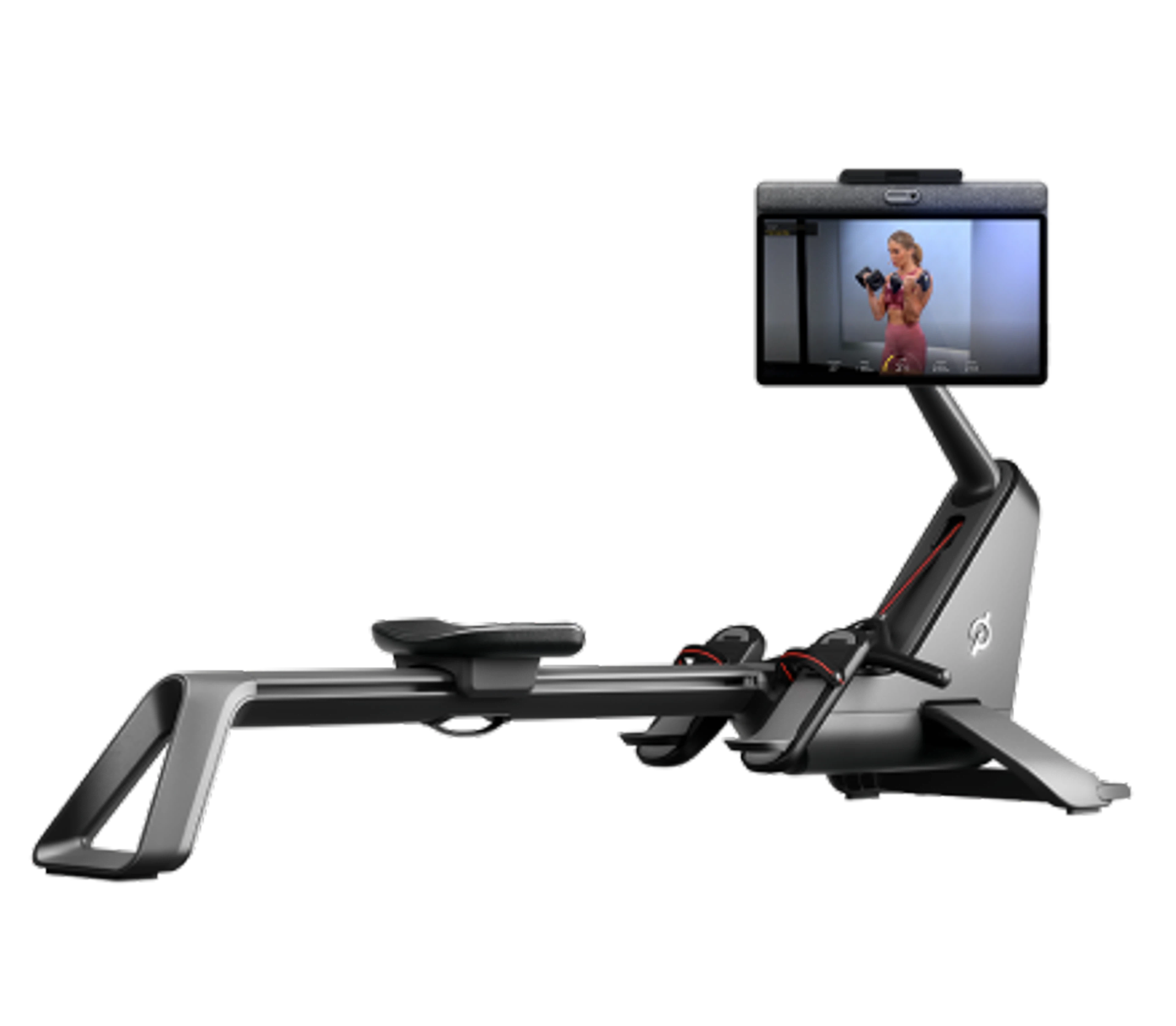
To take advantage of Peloton’s rowing classes, you can hop on a Peloton Row or cue up a class on the Peloton App. “Our rowing content is expansive, ranging from 5- to 60-minute rowing classes,” Katie says. “Classes vary from music themed, to intervals, endurance, HIIT training, warm up, cool down, and specific form and drills classes if you’re looking to target one part of your stroke.” If you’re working out on the Peloton Row, there are also scenic classes that allow you to virtually row all over the world with or without guidance from an instructor.
If you’re new to rowing, Katie specifically recommends the three-week You Can Row Program. “It’s an excellent starting point for a beginner rower,” she says. It includes three workouts per week, five to 30 minutes in length, and includes rowing workouts, form and drills sessions, and stretch classes.
Here’s a breakdown of the main types of rowing classes you can take with Peloton:
Warm Up and Cool Down Rows: These 5- to 10-minute rowing classes are designed to be done before or after your main workout.
Beginner and Advanced Beginner Rows: Katie recommends beginners check out the Beginner Row classes, which are 15–20 minutes long and include some drills and moderate efforts to help you find your flow on the machine. Once you’re somewhat comfortable, try any of the Advanced Beginner Row classes, which take it up one notch (incorporating more advanced metrics and cues) while still being beginner-friendly.
Interval Rows: Interval rowing workouts leverage workout styles like HIIT and Tabata to push you through challenging intervals and periods of rest.
Endurance Rows: These classes range from 20 to 60 minutes long and include longer intervals designed to build aerobic endurance.
Music and Theme Rows: Row to the beat of your favorite music with rowing workouts themed around specific artists, genres, and special events.
Row Bootcamp: “You can also make your rowing workouts more advanced by trying our Row Bootcamps, which add the element of strength training in between rowing intervals,” Katie says. These classes alternate chunks of time on the rowing machine with strength exercises on the floor. It’s a great way to log cardio and strength training done in one workout when you’re crunched for time, or just want to push yourself with a particularly tough workout.
Form & Drills Classes: These are 10- and 20-minute classes that zero in on mastering rowing form. Some classes focus on specific phases of a rowing stroke (i.e., the catch or drive), while others focus on perfecting your stroke as a whole.
Not sure where to begin? “I always recommend starting with some form and drills classes, some beginner classes, and then also checking out some music-focused classes,” Katie says,” so you can learn the form, the basics, and then apply it to some fun music you love.”


This content is for informational and educational purposes only and does not constitute individualized advice. It is not intended to replace professional medical evaluation, diagnosis, or treatment. Seek the advice of your physician for questions you may have regarding your health or a medical condition. If you are having a medical emergency, call your physician or 911 immediately.

Our Products
Level up your inbox.
Subscribe for a weekly dose of fitness, plus the latest promos, launches, and events.
By providing your email address, you agree to receive marketing communications from Peloton.
For more about how we use your information, see our Privacy Policy.