Halfpoint Images / Moment via Getty Images
Ears Hurt After a Run? You’re Not Alone—Here’s Why It Happens
If you’re moving your legs but feeling it in your ears, experts have several possible explanations—and solutions.
By Anna Medaris•
Why Do My Ears Hurt After Running?
Is It Normal for Ears to Hurt After Running?
How to Prevent Your Ears from Hurting After Running
The Takeaway
When you lace up your shoes and hit the road for a run, you probably expect your legs to fatigue, your skin to sweat, and your heart rate to quicken. But you probably don’t expect your ears to hurt after running. After all, what do they have to do with the drumming of your feet far down below?
While directly, the answer is “not much”; indirectly, there are plenty of reasons your ears may be implicated in your running habit. “This is not an unusual topic to hear about,” says Peter Ashman, MD, a runner and otolaryngologist at ENT and Allergy Associates. “Luckily, there are plenty of solutions and remedies for it.”
Read on to learn more about the various causes—and solutions for ear pain on (and after) the run.
Why Do My Ears Hurt After Running?
There are several key reasons your ears might hurt on or after a run.
1. It’s Cold or Windy Outside
The number-one reason for ear pain while running is exposure to cold, wind, or both, Dr. Ashman says. That’s in part because the ear canal is lined by a very thin layer of skin, with just cartilage and bone right beneath, he explains. “That tissue is very sensitive, and when it gets cold or windy, it’s going to cause those nerve endings to fire and the blood vessels to constrict, and it’s going to cause a lot of pain,” Dr. Ashman says.
In that sense, cold weather only exacerbates what already happens when you exercise: Your body shuttles oxygen-rich blood to the areas that need it most—in this case, your legs, says Lauren E. Borowski, MD, a primary care sports medicine specialist at the NYU Langone Sports Medicine Center. “There are very few muscles in your ears, so a lot of that blood flow is going elsewhere.” In rough elements in particular, that can hurt.
2. You’re Tensing Your Jaw
Another culprit behind ear pain after running is a clenched jaw. “Most people aren’t even aware of it because they're focused on running, and it’s a very intense activity,” Dr. Ashman says. But when your body is stressed—even in a healthy way like via exercise or in a cold plunge—the instinct to tense your jaw or grind your teeth can kick in. “That can also trigger jaw and ear pain, which is very common,” he says.
In fact, in one small study, researchers found that fitness trainers who regularly weight train were more likely to have teeth-clenching habits than their more sedentary counterparts. They also had more tooth cracks, and less range of motion when opening their mouths.
3. Your Headphones Are the Problem
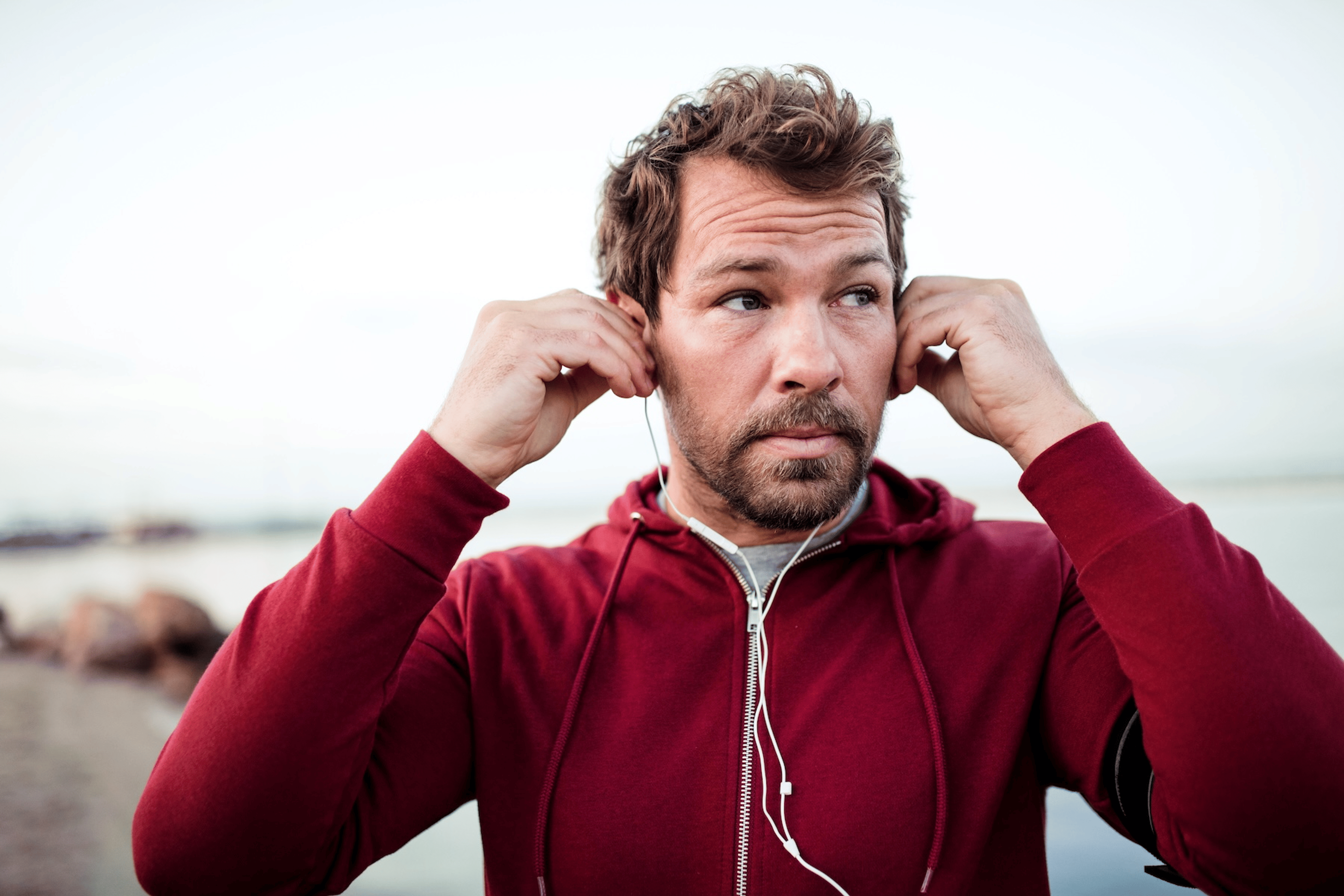
Jogging along to music or an outdoor Peloton class can keep your motivation high on long runs, but if your headphones or ear buds don’t fit right, your ears may suffer. “If the earbuds get stuck in your ear and they’re not fitting comfortably, they’re going to push on that sensitive tissue in the ear canal,” Dr. Ashman says. “And so…it’s going to trigger pain.”
4. The Pain Is Coming from Somewhere Else
Ear pain can originate elsewhere in the body, like the throat or sinuses. In those cases, it’s called “referred pain,” and is pretty common, Dr. Ashman says. “Sometimes when you're running, your neck muscles get really strained or your throat gets really dry, and that can all start inflaming all the tissues in the head and neck area,” he says. Because those nerve endings are connected, it can lead to pain in the ear as well.
5. You Have a Related Condition
Similarly, ear pain can stem from sickness, allergies, or a sinus infection, Dr. Borowski says. Particularly as we head into winter, “plenty of people will have issues that come up with congestion, [like] having their ears feeling like they’re clogged,” she says. Running might make the discomfort more noticeable, though low-intensity, brief exercise like a short jog may actually help open your nasal passages and relieve congestion, per the Mayo Clinic.
Ear infections and ear wax buildup are possible pain triggers too, Dr. Ashman adds. “Sometimes earwax pushes against the eardrum or the ear canal, and if you start running, it can move around and cause pain,” he says.
Is It Normal for Ears to Hurt After Running?
While Dr. Ashman says that post-run ear pain isn’t uncommon to hear about, the science on this particular topic is sparse—so it’s hard to say for sure just how prevalent running-related ear pain is. And patients rarely visit Dr. Ashman and Dr. Borowski specifically for that issue; rather, the doctors mostly come across it while working with runners on something else.
Some research (albeit relatively old), however, does address ear pain in athletes of all stripes. In it, researchers say that ear problems in sports aren’t common, but the most frequent issues are outer ear infections, abnormal bony growths in the canal, and middle-ear infections. Athletes in contact sports can also be prone to head traumas that damage the ear, and divers can deal with pressure-related damages and illnesses.
How to Prevent Your Ears from Hurting After Running
To stave off ear pain after running, you first need to identify what’s causing it. If it seems to be cold, the solution is simple: wear earmuffs or a headband, Dr. Ashman suggests, and remember to warm up before hitting the road. You can always move your runs inside on a Peloton Tread too.

Peloton Treadmills
Two treadmills. One Peloton experience.
But what if your ears are still hurting after a summer or indoor run? Try to notice if you’re tensing your jaw, and if so, give it several stretches or even try wearing a mouth guard while you stride, Dr. Ashman suggests. Interventions like physical therapy or botox for TMJ (temporomandibular joint) disorders might be an option too, the doctors say, so long as your healthcare provider says it’s right for you.
If headphones seem to be the issue, try a different variety, like one that sits over the ear if you’re used to ear buds—or the reverse if your traditional headphones are irritating you, Dr. Borowski says. And be sure to disinfect earbuds after a workout.
To stave off sickness- or allergy-related ear pain during runs, Dr. Borowski generally recommends trying an over-the-counter nasal decongestant before you run—so long as you don’t have heart rate or blood pressure issues, since some products can have cardiovascular side effects. Also avoid this route if you have epilepsy or thyroid disease. “Just be mindful and talk to your doctor about whether it’s OK to take a decongestant before working out,” she says. (And if your illness is below the neck—that is, you have issues like a hacking cough, full body aches, or a fever—it’s best to rest and skip exercise altogether, she adds.)
Finally, if you can’t solve your ear pain issue, talk to your primary care physician, who can inspect your ears and direct you to a specialist like an ear, nose, and throat (ENT) doctor if necessary. “They can kind of clue you in as to how serious this is…and what steps you need to take forward,” Dr. Borowski says.
The Takeaway
Ear pain after running might come as a surprise, but it’s a somewhat common phenomenon, experts say. Typically, the cause—and solution—is straightforward. For example, if your ears only hurt during cold-weather jaunts, you probably need some sort of covering to keep your ears warm. If it’s your headphones that are aggravating those sensitive tissues and bones, try a different style (or none at all). And if you’re tensing your jaw as a reaction to a tough workout, make a point of consciously noticing and stretching or massaging it along the way.
For more complex concerns, such as a suspected TMJ disorder or an infection, reach out to your healthcare provider for help. “The only cause for concern is if you have persistent issues that don’t resolve with these solutions, symptoms besides just the temporary pain,” such as significant ear pressure or hearing changes, Dr. Ashman says. “That’s when you should definitely stop and see someone to have your ears checked out.”
Related Articles

Run
Running Can Feel Really, Really Challenging. These 12 Benefits Prove It’s Totally Worth It

Run
Don't Let the Cold Get In the Way of Your Run. Here's How to Effectively Navigate Icy Temperatures

Run
What to Wear Running In Any Temperature, According to Experts

Run
The Benefits of Running on a Treadmill (Plus, When to Head Outside Instead)
This content is for informational and educational purposes only and does not constitute individualized advice. It is not intended to replace professional medical evaluation, diagnosis, or treatment. Seek the advice of your physician for questions you may have regarding your health or a medical condition. If you are having a medical emergency, call your physician or 911 immediately.
Level up your inbox.
Subscribe for a weekly dose of fitness, plus the latest promos, launches, and events.
By providing your email address, you agree to receive marketing communications from Peloton.
For more about how we use your information, see our Privacy Policy.