Frazao Studio Latino via Getty Images
How Exercise Can Help You Thrive Through Menopause—and What Your Routine Should Look Like
Learn how working out during and after menopause can help you feel stronger and live longer.
By Karla Walsh•
How Menopause Impacts Your Body
The Benefits of Exercising Through Menopause
How Much Should You Exercise During and After Menopause?
The Best Types of Exercise to Do While Going Through Menopause
How to Exercise During and After Menopause
5 Tips for Starting a Menopause-Minded Exercise Routine
While we might feel more comfortable talking about the latest sports scores or reality TV show drama, it’s about time we spend more time talking about—and normalizing—menopause. For nearly half of the human population, menopause is a natural part of life. More than 1 million women in the United States alone go through it each year.
While hot flashes often dominate conversations around menopause, something else sweat-inducing—exercise—doesn’t get as much attention. The truth is, during and after menopause, exercise becomes arguably more important than ever. It can help you manage symptoms and also plays a key role in helping you stay healthy and move well for life.
Exercise—along with proper recovery, hydration, sleep, and nutrition—will help maintain and even increase bone density and muscle mass, and improve heart health, says Peloton instructor Christine D'Ercole. “This will improve quality and length of life as risk of heart disease and bone fractures increases dramatically for women in this stage of life,” says Christine, who leads classes in Peloton’s new Menopause Health collection created in partnership with Respin Health, an organization aimed at revolutionizing menopause care.
Wondering how your workouts should change during and after menopause, or what the ideal menopause exercise routine looks like? To help you stay strong and vibrant—and to support a long, healthy life—we spoke to fitness experts to score their best menopause exercise tips. Here’s everything you need to know.
How Menopause Impacts Your Body
Menopause is the official end of your menstrual cycle, and typically occurs in women between age 45 and 55. During perimenopause (the stage leading up to menopause and the end of your period, which can last for years), through your last menstrual cycle, and into postmenopause, everything from your bones to body temperature undergoes notable changes. It’s an era filled with many physical, mental, and emotional shifts.
You’ve probably heard about hot flashes—sudden, brief bouts of body warmth, flushing, and sweating—which are one common feature of menopause that might make workouts feel like more of a drag. Besides those body temperature swings and the absence of a period, menopause comes with a few other changes that may impact your exercise routine during this lifestage.
Bone Loss. Bone loss is a normal part of aging, regardless of gender. Menopausal women have to deal with a double whammy, though, because a substantial drop in estrogen is responsible for many menopausal symptoms, including a decrease in bone strength. “Accelerated bone loss after age 50 puts women at risk for serious injury from a fall,” Christine explains. “Women suffer from hip fractures about three times more often than men. When fractures happen later in life, women are more likely to be immobilized for a long period of time, further weakening the musculoskeletal system, limiting recovery, and possibly compromising life expectancy.”
Muscle Loss. After age 30, adults lose about 3 to 8 percent of their lean muscle mass each decade, research shows. Without targeted intervention (such as strength training), this can lead to a slower metabolism and an increase in body fat percentage, explains Heather Baker, a physical therapist at Swedish Hospital—Endeavor Health. Research suggests that older adults with less muscle tend to be at higher risk for falls too.
Fat Gain. Research shows that an increase in fat mass often occurs in lockstep with menopause as a trickle-down effect of the hormonal changes that happen during this time. This includes an increase in the deep visceral fat that has been linked to a higher risk for chronic disease, Christine says.
Mood Changes. Not all hormone levels decline during and after menopause. Many do, though, including serotonin, a neurotransmitter and hormone that helps regulate mood. As a result, some women report feeling more irritable, anxious, or depressed during this stage of life.
Sleep Challenges. Scientists have found that menopausal women may wake up more frequently throughout the night and stay awake longer during these interruptions.

Peloton App
Access thousands of classes with no equipment needed.
The Benefits of Exercising Through Menopause
Exercise is an incredibly useful tool for managing symptoms associated with menopause—including all five of the changes listed above. It plays a powerful role in helping the body adapt to hormonal changes, explains Catherine Powell, doctor of physical therapy and owner of Powerful Physical Therapy.
“The biggest benefits of exercising through menopause are giving yourself the best chance for preventing [the loss of], maintaining, and even increasing bone density and muscle mass, as well as improving heart health,” Christine says.
Resistance training can be especially helpful for maintaining bone density and helping to reduce the risk of osteoporosis. Weight-bearing cardio exercises—any exercise where your feet and legs are supporting your body’s weight, including running, walking, hiking, and playing pickleball or tennis, for example—are also key for bone health.
Staying active is also a boon for the metabolism, adds Sarah Cash Crawford, doctor of physical therapy and founder of Anchor Wellness and WAVE Physical Therapy. Exercise benefits metabolism in a few different ways. First, you’ll burn more calories while you’re working out. Second, by increasing muscle mass, your metabolism will be more active at rest too. This muscle mass also comes in clutch to support strength, agility, and balance, all factors related to lower risk for falls.
The benefits of exercising through menopause aren’t just physical. Regular movement also supports mood and mental health by stabilizing energy levels and easing anxiety and irritability, Crawford says. Plus, there’s a strong connection between exercise and better sleep; many women notice they sleep better when they stay active.
Perhaps most importantly, during menopause, exercise can offer a sense of control and connection to your body during a time that can often feel unpredictable, Crawford explains: “For many women, exercise offers a much-needed outlet for community and social connection, something that can uplift both emotional well-being and motivation.”
How Much Should You Exercise During and After Menopause?
Generally speaking, the amount of exercise recommended during menopause aligns with the standard guidelines for all adults: That’s at least 150 minutes of moderate-intensity or 75 minutes of vigorous-intensity aerobic exercise per week (or an equivalent combination of the two), according to the World Health Organization (WHO) guidelines, Crawford says.
The National Academy of Sports Medicine (NASM) and Powell also recommend tacking on at least two days of strength training, being sure to hit all major muscle groups throughout the course of the week. It’s also helpful to incorporate flexibility, mobility, and balance work when possible to support joint health and prevent falls.
Keep in mind that “consistency matters more than perfection, so starting with what’s manageable and building from there is key,” Crawford says. “And don’t underestimate the value of everyday movement, such as walking, gardening, or taking the stairs. All contribute to overall activity and can make a meaningful difference over time.”
South_agency via Getty Images
The Best Types of Exercise to Do While Going Through Menopause
Now that you know why and how much exercise to do, let’s dive into how to work out during menopause. Your best bets include the following.
Strength Training
It’s clear that strength training of any kind is beneficial, Baker says. It builds muscle mass, which leads to a higher metabolism and greater caloric burn after your workout and even at rest. Resistance training also bolsters bones.
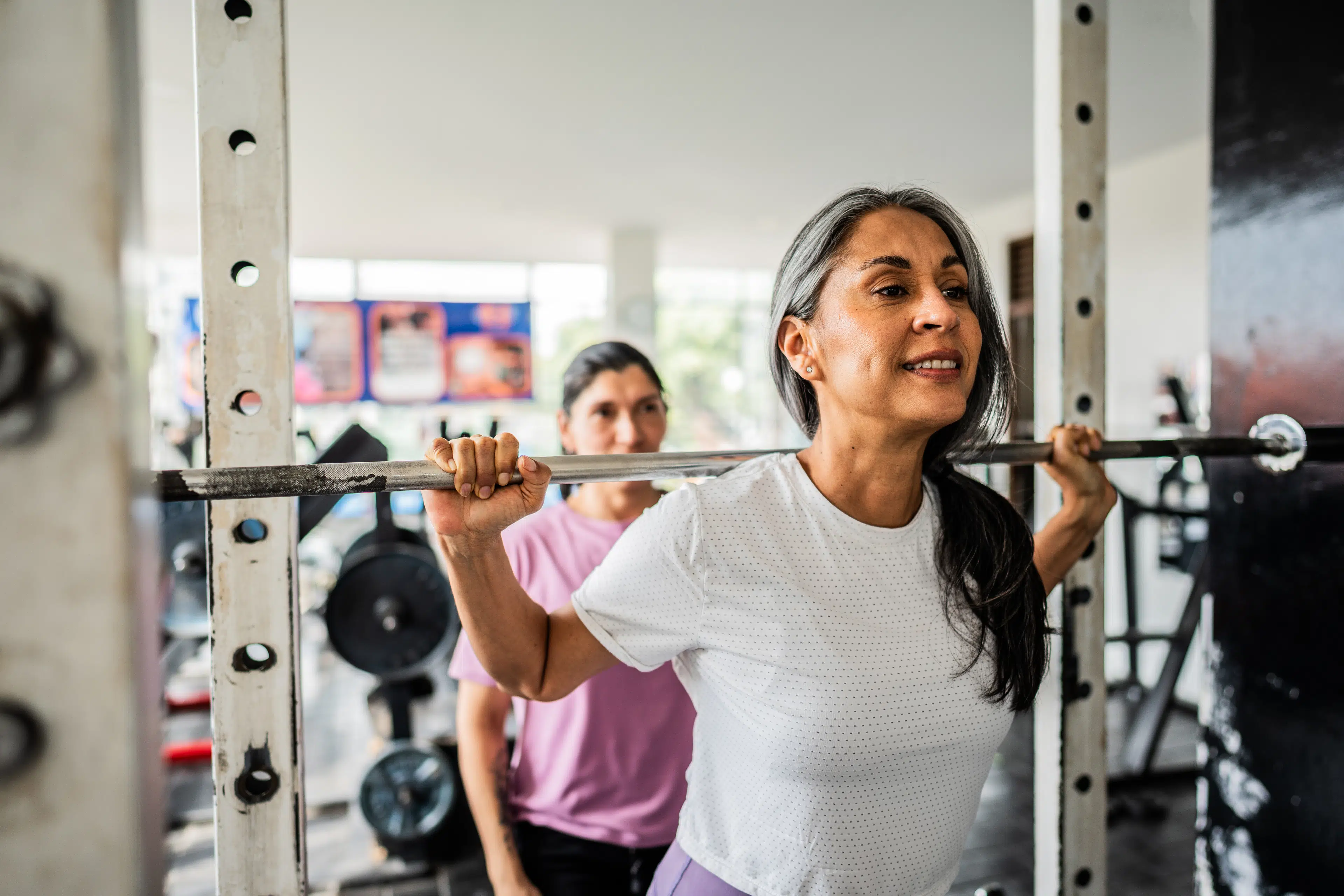
Aim to hit all of the major muscle groups, either by doing full body strength workouts two or three times per week, or by following a workout split (which divides up your strength training by muscle group). Two key moves to include? Squats and planks. “Squats are a great lower extremity strengthener that carries over into many functional tasks,” Powell says. “Planks are amazing for core strength and shoulder stability. Both of these factors will help your body in all other strength and cardio exercises.” Plus, a strong core promotes better balance and posture, which can help reduce the risk for falls.
Walking
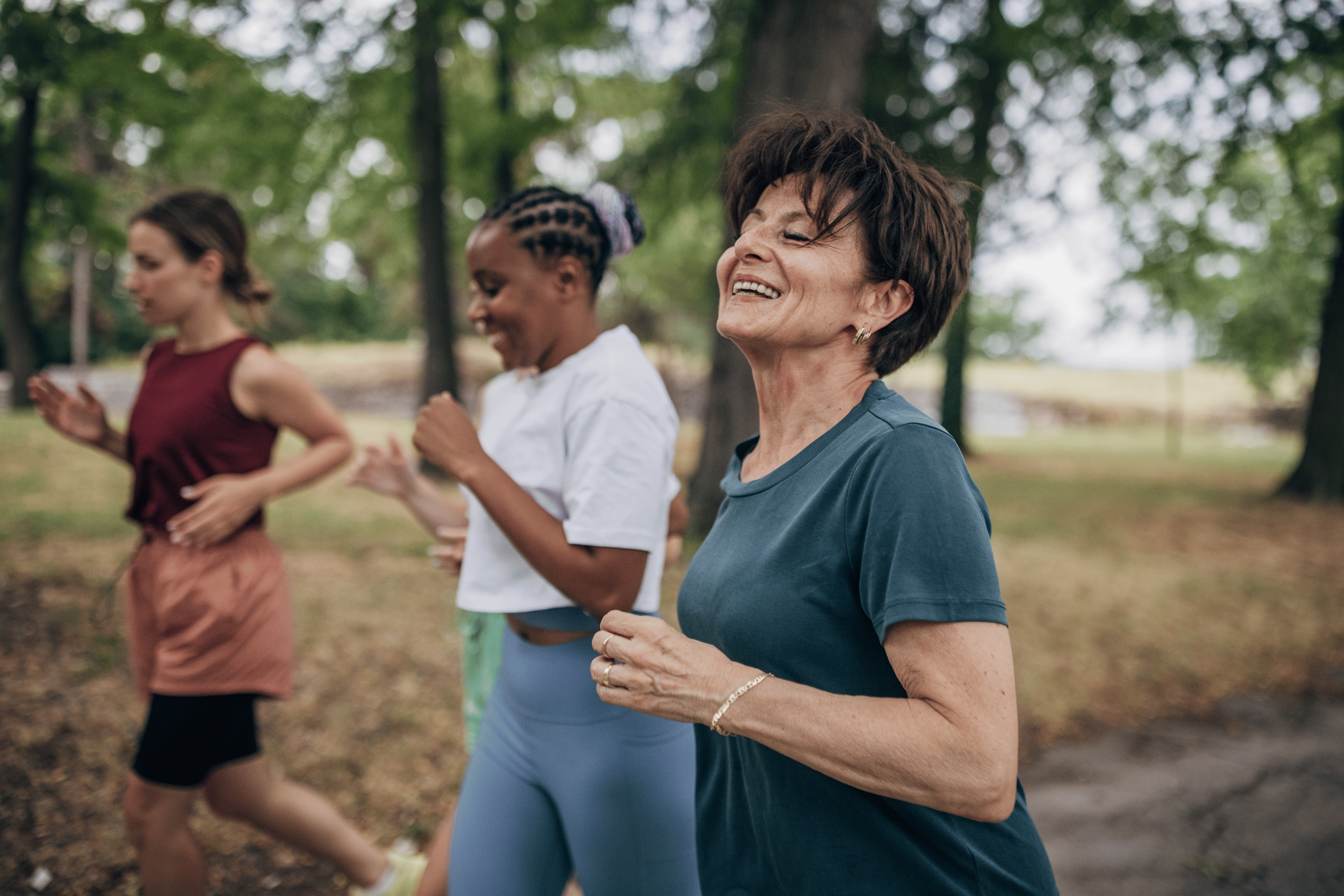
Walking is a great way to support heart health, weight regulation, and inch you closer to that goal of 150 minutes of aerobic activity per week, Crawford says. To increase the challenge and potentially also the bone-health-boosting benefits, you can also walk with a weighted vest.
“Cardiovascular exercise, such as walking, is incredibly helpful for heart health, blood sugar regulation, and a myriad of other health conditions, but it should not be your only form of exercise,” Baker says.
Mobility and Flexibility Training
Estrogen also plays a pivotal role in the health and mobility of muscles, tendons, and ligaments. Because levels of this hormone drop during menopause, women often report an increase in muscle tightness and generalized stiffness, Baker explains. “Adding stretching and mobility work will combat this experience, improve comfort, and help to maintain flexibility,” she says.
For a balance boost, to help tame stress, and potentially promote better sleep, consider other gentle mind-body movement practices like yoga, Pilates, or Tai Chi, Crawford adds.
Interval Training
Scientists have found that high-intensity interval training (HIIT) workouts might be the best way to get cardiovascular exercise around and after menopause, Baker says. Cycling is a particularly efficient way to do interval training, since it’s low-impact (i.e., easy on your joints) but can still help you reach the high intensities that help reduce visceral and total fat mass.
Christine is a big fan of sprint interval training (SIT), which is one particular type of HIIT. It often involves doing work intervals of 30 seconds or less with 2- to 4-minute recovery intervals in between, she explains. Whether you’re running, cycling, rowing, or doing another activity, sprint intervals activate fast-twitch muscle fibers, which tend to be the first to go with age, Christine says. These are the quick-reaction muscle fibers that help us respond quickly, such as reacting during a potential slip or fall. “Activating fast-twitch fibers also activates mental tenacity, which is an important quality for facing challenges,” Christine says. (On a Peloton Bike or Bike+ or the Peloton App, look for Christine’s Sprint Interval Training collection, which includes cycling classes that use this training method.)
All that said, HIIT is effective because it’s quite intense. If you’re new or returning to exercise, for the first two months, start with walking or other moderate-intensity cardio, body weight strength training, mobility, and flexibility. Then once you feel steady on your feet and ready for the next challenge, start sprinkling in one to two HIIT workouts per week and consider picking up some weights.
How to Exercise During and After Menopause
Ideally, you’ll include all of the above elements in your exercise routine. Christine emphasizes heavy strength training and interval training as the most important ingredients. When combined with complementary lower-intensity recovery and endurance workouts, you’ll get “a balanced routine that stimulates cognitive function as the body manages functional stress and load,” Christine says.
Below, Christine offers this example of what a balanced week of workouts might look like during menopause. Remember to warm up and cool down before and after every sweat session, she adds.
Monday: 20-minute SIT ride
Tuesday: Upper body and core strength training
Wednesday: 20-minute SIT ride
Thursday: Lower body and core strength training
Friday: 20-minute SIT ride
Saturday: 20-minute recovery ride
Sunday: Rest
Keep in mind that this is just a jumping-off point. For a personalized exercise recommendation, it’s valuable to consult with your doctor, a personal trainer, or a physical therapist to determine what’s safe for your body and medical conditions, Powell says.
For more guidance, check out the Menopause Health collection in the Peloton App or on a Peloton device. The collection features strength, cardio, and HIIT classes curated for people in perimenopause through postmenopause.
Try Classes from the Menopause Health Collection on the Peloton App


5 Tips for Starting a Menopause-Minded Exercise Routine
It can feel daunting to stick to a routine that feels like a “must” rather than a “want,” so the experts here first and foremost recommend experimenting to find which types of exercise you enjoy, and using that to guide your routine.
“Movement should feel good! Enjoyment is what makes it sustainable,” Crawford says. Dancing, gardening, and walking with your dog all “count.” Something as simple as a 10-minute daily walk is a strong foundation, Crawford continues: “Focus on creating a routine you enjoy and build from there.” As you do, remember to keep the following in mind.
1. Start slow and steady.
If you’re new to exercise, especially strength training, progress slowly and strategically. “If you’re just starting out, it’s important to build your base,” Christine says. For the first 6–8 weeks of strength training, she recommends building endurance by lifting lighter weights for more reps. “As your body adapts, you’ll find the weight that was challenging a couple of weeks ago becomes more comfortable, even easy,” she says. That’s how you’ll know you’re ready to bump up the amount of weight you’re lifting.
Whether you’re resistance training, cycling, stretching, or otherwise, “listen to your body. Don’t fall into the mindset that more is always better, as overtraining can worsen fatigue and stress,” Crawford advises. If you notice new or lingering pain, or if anything else feels “off,” consult your doctor or a physical therapist.
2. Connect with others.
You don’t (and shouldn’t) go through this alone. Seek out an accountability partner, healthcare provider, coach, trainer, or other people navigating exercise during menopause. “The community you find by encountering like-minded individuals in your peer group goes a long way towards motivating you to keep showing up, for yourself and for your friends,” Christine says. “All of this supports living a longer, more fulfilling life,” Christine says.
To share in community with other Peloton Members and get more information from Peloton instructors and Respin menopause experts, join the dedicated Menopause Health Team on the Peloton App.
3. Be consistent, yet flexible.
Especially during menopause, energy levels and mood can vary by the day. “Try to stay consistent, even if it means shorter sessions. Small efforts done regularly are far more effective than sporadic, intense workouts,” Crawford says. Know that you’ll miss some days, and that’s OK. “Be flexible with yourself and get back on board as soon as possible,” Christine says.
4. Prioritize recovery.
Rest is just as important as movement—and some weeks, you’ll need more recovery than others, Christine says. “Move into this work patiently. Breathe. Protect yourself from injury by moving mindfully,” she advises. Be sure to carve out at least one full day each week for passive recovery (aka complete rest). Add another day or two per week of active recovery (think: gentle practices like mobility, stretching, or walking) if you’re just getting started or are feeling overly sore.
5. Zoom out on your well-being.
As your body changes, it can impact your self-esteem in countless ways, “from your ability to move freely to how your clothes fit,” Christine says. Mindful movement during menopause can help you stay more connected to your body, feel better, and promote overall wellness—but it can’t do everything.
“Hydration, rest and recovery, sleep hygiene, and managing our self-talk will also help you navigate the terrain of menopause to be your best self,” Christine says. “With self-care and self-respect, we can get stronger, fiercer, braver, louder, and wiser as we age.”
Related Articles

Health
8 Ways to Prioritize Self-Care During Menopause (and Why That’s So Important)

Cardio
This Type of Exercise Is Essential for Bone Health—Here's What You Need to Know

Health
Why Nutrition Is So Important During Menopause, Plus 7 Tips from Dietitians and Doctors

Health
How Much Exercise Do You Need to Improve Longevity? (Hint: It's Not As Much As You Think)
This content is for informational and educational purposes only and does not constitute individualized advice. It is not intended to replace professional medical evaluation, diagnosis, or treatment. Seek the advice of your physician for questions you may have regarding your health or a medical condition. If you are having a medical emergency, call your physician or 911 immediately.

Level up your inbox.
Subscribe for a weekly dose of fitness, plus the latest promos, launches, and events.
By providing your email address, you agree to receive marketing communications from Peloton.
For more about how we use your information, see our Privacy Policy.