How to Get Comfortable During Fish Pose So You Reap All the Heart-Opening Benefits
Stretch open your chest, improve posture, and breathe easier with Matsyasana.
By Ingrid Yang•
What Is Fish Pose (Matsyasana) In Yoga?
The Benefits of Fish Pose
How to Do Fish Pose Properly
Variations and Modifications for Fish Pose
Tips to Keep In Mind When Doing Fish Pose
Who Should Avoid Fish Pose
How to Incorporate Fish Pose Into Your Yoga Practice
The Takeaway
After a day spent curled over a laptop or scrolling through your phone, Fish Pose (Matsyasana) can feel like a quiet miracle. Your chest lifts, your shoulders melt back, and suddenly there’s more room to breathe. It’s the antidote to slouching; the posture that reminds your body what openness feels like.
Despite how dramatic it looks, Fish Pose isn’t about bending yourself into extremes. With the right props and a little guidance, it can be one of the most restorative shapes in yoga. It opens the heart and, when done thoughtfully, serves as a gentle release for both your body and mind.
Peloton instructor Mariana Fernández loves teaching Fish Pose for exactly this reason. “When you see it, you might think you have to contort yourself,” she says. “But it’s one of the most beneficial poses. I include it in my Focus Flow: Healthy Back classes because it really works all parts of the spine.”
What Is Fish Pose (Matsyasana) In Yoga?
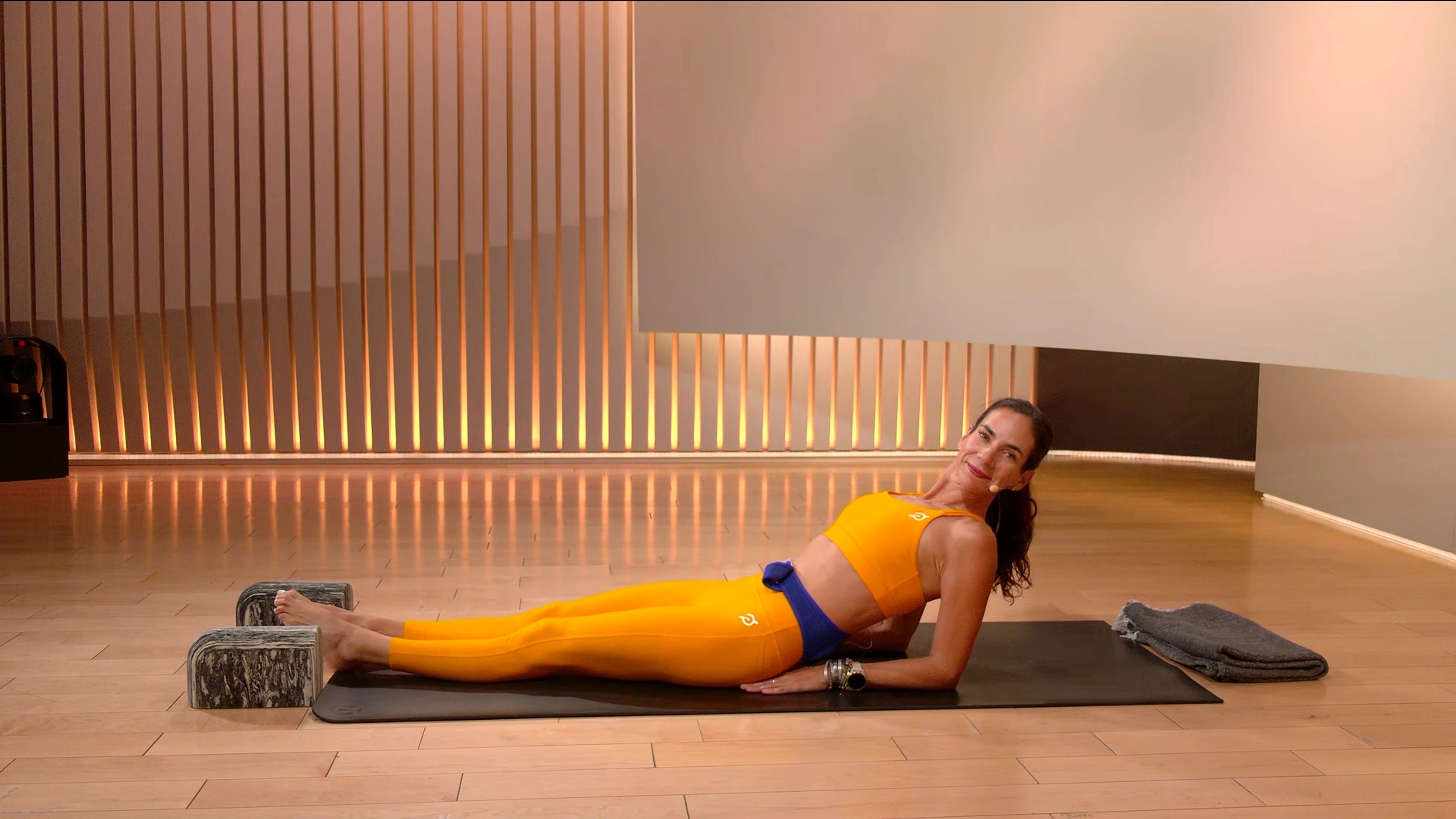
Fish Pose, or Matsyasana, is a classic yoga backbend designed to restore balance to the spine and breath. It’s a reclined pose performed supine (face up) with your legs outstretched, your forearms on the floor tucked under your torso, and your head lowered toward the floor. Fish Pose invites openness through the front of the body while subtly strengthening the back, offering a sense of expansion that feels increasingly essential in our tech-bound world.
Unlike more dramatic backbends, Fish Pose focuses on subtlety. The lift is gentle, the curve controlled, and the sensation often feels more spacious than strenuous. “You’re supporting the lumbar spine while creating openness through the thoracic spine,” Mariana explains. “It’s one of the few poses that really targets the mid-back, which we don’t give much love to.”

Peloton App
Access thousands of classes with no equipment needed.
The Benefits of Fish Pose
Fish Pose offers a range of physical, mental, and emotional benefits, and it’s often a pose people don’t realize they need until they try it.
Restores Balance to the Spine: Fish Pose gives your spine the movement it rarely gets. By gently opening the shoulders and lifting the chest, it restores flexibility to the mid-back and encourages a sense of spaciousness throughout the upper body. “As a kid, I tended to hunch over because I was a swimmer,” Mariana says. “Fish Pose helped bring my spine back into alignment and undo those patterns.”
Expands Breathing Capacity: By creating space across the chest, lungs, and diaphragm, this pose allows the breath to deepen naturally. Stretching the intercostal muscles (between the ribs) and lifting the sternum makes it easier to take full, unforced breaths, helping improve oxygenation, calm the nervous system, and reset your energy.
Relieves Neck, Shoulder, and Upper-Back Tension: Daily habits and stress tend to collect in the upper body (hi, tech neck). Fish Pose helps release that built-up tension by opening the chest and lengthening the spine, leaving you feeling lighter and more at ease.
Reduces Stress and Supports Emotional Release: Known as a heart opener, Fish Pose also affects the nervous system by encouraging parasympathetic activation, which promotes relaxation. Paired with deeper breathing, this pose can create a sense of calm, and for many, it even brings an unexpected emotional release.
Builds Core and Quad Strength (in Variations): While the traditional form is restorative, advanced variations (like lifting both legs off the floor) activate your core, hip flexors, and quads, which makes this pose a versatile blend of strength and release.
Supports Digestive Health: Twisted variations of Fish Pose gently compress the abdomen, which can help stimulate the digestive organs and improve circulation in the abdominal region, supporting overall gut mobility and comfort.

How to Do Fish Pose Properly
Fish Pose can look different for every body. Mariana emphasizes one thing above all: support yourself well. Here’s a step-by-step breakdown on how to do Fish Pose:
Start lying face up on your mat, legs extended, arms alongside your body.
Slide your hands (palms down) under your hips/glutes to support the low back.
Walk the elbows in toward one another as close to your torso as possible.
Press your forearms and palms down to lift your sternum up; draw your shoulder blades slightly together and down. Mariana suggests making sure you align your elbows directly behind your hands, with your palms pressing down for traction.
Keep the lift coming from your chest (not your chin), and your throat soft.
Gently tip the head back so the crown lightly grazes the mat, ensuring no weight on the neck. If you feel strain, Mariana recommends placing a block or folded blanket under your head for support.
Activate your legs: press through heels, engage quads, and lengthen your tailbone toward your feet. (If it’s not comfortable to have your legs straight, you can also bend your knees with your feet on the floor.)
Breathe slowly for 5–10 breaths; keep the chest buoyant, jaw relaxed, and elbows steady beneath shoulders.
To exit, tuck your chin toward your chest, press into forearms to lift the head/torso, then slowly roll down to lie flat for a few breaths before moving on.
Variations and Modifications for Fish Pose
Fish Pose is incredibly adaptable, making it accessible for beginners and endlessly interesting for advanced practitioners.
Supported Fish Pose: Place a yoga block or bolster under your shoulder blades, and another beneath your head (as shown below). The block under the shoulder blades goes “right where the bra line hits,” Mariana explains. It creates “the ultimate expansion of your diaphragm, your lungs; you see how it opens up.”
Legs in Butterfly: Let the soles of your feet touch and knees open wide to combine a hip opener with your heart opener.
Bent Knees, Feet Down: A gentle variation perfect for tight hamstrings or low back sensitivity.
Lifted Legs Variation: For strength-building, try lifting both legs off the floor with straight knees and feet pointed up at 45-degree angle. Be sure to engage your quads and core.

Tips to Keep In Mind When Doing Fish Pose
Protect Your Neck
The weight of your head can easily pull you too far back, so be gentle. Mariana recommends using a block or folded blanket under your head if needed to avoid straining the cervical spine.
Lead with Your Chest, Not Your Chin
Focus on lifting from the sternum to create space through the front body, instead of cranking your head back. Keep the throat soft and relaxed.
Breathe Continuously
It’s common to hold your breath in this pose, but staying with steady inhales and exhales helps you relax into the shape.
Start Wide If You're Tight
If your shoulders or upper back feel stiff, Mariana suggests widening your forearm stance for extra stability. A broader base can make the pose more accessible and supportive.
Warm Up Beforehand
Mariana recommends prepping your body with gentle movements that open the spine and shoulders. Include Cat-Cow (Marjariasana-Bitilisana), which mobilizes the spine and wakes up both the front and back body, and shoulder openers: Interlace your hands behind your back or practice cactus arms to create external rotation before entering the pose.
Afterward, Counterpose
To restore balance after this heart opener, Mariana suggests gentle, grounding movements, such as Supine Child’s Pose (Supta Balasana), hugging your knees to your chest while lying on your back to release the lower spine. In traditional yoga sequencing you may also use Fish Pose as a counterpose after inversions like Shoulder Stand (Sarvangasana) or Plow Pose (Halasana).


Who Should Avoid Fish Pose
While Fish Pose is highly adaptable, it is not the best choice for everyone. Avoid this pose or opt for a supported variation if you have:
Neck injuries or chronic neck pain
Uncontrolled high blood pressure or glaucoma
Serious spinal conditions or disc issues
Frequent vertigo or dizziness
If you fall into any of these categories, it is safer to skip Fish Pose, consult your doctor, or work with a knowledgeable instructor to modify it appropriately.
How to Incorporate Fish Pose Into Your Yoga Practice
Fish Pose can be a powerful addition to your yoga routine, but Mariana emphasizes using it intentionally rather than automatically. “I’ll usually include it in my Healthy Back classes, or after something like Camel Pose (Ustrasana), where we’ve already warmed up the spine and shoulders,” she explains. “It’s like the final cherry on top.”
Because Fish Pose opens the chest and lengthens the spine, it works best when your body is already primed for expansion. Think of it as a finishing pose that helps integrate the benefits of everything that came before it. After deeper backbends like Camel or heart-opening sequences, Fish Pose offers a supported way to reset the spine and invite deeper breathing before moving into more restorative shapes.
For home practice, consider adding it near the end of your sequence, especially after movements that mobilize the shoulders and upper back. Pair it with a counterpose, like Supine Child’s Pose or knees-to-chest, to bring the spine back to neutral before fully relaxing into Savasana.
The Takeaway
Fish Pose isn’t about contortion; it’s about creating space, finding support, and letting go. With props, a mindful setup, and expert guidance from seasoned instructors like Mariana, it can become one of the most restorative and rewarding poses in your practice.
“Fish Pose helps counter so much of what we hide when we shelter or protect ourselves,” Mariana says. “Giving yourself the opportunity to breathe deeply and open up, not just physically but emotionally too, can feel incredibly freeing.”


This content is for informational and educational purposes only and does not constitute individualized advice. It is not intended to replace professional medical evaluation, diagnosis, or treatment. Seek the advice of your physician for questions you may have regarding your health or a medical condition. If you are having a medical emergency, call your physician or 911 immediately.

Level up your inbox.
Subscribe for a weekly dose of fitness, plus the latest promos, launches, and events.
By providing your email address, you agree to receive marketing communications from Peloton.
For more about how we use your information, see our Privacy Policy.