
Solstock via Getty Images
How to Tell If You’re Ego Lifting—and Why You Should Tone It Down
Think you’re lifting the right amount of weight? Heavier isn’t always better, and it could set you back.
By Eric Arnold•
What Is Ego Lifting?
How to Tell If You’re Ego Lifting
How Ego Lifting Affects Your Workout Performance
The Difference Between Ego Lifting and Challenging Yourself
How to Avoid Ego Lifting
For just a moment, think of the last time you were in a gym and felt intimidated. Odds are, one potential reason was that another person nearby was hoisting heavy-looking dumbbells, grunting dramatically, with a pained expression on their face. You might have even thought to yourself that this person was probably lifting really heavy weights just to look and feel cool.
There’s a term for people like this: Ego lifters. Now, go look in the mirror. Guess what you’re likely looking at? An ego lifter.
The truth is, ego lifters come in all shapes and sizes, and we’ve all pushed ourselves too hard at one point or another. You needn’t be a professional bodybuilder to lift too much weight, thinking that it’s doing your body good. (Spoiler alert: It isn’t.)
The good news, however, is that it’s easy to catch yourself in the act and course correct. Lift the right amount of weight with good form, and the results will speak for themselves. That, in turn, is the best ego boost you can possibly give yourself.
What Is Ego Lifting?
In its most simple definition, ego lifting is the act of lifting more weight than you can safely or properly handle, usually to impress others or boost your own pride.
“In my experience, people (e.g., me) sometimes ego lift because they (again, I) want to feel like they are super strong and everyone should notice their ability,” says Peloton instructor Alex Karwoski. “There is a lot of identity projection taking place in those moments and not much actual strength gaining.”
The fact is, building strength isn’t just about how much you can lift; it’s also about doing each move with proper form so you actually reap the benefits of every rep. If your dumbbells are too heavy for your ability, you won’t be able to execute an exercise properly, and could even put yourself at risk of injury.

Peloton App
Access thousands of classes with no equipment needed.
How to Tell If You’re Ego Lifting
Because we’re all guilty of the habit at one point or another, it’s not always easy to catch yourself in the act of ego lifting. After all, we’re so used to hearing that we should challenge ourselves that it may be hard to see where the line is between taking things up a notch and taking them too far.
Here are a few signs that you’re ego lifting, and need to reduce the amount of weight you’re using.
Your Form Starts to Break Down
You might not notice immediately that your form is breaking down from lifting weights that are too heavy, but that’s one of the most notable signs that you’re ego lifting, according to Alex. This is going to manifest differently depending on the exercise; for example, during a deadlift, your back may start to round, or during a squat, your knees may start to cave in. Another clear sign of ego lifting—and a potential result of continuing to lift with improper form—is “unusual soreness in mechanical parts of the body (joints vs. muscles),” Alex says.
You’re Cheating Your Reps or Reducing the Range of Motion
A sure sign that you’re using a weight that’s too heavy is when you can’t execute a clean or full range of motion for each rep. Are you only lowering a quarter of the way in a squat, neglecting to straighten your arms at the bottom of a biceps curl, or bench pressing until your elbows bend at 45 degrees, not 90? These are all signs that your weights are too heavy and you’re exercising your ego, not your muscles.
You Need Extra Assistance
Another sign that you’re ego lifting is if you need to rely on extra momentum to complete a motion, Alex says. For example, if you need to swing your upper body to get weights up to your shoulders in a lateral raise or biceps curl, there’s a good chance you’re lifting too heavy. Or, to an extreme, you may also be ego lifting if you’re relying too heavily on a spotter. While spotters serve an important safety purpose for some exercises, you shouldn’t need a spotter’s assistance to finish every rep.


How Ego Lifting Affects Your Workout Performance
How does ego lifting affect your workout performance? In all the wrong ways.
The straightforward explanation is that, when you’re ego lifting, you’re making your strength training significantly less effective. If you’re lifting weights that are too heavy for the muscles you’re targeting, you’re asking other muscle groups to step in and help out. This compensation means you aren’t isolating and working the target muscles correctly.
“A major drawback to ego lifting is that while it may feel like you're doing something that is beneficial, you're actually recruiting the ‘wrong’ muscles to help you perform a movement,” Alex explains.
Not only will this reduce your strength gains over time (since the target muscle is getting cheated out of the work), but you’re also increasing your risk of soreness or, worse, injury.
“I have had a couple of instances with former teammates who put just a little too much weight on the bar for some front squats and, as fatigue set in throughout the reps/sets, their form suffered,” Alex says. “And in the end, their back pain reminded them for a few weeks just how foolish they had been. It’s a fine line between discomfort and injury. Ego lifting can lead to the latter.”
Ego lifting can go on to affect the rest of your workout too. When you recruit extra muscle groups to lift weights that are too heavy, you might fatigue them before you have the chance to intentionally target them later in your workout. For example, if you go too heavy on your bent-over rows, you might tire out your shoulder stabilizer muscles before you go on to do overhead presses, compromising your performance and strength you have left for that move.
Lifting too heavy may also undermine your other fitness efforts—especially if building maximal strength (i.e., increasing your one rep max) isn’t your main goal. “If you’re an endurance athlete who primarily uses strength sessions to ‘maintain’ and not necessarily ‘increase’ your muscle size, ego lifting can really zap your central nervous system, which takes a lot longer to come back than you’d think,” Alex explains. “All in all, the very brief moment of time where ego lifting feels good can lead to an elongated duration of fatigue.”
The Difference Between Ego Lifting and Challenging Yourself
All this begs the question: Where is the line drawn? How much weight is enough to challenge yourself, and how much is too much to the point that you’re ego lifting?
If you’re lifting the right amount of weight, the last few reps of every set should challenge you, mentally and physically. However, if you’re struggling from the very beginning of a set, it’s a sign you may be lifting too heavy.
You can also ask yourself a quick series of questions as you take on any particular exercise:
Can I control the movement fully, smoothly, and consistently?
Would I be doing this if no one was watching?
Do the muscles I’m targeting feel tired, or does my entire body feel exhausted, tense, or sore?


How to Avoid Ego Lifting
Some bad habits are much easier to avoid than others. The good news? Ego lifting can be avoided if you prioritize lifting safely and learn how to catch yourself.
Learn How to Choose the Right Weights
To start, it helps to get a handle on how much weight you should be lifting, including when it’s acceptable to move up. If you’re trying an exercise for the first time or coming back after a break, go as light as possible or consider practicing the movement with just your bodyweight first. “Once you have the proper form, can control the movement throughout the entire range required, and have no pain (mechanically speaking), you’re probably ready to increase your weights,” Alex says.
Another handy rule of thumb? You should struggle to complete the last few reps of each set; if you’re not tiring out by the end of a set, it’s a sign you can go heavier.
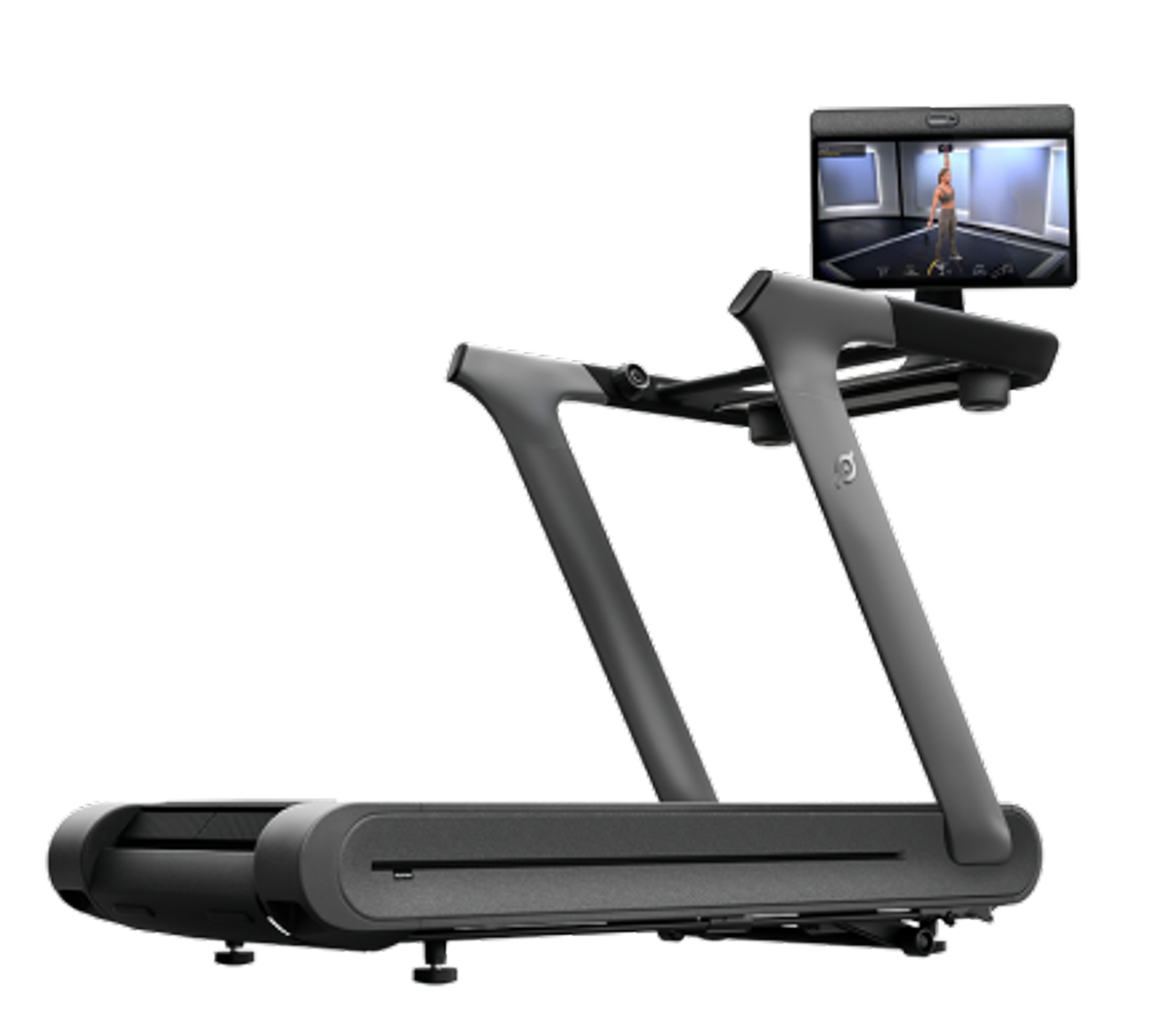
On the Peloton Cross Training Bike+, Tread+, and Row+ powered by Peloton IQ, the digital weight rack and suggested weights features can help you get the hang of this. Log your available weights in your profile, and keep track of which ones you like to use for specific exercises. During movement-tracking-enabled strength workouts, Peloton IQ will offer real-time weight suggestions based on your performance. If you’re consistently finishing sets with good form or exceeding your rep target, for example, Peloton IQ will suggest you bump up your weights.
Be Honest with Yourself
The simplest way to avoid ego lifting is just to be honest with yourself. “Stay honest with your lifts, track them, and remember that the training you do is valuable only if you can break things down properly and then have the necessary time to recover and come back actually stronger,” Alex explains. “If you’re trying to ‘look strong’ as opposed to ‘feeling strong,’ you may be teetering on the edge.”
Stay Aware During Your Workouts
We’ve all let our minds wander during a workout. But when you’re doing strength training, staying focused and paying close attention to each rep can help you avoid ego lifting.
“Being mindful of how you’re moving the weight, your body positioning, and whether or not you need a spotter to be there for safety or for actual help due to possible danger, are all very important factors to consider,” Alex says. Honing your mind-muscle connection can help you ensure you’re moving with proper form and activating all the right muscles to get the movement done.
If You Catch Yourself, Correct and Move On
Even Alex, a professional athlete, is willing to admit that he’s succumbed to ego lifting, just like everyone else. “Have I tried to bench press too much weight and ended up having to, without a spotter, figure out a way to slip out from underneath the bar? Yes,” he says.
What matters is that you notice, and don’t let your ego stop you from making a change. If you see your form slipping, don’t try to muscle through the rest of the set; put your weights down, pick up lighter ones, and start fresh with proper form.
If you need an objective eye on your form, take advantage of the Form Feedback feature on the Peloton Cross Training Bike+, Tread+, and Row+ powered by Peloton IQ. During movement-tracking-enabled strength workouts, Peloton IQ will monitor your form, offer real-time feedback to help you improve, and prompt you to swap for lighter weights if you’re consistently making errors.
Ultimately, the goal is strength, not showmanship. When in doubt, remember the mantra from Peloton instructor Jess Sims: “No ego, amigo.”
This content is for informational and educational purposes only and does not constitute individualized advice. It is not intended to replace professional medical evaluation, diagnosis, or treatment. Seek the advice of your physician for questions you may have regarding your health or a medical condition. If you are having a medical emergency, call your physician or 911 immediately.

Our Products
Level up your inbox.
Subscribe for a weekly dose of fitness, plus the latest promos, launches, and events.
By providing your email address, you agree to receive marketing communications from Peloton.
For more about how we use your information, see our Privacy Policy.