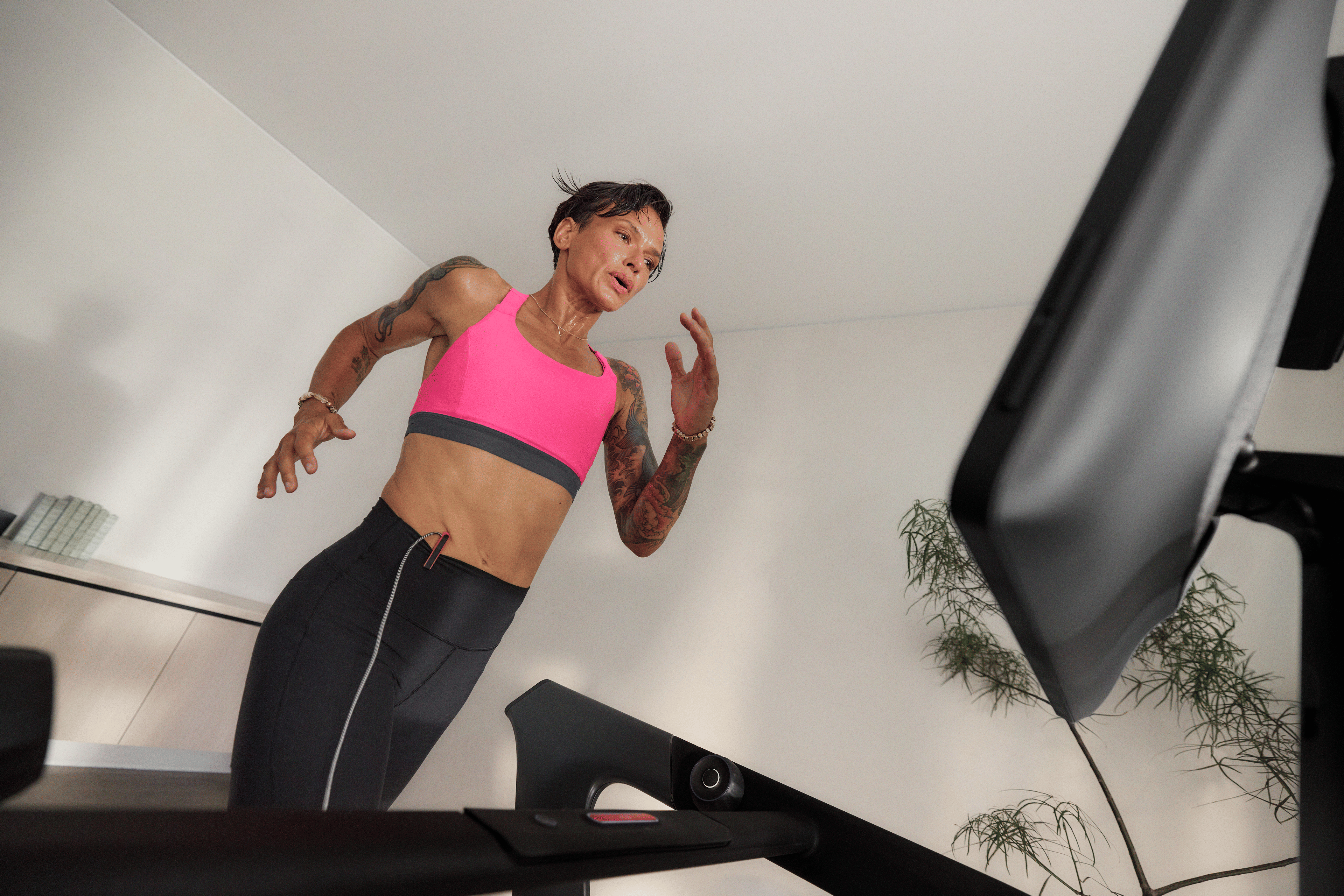
9 Core Exercises for Faster, Stronger Runs
Building a strong core is the key to making your miles easier and more efficient.
By Jordan Smith•
Why Having a Strong Core Is So Important for Runners
Which Core Muscles Do Runners Need to Strengthen?
The Best Types of Core Exercises for Runners
9 Essential Core Exercises for Runners
How to Include Core Work In Your Running Routine
While leg strength and cardio endurance are major players in your running journey, there’s one muscle group that’s often overlooked and underestimated: the core. “Our core is our body’s stabilizer. It helps us run smoother, faster, and less injury-prone,” says Peloton instructor Olivia Amato. A solid core will support many aspects of your run, maybe most importantly helping you maintain your form—leading to more efficient miles and a reduced risk of injury.
Here, experts give us the rundown on the benefits of a strong core for running performance and the essential core muscles runners should know. Plus, nine core exercises all runners should add to their strength training routine.
Why Having a Strong Core Is So Important for Runners
“A strong core is so beneficial when it comes to most things and is especially true for running,” Olivia says. “It keeps your posture tall, helps you breathe easier, absorbs impact, and reduces energy leaks so that every stride is more efficient.”
No matter if you’re training for your first 5K or are a seasoned marathoner, a strong core is going to be the foundation for better runs. For beginner runners, building up a strong core can help you adjust to training and make runs feel easier. Additionally, strong core muscles can help ensure you’re running with proper form, which will make you a more efficient runner and reduce your risk of injury. “For beginners, core strength is super important because their bodies aren’t used to the repetitive higher impact of running,” Olivia says. “A stable core helps protect joints and prevents those ‘rookie aches,’ like low back tightness or uneven hips.”
If you have a weak core, your body will try to compensate by relying on other muscles, which usually means the hips, buttocks, knees, and low back do more work. This can lead to unwanted results, ranging from early fatigue on your runs to injuries, explains Dennis Colón, doctor of physical therapy and director of player health at Alliance Regen & Rehab. Having a strong core allows your body to remain stable when your foot contacts the ground. This ensures you can hold good running form, even when you’re fatigued.
“Having a strong core allows for easier movement and energy efficiency, and allows for better form and mechanics, even when you get tired,” he says. “This will translate to even fewer overuse injuries or common injuries.” The research agrees: A 2024 study published in the British Journal of Sports Medicine found that runners who incorporated hip and core strengthening into their fitness routine had 39 to 52 percent fewer overuse injuries than those who only built up strength in the ankles and feet.
As you progress, a strong core is not only going to stabilize and prevent injury, but it’s also going to improve performance, Olivia says. “More experienced runners use their core to maintain form when fatigue sets in, push faster paces, and handle tougher terrain,” she says.
And if it’s improved performance you’re after, just eight weeks of core training may help. A small 2019 study done on college athletes found that after eight weeks of core training, participants had improved balance, core endurance, and running economy.

Peloton App
Access thousands of classes with no equipment needed.
Which Core Muscles Do Runners Need to Strengthen?
“The core is so much more than just your abs,” Olivia says. It also includes the muscles in your pelvis, hips, and lower back, as well as all the abdominal muscles that hold your core together, Colón explains. “This field of the body controls nearly every aspect of movement when running,” he says.
What this means is that becoming a better runner isn’t just about building leg strength—a strong core is key to improving performance, since those muscles will work together to help you power through every stride. Here’s the rundown on how different core muscles support your running, according to Olivia. “If all of these aren’t working, you waste energy and risk getting injured,” she adds.
Obliques: These muscles on the sides of your torso control rotation and anti-rotation while running. Strong obliques keep your torso centered as you use your arms and legs to propel yourself forward.
Lower Back: The deep muscles in your lower back, including the erector spinae, keep your posture tall and prevent slouching. A small study published in PLOS One found that having a stronger, more upright posture can help boost running performance compared to leaning too far forward.
Glutes: The muscles in your butt, the gluteus maximus, gluteus medius, and gluteus minimus, power you forward and stabilize your hips.
Deep Stabilizers: Deep core muscles, including the transverse abdominis, the diaphragm, and the pelvic floor, support your spine and keep everything braced and stable as you put one foot in front of the other.
The Best Types of Core Exercises for Runners
Banging out endless crunches at the end of your runs like you might’ve done in high school isn’t going to cut it if you want to become a stronger runner. Instead, it’s all about functional core work. “Runners need movements that train stability, rotation control, and the ability to transfer force between upper and lower body,” Olivia says. Exercises that mimic running patterns, like planks, anti-rotation holds, and single-leg balance work are far more useful than sit-ups, she continues.
Colón agrees. Traditional ab exercises, like crunches, can be too isolated to one muscle group; this doesn’t typically transfer well to running health or performance, he says. Instead, he suggests focusing on three types of core exercises to support your running performance:
Anti-Rotation: These exercises (such as the Pallof press) train your core to resist twisting at the torso. When your torso rotates unnecessarily while running, you lose energy that would instead be propelling you forward.
Anti-Extension: These exercises (like dead bugs) resist arching the lower back help you keep a neutral spine when running, reducing injury risk and helping maintain proper running form.
Hip Stability Work: Strong hips are essential for maintaining a stable pelvis while running, which helps reduce injury, improve efficiency, and ensure proper form.
While bodyweight core work is a great place to start, Colón also advises his athletes to do exercises for strength and stability under some form of load (i.e., using resistance, such as weights or a resistance band).


9 Essential Core Exercises for Runners
These nine core exercises for runners, favorites of Olivia and Colón, will build the strength and stability to support you through all your miles. If you’d rather follow an instructor-led class, check out the Core for Runners classes on the Peloton App.

Dead Bug
The dead bug is a move that helps with coordination and teaches your core to stabilize while your arms and legs move—which is exactly what happens in running, says Olivia.
Start lying face up with knees bent in tabletop position and arms straight toward the ceiling. Brace your core, pressing your lower back against the floor.
Slowly lower and extend your right leg and left arm toward the floor. Pause, then slowly return to starting position.
Repeat on the opposite side.

Side Plank
The side plank is highly effective because the move not only targets the core, but also activates the outer glutes, combining core and hip stability work, according to Colón.
Start in a high plank position with shoulders stacked over wrists, legs extended behind you, with your core braced and glutes engaged.
Rotate onto your right side, pressing into the floor with your right palm and extending your left hand to the ceiling. Rest on the outer edge of your right foot with your left foot stacked on top. Ensure your hips are stacked and your body is in a straight line.
Hold for 30 to 60 seconds, then return to the starting position and repeat on the other side.

Side Plank Hip Dip
Up-leveling your side plank to add a hip lift still works the hips hits obliques and glutes, but also adds an additional stability-building element. The move is great for hip stability and preventing IT band issues, Olivia says. You can do this move in a high side plank or a forearm side plank, as shown.
Start in a side plank on your right side, pressing into the floor with your right palm and extending your left hand to the ceiling. Rest on the outer edge of your right foot with your left foot stacked on top. Ensure your hips are stacked and your body is in a straight line.
Keeping hips stacked and core engaged, lower your right hip a few inches toward the ground (without touching), then lift it back up to return to starting position.
Repeat for the desired number of reps, then do the same on the other side.

Bird Dog
A bird dog, performed on hands and knees, helps build spinal stability and balance while training your core to resist rotation, according to Olivia.
Start on all fours, hands under shoulders and knees under hips, maintaining a flat back.
Brace your core and extend your left arm and right leg so they’re level with your shoulders and hips.
Pausing at the top, keeping your hips square to the floor and spine neutral. Then, slowly lower your arm and leg to return to start.
Repeat with the other arm and leg.

Single-Leg Glute Bridge
Since running is a unilateral exercise (it involves pushing off and landing on one foot at a time), it’s important to incorporate single-leg strength exercises to find any imbalances you might have. This move ties the glutes and core together, mimicking running’s single-leg stance, Olivia says. Additionally, the single-leg glute bridge helps build hip strength and improve hip extension, both necessary as your body pushes you forward on your runs, adds Colón.
Start lying face up on the floor with your arms at your sides, knees bent, and feet flat on the ground. Lift your left foot off the floor so your knee is directly above your hip.
Press into your right foot and squeeze your glutes and core as you lift your hips until your body forms a straight, diagonal line from shoulders to knees.
Hold for one second at the top, then lower your hips to the floor.
Repeat for the desired number of reps, then do the same on the other side.

Farmer’s Carry
The farmer’s carry is a seemingly simple move that packs a punch. You’ll build core stability, grip strength, and postural endurance under a heavy load, Colón says. To increase the challenge on your core, hold a weight in just one hand.
Start standing with a heavy dumbbell or kettlebell in each hand.
Keep your core engaged, shoulders back, and chest proud and walk for a set time or distance.

Kettlebell March
Since the kettlebell march requires you to lift one leg at a time, you’ll need to brace your core to maintain balance as you alternate sides. Doing this trains stability while balancing on one leg, Colón explains. To modify, you can hold a single kettlebell with both hands in front of your chest in a goblet position.
Stand with your feet hip-width distance apart, holding a kettlebell in each hands at chest height.
Brace your core and lift one knee toward your chest.
In a controlled motion, lower your leg to starting position, then repeat on the other side. Continue alternating.
Pallof Press (Anti-Rotation Press)
Olivia likes this core exercise for runners as it strengthens your obliques and deep core for anti-rotation. This translates to a stable torso, helpful when it comes to controlling running form, keeping your body moving in a straight line while your arms pump as you propel forward. Note that for this move, you’ll need a spot to anchor a resistance band (or a cable machine).
Anchor a resistance band at about chest height. Stand facing sideways so the anchor point is on your right.
Hold the resistance band with both hands at your chest, ensuring you’re far enough from the anchor point there’s tension on the band.
Keeping a slight bend in your knees, engage your core and slowly extend your arms to push the band away from you in front of your chest.
Pause, then slowly pull the band toward your chest to return to the starting position, ensuring you don’t twist your torso throughout the move.
Repeat for the desired number of reps, then turn so the anchor point is on your left and repeat.
Staggered Stance Pallof Press
Upleveling your Pallof Press adds an additional stability challenge, and mimics the asymmetrical way you move when running, Colón says.
Anchor a resistance band at about chest height. Stand facing sideways so the anchor point is on your right, and step your right foot back into a staggered stance.
Hold the resistance band with both hands at your chest, ensuring you’re far enough from the anchor point there is tension on the band.
Keeping a slight bend in your knees, engage your core and slowly extend your arms to push the band out in front of your chest.
Pause, then slowly pull the band toward your chest to return to the starting position, ensuring you don’t twist your torso throughout the move.
Repeat for the desired number of reps, then turn so the anchor point is on your left and repeat.
How to Include Core Work In Your Running Routine
Since most functional strength exercises also work your core, you don’t have to spend hours a week specifically targeting those muscles. Adding core exercises to your training routine for just five to 10 minutes, three to four times a week will help in a major way, Olivia says.
To get the most of your core work, you’ll want to select certain exercises depending on what other workouts you’re doing that day. For example, before speed workouts or long runs, Olivia suggests sticking to activation-style moves (like dead bugs and bird dogs) to wake up the core and avoid fatiguing the body. (That’s one reason you might see core exercises in a Pre-Run Warm Up class on the Peloton App.) After easy runs or during strength sessions, you can add a short (five- to 10-minute) core circuit with more challenging exercises.
“Consistency matters more than duration,” Olivia says. By adding just a little bit of core work to your strength days can have major payoffs when it comes to your running performance. Remaining consistent and focusing on building a strong core—not just your abs—will help you run strong and hit your goals, whether that be to go longer distances without fatiguing or smash a new PR.
For help slotting core work into your routine, consider creating a personalized workout plan on the Peloton App, or check out cross training programs like the Strength for Runners program led by Peloton instructors Becs Gentry and Matt Wilpers.


This content is for informational and educational purposes only and does not constitute individualized advice. It is not intended to replace professional medical evaluation, diagnosis, or treatment. Seek the advice of your physician for questions you may have regarding your health or a medical condition. If you are having a medical emergency, call your physician or 911 immediately.
Level up your inbox.
Subscribe for a weekly dose of fitness, plus the latest promos, launches, and events.
By providing your email address, you agree to receive marketing communications from Peloton.
For more about how we use your information, see our Privacy Policy.