
JulPo via Getty Images
Can You Work Out Your Abs Every Day? Here’s What Experts Recommend
When it comes to training your core, more isn't always better.
By Jordan Smith•
Can You Do Abs Every Day?
The Benefits of Training Your Abs Often
Myths About Daily Ab Training
The Best Ab Exercises to Do Daily
Is It Possible to Overtrain Your Abs?
What the Ideal Ab Training Schedule Looks Like
If your goal is to build a strong core, we’ll let you in on a little secret—you’re likely already working your abs during every exercise session. “Creating a truly strong, resilient core takes time, consistency, and patience. The exciting part is, once you build that solid foundation, your core continues to support you for life,” says Peloton instructor Assal Arian.
However, if you’re wondering if you really can work out your abs every day—in a targeted way—the answer is yes, and no. We tapped experts to break down the dos and don’ts of daily ab training, and their favorite ab exercises you can safely do every day.
Can You Do Abs Every Day?
Yes, you can work your core every day, but the question of whether you should depends on your goals, exercise choice and intensity, and recovery, says Kahli Castagnera, a doctor of physical therapy and orthopedic clinical specialist.
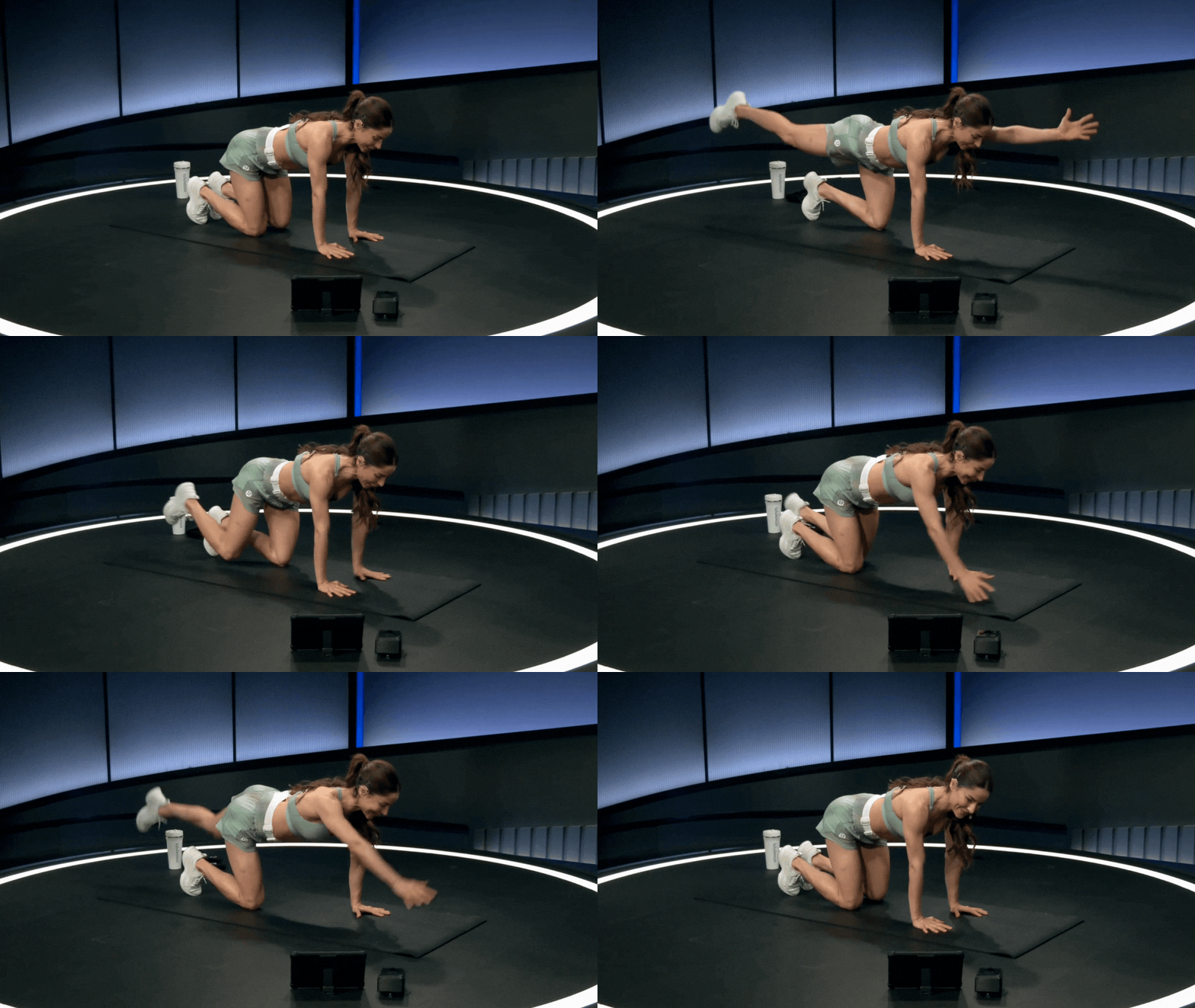
Core exercises that are low-intensity and low-load, like dead bugs and bird dogs, can typically be performed daily while high-intensity, high-load exercises, like a bicycle crunch and a weighted sit-up, require more recovery time and shouldn’t be done daily. Assal, for example, says: “I prefer to be intentional about when I isolate them instead of squeezing them into every workout.”
While you shouldn’t do high-intensity ab-focused exercises every day, keep in mind you’re likely activating your core during your other workouts without even realizing it, during moves like weighted squats, deadlifts, strict overhead presses, and even pulling movements (such as rows). Research shows that compound exercises can effectively engage and strengthen the core without needing separate ab-specific moves every session.
“I believe almost any exercise performed properly with good form and a focus on stabilizing your core while performing the movement can become a core exercise,” Castagnera says.

Peloton App
Access thousands of classes with no equipment needed.
The Benefits of Training Your Abs Often
When done safely, consistent—and even daily—ab training can have many benefits.
Supports Posture and Prevents Back Pain
A strong, stable core supports your spine and protects your lower back, Assal says. Weakened core muscles can lead to spinal instability and lower back pain; to counter this, you want to build strength on all sides of your abdomen, including your lower back, with core stability exercises. A review published in International Journal of Sports Physical Therapy, for example, found that doing core stabilization exercises can help reduce low back pain, which can both hinder your ability to exercise how you want and make daily tasks uncomfortable.
Improves Performance
Having a strong core supports your body across all types of movement, according to Assal, whether that’s lifting heavy, running, jumping, or just getting through a long day at work or on your feet. A 2023 review of research published in the Biology of Sport found that core training for at least four weeks helped to improve balance, vertical and horizontal jump, and throwing and hitting. “It also helps you feel more connected and confident in your daily movements,” Assal says.
Lower Injury Risk
Think of your core like a soda can; building strength and stability on all sides of your core is like a pressurized, closed soda can, which wouldn’t crush if you stood on it. This allows you to withstand more load and challenge while staying injury-free. On the flip side, if you stand on an open can, it will crush. Without adequate core stability, you’re more susceptible to injury when doing things like exercise, sports, work-related tasks, and everyday life activities. For example, a small 2020 study published in The American Journal of Sports Medicine found that building strong core muscles can help reduce ACL injuries during side-stepping motions performed in sports.
Myths About Daily Ab Training
One of the biggest misconceptions Assal hears about working your abs every day is that the more ab workouts you do, the more belly fat you’ll lose or the more visible your abs will be. “I always remind people gently that visible abs are mainly a reflection of overall body fat levels, which are influenced by nutrition, sleep, stress, and genetics,” Assal says. And just a reminder, visible abs aren’t necessarily a reflection of health—it takes a lot of work and often a restrictive diet to maintain for a long period of time, which may not be healthy for you.
Another popular myth Assal hears? That you can “build abs” in just a few weeks. While you can get stronger quickly, creating a truly strong, resilient core takes time, consistency, and patience. Even if you ease off for a while, those deep muscles stay functional and protective. “It’s one of the best long-term investments you can make for your body,” Assal says.
The Best Ab Exercises to Do Daily
While the specific ab exercises you should incorporate into your daily routine will depend on your individual goals, adding core exercises to activate your core stabilizers is an excellent choice for a warm-up.
Castagnera recommends exercises that target the core in all directions: front to back, side-to-side, and rotation, as well as a mix of isotonic exercises (engaging your muscles while moving, like during a crunch) and isometric exercises (engaging your muscles without moving, like during a plank).
Dead Bug: A slow, controlled version of this move is Assal’s go-to. “It’s amazing for connecting breath with movement and activating the whole trunk, especially if your workout starts lying on your back,” she says.
Side Plank (or other plank variation): “If I know there are planks in the workout, I’ll warm up with a plank variation to switch on the shoulders and midline safely and intentionally,” Assal says.
Bird Dog: This move can help build core strength and improve posture. The bird dog can be used during your warmup to target your muscles and help build stability.
Pallof Press Variation: This move is great for warmups before lifting heavy loads, since it engages your full body. (Note it requires a resistance band or cable machine.) It fires up the core’s anti-rotation, which helps you protect your spine.
Leg Lift: This move builds core strength and stability, helping to reduce lower back pain.
Plank Shoulder Taps: By adding shoulder taps to your plank, you’ll work your abs and build overall stability.
Offset Weighted Overhead March: Adding a weight to a standing ab move helps to up the intensity of the move, and holding a single weight overhead can help build balance.
There’s more where that came from: Assal has created more than 120 core-specific workouts in the Peloton App library so far—some great for beginners, others to really challenge you. “There’s a ton of variety too, whether you’re into bodyweight core, want to turn up the heat with weighted ab circuits, or prefer to stay upright with standing core workouts,” she says. “There’s something for every mood, level, and schedule.”
Try a Core Strength Workout with Peloton


Is It Possible to Overtrain Your Abs?
Yes, it is. One sign you’re overtraining is excessive soreness that lasts for 24 hours after exercise, says Castagnera. If you do too much intense ab work, it can present a continuum of increased soreness. On the lower end, you may experience delayed onset muscle soreness (DOMS) or increased injury risk and in extreme cases, increase your risk of rhabdomyolysis (when muscle tissue breaks down and enters your bloodstream, potentially resulting in kidney damage).
What the Ideal Ab Training Schedule Looks Like
“Core training doesn’t have to be super long or super heavy,” Assal says. “It can be short, simple, and still make you feel empowered.”
If you’re newer to strength training or are currently training two to three times a week, Assal recommends adding a quick 5-minute core finisher after a full-body session. You can also add a longer 15- to 20-minute focused core session—maybe after a lower-body day—around two times per week is a great start. (You can find core strength classes ranging from 5–30 minutes on the Peloton App.)
“I train about five times a week and usually add in focused ab training one to two times weekly,” Assal says. “Because my core is already working hard during heavier lifts, I don’t always need extra.”
For more guidance, try a core-focused, instructor-designed workout program on the Peloton App, such as Crush Your Core with Peloton instructor Emma Lovewell, Straight to the Core with Peloton instructor Rebecca Kennedy, or Assal’s very own Dein Core-Dein Power (Your Core, Your Power) in German.


This content is for informational and educational purposes only and does not constitute individualized advice. It is not intended to replace professional medical evaluation, diagnosis, or treatment. Seek the advice of your physician for questions you may have regarding your health or a medical condition. If you are having a medical emergency, call your physician or 911 immediately.

Level up your inbox.
Subscribe for a weekly dose of fitness, plus the latest promos, launches, and events.
By providing your email address, you agree to receive marketing communications from Peloton.
For more about how we use your information, see our Privacy Policy.