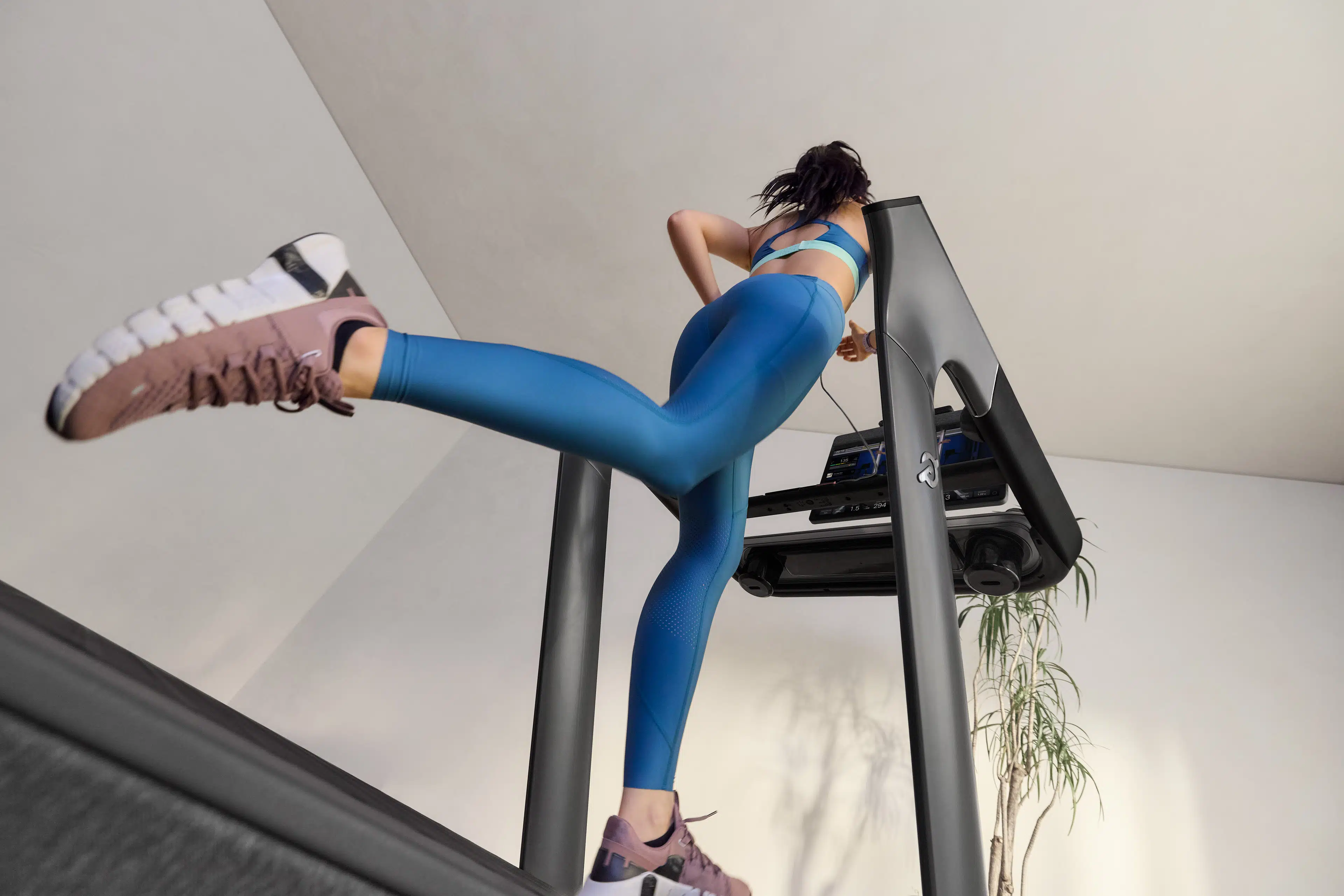
How to Seamlessly Transition Your Runs from Road to Treadmill
No matter why you choose to head indoors, these expert tips will help you transition to the tread without missing a beat.
By Jordan Smith•
The Differences Between Treadmill & Outdoor Running
5 Tips for Transitioning from Outdoor Running to a Treadmill
Is Running On a Treadmill Easier or Harder Than Running Outside?
How to Decide When to Run on the Treadmill vs. Outdoors
While many runners enjoy logging miles on open roads or scenic trails, there comes a time in the year when you have to consider taking your training to the treadmill. Whether you’re avoiding cold, slippery conditions, staying comfortable in the AC when it’s too hot out, or recovering from an injury, the treadmill can help you maintain your running routine even when outside miles aren’t an option.
Even if you love running outside, bringing your workout indoors doesn’t need to feel like a concession. Sweating it out during a treadmill workout with your favorite Peloton instructor or logging a long run indoors can have a lot of perks, from taking the guesswork out of your training and making your runs more fun, to even helping you improve your stride and nail proper running form.
Here, experts break down the differences between indoor and outdoor running, the best ways to make a smooth transition to the tread, and some tips for breaking up the monotony so you’ll love the treadmill in no time.
The Differences Between Treadmill & Outdoor Running
Of course, running outside versus running on a treadmill will offer different experiences. “The treadmill is a very controlled environment, and if you need that for training, it’s a great option,” says Irina Stiasny, a doctor of physical therapy, RRCA-certified run coach, and owner of Run Rocket PT. Here are just a few of the notable differences between the two:
The treadmill puts you in total control. “Running inside on a Tread offers the chance to run with zero resistance (if you choose zero percent incline), which is something you do not get to elect when running outside,” explains Peloton instructor Becs Gentry.
Running on a treadmill allows you to train for specific goals. “If you’re working on certain aspects of your run like speed, training for a hilly race, or there’s specific data you’re using to simulate the race conditions, it’s a lot easier to do this on the treadmill,” Stiasny says.
The surface of the treadmill is easier on your joints. Treadmill belts provide more shock absorption than other running surfaces, like concrete or turf, according to research published in Applied Sciences, which can help protect your knee and ankle joints. Additionally, Stiasny uses the treadmill as a tool for her physical therapy clients returning from injury. “They’re definitely easier on your joints than pounding the asphalt,” she says.
Running inside can be boring. Let’s face it, there are many benefits of treadmill running, but the biggest drawback might be the lack of scenery as you stay stationary in your house or gym. Luckily, there are ways you can make running on a Peloton Tread or Tread+ enjoyable, such as a high-energy Peloton running class with your favorite instructor, a virtual Scenic workout, or a gaming-inspired workout like Peloton Lanebreak.

Peloton Treadmills
Two treadmills. One Peloton experience.
5 Tips for Transitioning from Outdoor Running to a Treadmill
Whether one of your favorite parts of your run is exploring new trails or you’re used to the rolling hills of your neighborhood route, there will be some adjustments as you trade outdoor running for treadmill running.
The good news? There are so many different ways to train inside, according to Becs. “This is a great time to learn how to run in the most efficient way,” she says. “We have some fab basics classes that cover form and cadence (optimal steps per minute).”
1. Don’t Go Cold Turkey
Since running outside and running on the tread are going to be very different experiences, Stiasny suggests starting out with just one treadmill run (or even a walk) per week, depending on your comfort level with treadmills, slowly building up to more indoor runs.
“I typically tell people to try once a week to make sure [running on the treadmill] feels good on your body and that there are no aches and pains,” Stiasny says. “I wouldn’t suggest going immediately to five days a week on a treadmill if you’re used to being outside.”
Instead, after your initial treadmill run, swap one additional outdoor run for a treadmill run per week. For example, if you typically run five times a week, she suggests running twice a week on a treadmill and then three times outside, slowly adding one day a week inside, and cutting back on outdoor runs as needed based on weather or other factors. And there’s no need to completely swap to indoor runs, you can still head outside if your mood, or the weather, calls for it.
2. Focus on Form
If you’re used to running outside, running on a belt at a controlled speed can be tricky at first, but there are a few tips that will help you become a pro in no time.
Just like when you’re running outside, make sure you’re upright with your feet underneath your hips and that the speed of the tread or lean of your body isn’t dragging them out in front of you or behind you. “When you look down, you should be able to see your toes,” Stiasny says. If you look down and all you see is your shin, it could be a sign that you’re overstriding, or you’re not running at the right speed.
Where your body is on the tread is important, too. Instead, Stiasny suggests centering yourself within the handrails of the treadmill, closer to the front of the belt, but not so close that the console gets in the way of your arm swing or that your face is right up against the screen. Staying toward the front of the machine ensures you can keep up with the belt, especially at higher speeds. You can also use the safety key, which will stop the belt if it detaches, to know you’re in the right spot: When attached to your clothing and the treadmill, the cord shouldn’t be pulled taut.
And remember, keep your shoulders down, chest proud, and make sure your arm swing doesn’t cross your body. If you feel too tight, you can gently shake your arms out by your sides before resuming your arm swing.
3. Re-create Outdoor Conditions
Even if you’re running on a flat road, it’s often not perfectly flat, like a treadmill. You’re also working against some resistance as you move forward through space. “We always have air, and often some wind, as a resistance pushing against us when we head outside for a run,” Becs says.
To help compensate for the lack of air resistance and to help you assimilate when running on a tread, Becs and Stiasny suggest running with the treadmill set on a slight incline. To re-create those outdoor conditions on the Tread, Becs recommends leaving the incline at at least 0.5 percent for a flat road and up to around 2 percent for more experienced runners or those training for a hilly race.
4. Practice Pacing
One major benefit of the treadmill is that it holds the speed for you, allowing you to get a feel for paces without the guesswork that can happen when you’re outside. “When I run on a treadmill, my stride is pretty consistent versus when I’m outside,” Stiasny says. “It’s like cruise control.”
If you’re a beginner runner, starting out on the treadmill can help you get a feel for running consistently at one pace and figure out what speed is right for you. This will help make you a more efficient runner when you’re ready to tackle longer distances.
You can also use this consistency to practice your speed work sans distractions, and keep yourself accountable for every interval. Experiment with interval workouts or Peloton’s Pace Target classes to get a feel for your different speeds, from recovery and challenging to max.
“I also love practicing my tempo run pace on the Tread, as you sit at this pretty uncomfortable speed for a given time, 20 to 60 minutes depending on experience level,” Becs says. “Doing this on a Tread opens your world to so many ways of training your body and mind. Because you are devoid of distractions and the ability to vary pace, it teaches you to settle and learn discomfort in a whole new way.”
5. Remember to Fuel
You should still hydrate and fuel based on the length of your workout, just like you would outside. Unlike running outside, where you have to carry your water and fuel, you can keep everything at your fingertips right on the treadmill.
Stiasny says she has to remind her clients that even though you’re running indoors where it’s not too hot or cold and you may not sweat as much, it’s just as important to drink water or electrolytes and fuel with your favorite gels or chews.
Try a Treadmill Running Workout with Peloton


Is Running On a Treadmill Easier or Harder Than Running Outside?
There are two sides to this coin. Running on a treadmill may feel easier since there’s no wind resistance, incline (unless you add one), or variation in terrain, and the treadmill maintains the speed for you. However, because you aren’t able to self-pace and you’re not physically going anywhere, some research shows that running on a treadmill can feel harder or less enjoyable. “It should feel easier because you’re just pretty much in one place and just moving like a rabbit, but because nothing is changing, I feel like I’ve been running for hours but realize I’ve only gone one mile,” Stiasny says.
A lot of treadmill training is going to be a mental game, so it’s key to figure out how to mix up your workouts if you’re missing the outdoors. Doing things like varying the elevation and changing up your speed mid-run can also help, Stiasny says. Try one of Peloton’s Scenic Classes to give you a glimpse of trails around the globe, take a guided interval workout or speed workout class, and then pop on a show using Peloton Entertainment.
How to Decide When to Run on the Treadmill vs. Outdoors
While many runners may think of winter as treadmill season due to cold weather and slick conditions, there are actually a plethora of reasons for running inside that aren’t cold related. On the flip side, you might live in a climate where it’s too hot to comfortably run outside. Opting for the treadmill can provide a climate-controlled environment so you can get your miles in without worrying about dressing for cold weather or being affected by sun and heat.
Or, you may work a schedule that only allows for running early in the morning or late in the evenings when it’s dark. This can be dangerous if you find yourself running on the side of the road near traffic, or it may make you feel uncomfortable to run alone on a dark path. Opting for a class on your Peloton Tread might make more sense for you, allowing you to complete your run in the safety of your home or a gym.
Treadmill running can also be great for beginners who are learning how to pace, as you can get a feel for what certain speeds should feel like, and can easily slow down or stop whenever you need to, without having to walk back to your starting point. Running on the treadmill allows you to set a consistent speed and stick to it, which can also help you avoid injury as you build up your stamina. “I definitely tell people to start on the treadmill first, just because there’s an off button and you can just get off and take a break versus if you’re in the middle of the trail, you really don’t have an off button,” Stiasny says.
Additionally, the treadmill provides a stable, more forgiving surface for those with injury concerns. Stiasny starts many of her physical therapy clients out on a treadmill, especially if they’re recovering after a surgery or an injury. “I typically start them on a treadmill because of the controlled environment, and we don’t have to worry about surface differentiation,” she says. A treadmill is going to offer a softer surface than pounding the pavement, and building up your mileage that way will help prep you for the transition from the treadmill back to outdoor running.
Utilizing treadmill training can be a great way to get your miles in in a safe, controlled environment. However, cold (or hot) weather doesn’t have to mean you have to give up your outdoor runs for the whole season. Incorporating treadmill runs on days when conditions outside are extreme or dangerous for any reason, but still adding in outdoor runs as you see fit will allow you to make the most out of your training and help reduce boredom as you work toward your goals.
Related Articles

Run
Why Incline Treadmill Walking May Be Your Favorite New Workout

Stretching + Mobility
These 9 Stretches Will Help You Get the Most Out of Your Next Treadmill Workout

Marathon + Racing
Can You *Really* Train for a Marathon on a Treadmill? (Spoiler: Yes, You Can)

Run
Running Cadence Is an Overlooked Metric. Here’s Why It Matters
This content is for informational and educational purposes only and does not constitute individualized advice. It is not intended to replace professional medical evaluation, diagnosis, or treatment. Seek the advice of your physician for questions you may have regarding your health or a medical condition. If you are having a medical emergency, call your physician or 911 immediately.

Level up your inbox.
Subscribe for a weekly dose of fitness, plus the latest promos, launches, and events.
By providing your email address, you agree to receive marketing communications from Peloton.
For more about how we use your information, see our Privacy Policy.