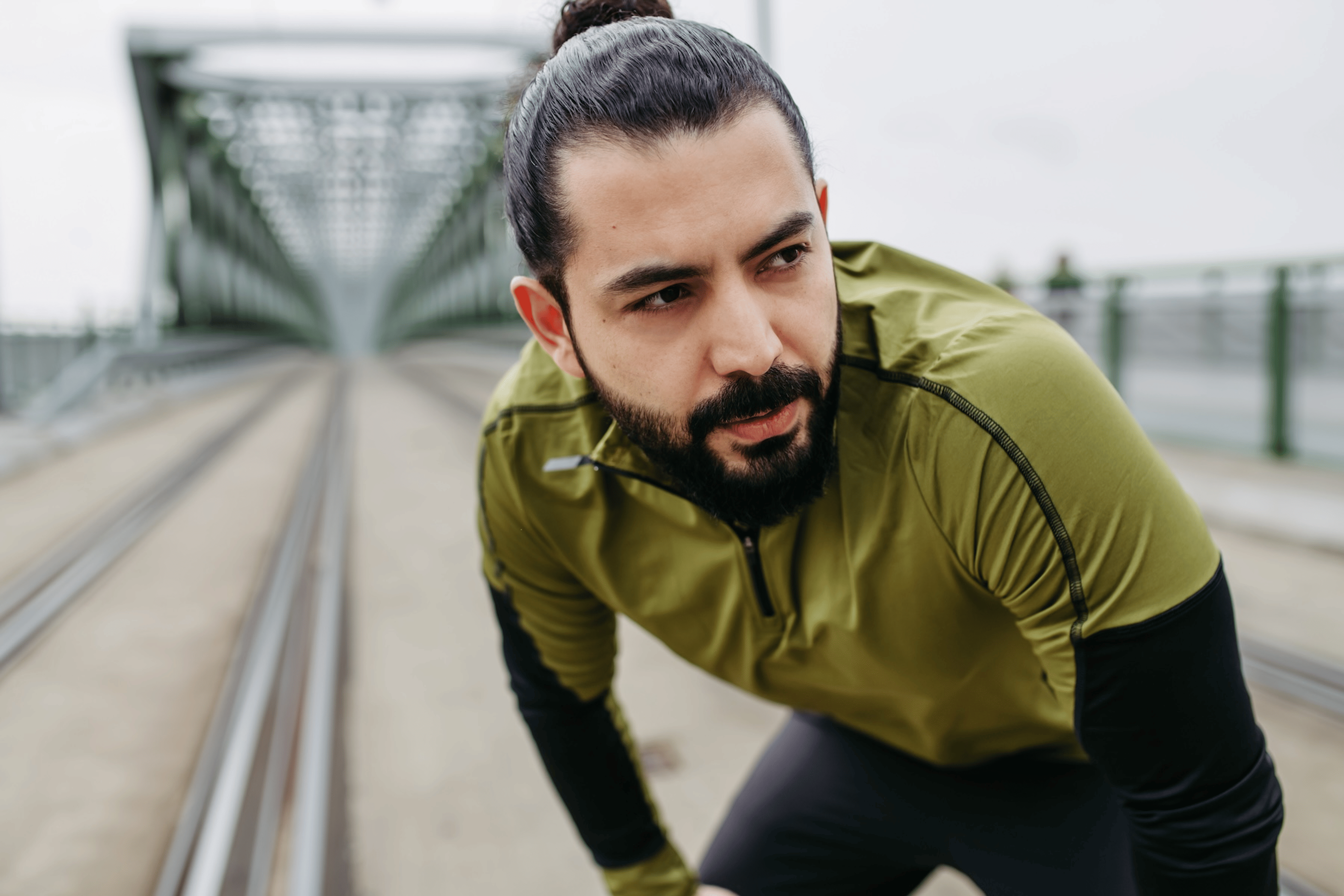
Halfpoint Images / Moment via Getty Images
Why You May Get a Stomach Ache After Exercising—and How to Fend It Off In the Future
Plus, what to do right now if your belly’s bothering you post-workout.
By Sarah Klein•
Why You Might Get a Tummy Ache After Exercise
What to Do If You Get a Stomach Ache After a Workout
How to Prevent a Belly Ache After Exercise
When to Talk to Your Doctor About Stomach Aches After Workouts
The Takeaway
You just finished a run or got home from the gym, and you’re flying high, feeling accomplished and strong. Then all of a sudden… your stomach hurts? A tummy ache after exercise isn’t the celebratory feeling you were looking for.
“Although many people feel totally fine after a workout, it’s not unusual to have nausea, stomach pain, or even diarrhea afterward,” says Justin A. Crocker, MD, a gastroenterologist and associate professor of medicine at Duke University. “It tends to show up more with intense exercise, but in most cases it isn’t a sign of anything serious.”
So what’s behind your symptoms? There are a number of reasons some people get a belly ache after exercise, and it’s not always an obvious culprit. “Sometimes you can’t always figure out at the beginning what’s going on,” says Gregory Stewart, MD, a sports medicine physician at University Medical Center New Orleans, East Jefferson General Hospital.
Fortunately, there are also a number of ways to prevent that discomfort after a little trial and error. Keep reading to learn more about what might be causing your stomach ache after the gym, how to deal with it in the moment, and how to (hopefully!) prevent these sensations next time.
Why You Might Get a Tummy Ache After Exercise
You might get a stomach ache after a workout for several different reasons. Here are some of the most common causes to know.
1. It’s Something You Ate
The age-old advice not to swim for an hour after eating isn’t exactly true, but eating too soon or too much before exercising can certainly upset your stomach, Dr. Stewart says. So can high-fat foods or spicy foods because they’re a bit more taxing on your digestive system. Some people also find too much dairy or caffeine before exercise results in an upset stomach later, Dr. Crocker says.
On the flip side, maybe you didn’t eat enough. If your blood sugar is low because you don’t have enough carbs to fuel your activity, you might find yourself dealing with nausea after a workout or other symptoms of an upset stomach.
2. You’re Dehydrated
If you haven’t had enough water, you might find a workout leads to all sorts of unpleasant symptoms of dehydration, such as headaches, muscle cramps, and some general stomach discomfort, Dr. Stewart says.
3. You’re Jostling Your Stomach Around
If you’re running, jumping, or moving in and out of the saddle while cycling, your belly is bouncing around too. All that jostling can stretch some of the ligaments in your torso around your organs and potentially cause pain and discomfort, Dr. Stewart says. You also might not feel comfortable if you’re leaning over on your bike and compressing your stomach too much, he adds.
4. Blood Is Flowing to Your Muscles
You need oxygen-carrying blood throughout your body to fuel every movement you make. When you’re exercising, you need more blood and oxygen in the big muscles doing the hard work. If you’re running or cycling, for example, more blood will move toward your legs and away from your stomach and gastrointestinal (GI) tract, Dr. Stewart explains.
Less blood in your GI system can in turn lead to a stomach ache after the gym or another workout. “That can irritate the gut and slow digestion, which is the main reason these symptoms show up,” Dr. Crocker says. “The harder the effort, the worse someone might feel.”
This is most likely to happen when you’re working out at a high intensity. And it may result in more than a stomach ache: You might also experience nausea or diarrhea, Dr. Stewart says. “This is sometimes telling you you’re doing too much, too quick,” he adds, like scaling up from 20–30 minutes of exercise at a low intensity to a high-intensity 45-minute workout.
5. You Have a Pre-Existing GI Condition
If you already have a diagnosis like lactose intolerance or irritable bowel syndrome, your stomach might hurt after a workout because exercise can trigger certain symptoms for people with these or other digestion-related conditions, Dr. Stewart says.
What to Do If You Get a Stomach Ache After a Workout
When you’re in the thick of a tummy ache after exercise, you’re probably looking for quick relief.
If you haven’t yet, scale back or stop what you’re doing entirely. Bouncing and jostling your stomach around less should help, Dr. Stewart says. “You may just need to rest, just slow it down for a couple of minutes and see,” he adds. It’s possible the feeling will pass and you can get back to business. (If not, you may need to call it a day.)
Try having something to drink too. “Sometimes plain water can make nausea worse, so a sports drink may go down easier,” Dr. Crocker says. This isn’t the time for a protein shake or a post-workout snack—both might make nausea or other symptoms worse, he says. If you’re feeling really nauseated, find somewhere safe and comfortable where you can lie down for a few minutes to help the sensation pass, he adds.
How to Prevent a Belly Ache After Exercise
Some days, a stomach ache after exercise will be unavoidable. But there are a few measures you can try to help ward off the discomfort as much as possible:
Build up intensity gradually: Rather than making dramatic jumps in how long or hard you’re working out, slowly work your way up to avoid stomach upset, Dr. Stewart says. A tummy ache after exercise shouldn’t discourage you from exercising altogether, he says. You just might need to start with 5 minutes, then 10, then 15 until your stomach can handle longer workouts. You may also need to ease into each individual workout: Spend a few extra minutes going through some warm-up exercises instead of starting off with high-intensity exercise right away, Dr. Crocker says. (The Peloton App has thousands of warm-up classes that make this simple and fun.)
Strengthen your core and pelvic floor: If some of your tummy ache feels like it’s in your lower abs or pelvis, strengthening your core and pelvic floor might help, Dr. Stewart says. Try adding some pelvic tilts, planks, leg lifts, and Kegel exercises to your strength training routine, he suggests.
Eat earlier: If you suspect your post-exercise tummy ache happens when you eat too close to a training session, try to finish your pre-workout meal or snack a little earlier. Dr. Stewart recommends eating an hour or two before your workout to avoid stomach discomfort. You’ll generally want to avoid eating big meals right before a workout too.
Expert with pre-workout food: You may also need to be a bit of a diet detective: Keep track of when you get a stomach ache after exercise and note what you ate or drank and how much beforehand. Then, come up with some hypotheses and test them. For example, if you got a belly ache after you drank coffee before a morning run, what happens if you skip the coffee next time? If you don’t think you ate enough carbs before your last Power Zone Ride, what happens if you eat a slice of toast and a banana before your next one? Adjust your pre-workout habits as needed to see if you can ward off the tummy ache.
Stay hydrated: Drinking enough water may also help you keep your belly feeling good after exercise. “Drink some water before you start, and keep something to drink with you,” Dr. Crocker says. Most adults should aim for around 11.5–15.5 cups of fluids a day. But, as strange as it sounds, a simpler way to track your hydration status is to look in the toilet bowl: If your urine is a pale yellow color, you’re optimally hydrated.
Don’t give up: Tummy aches are more common after exercise if you’re new to working out or just getting back into training after a break, when your body isn’t as used to the way your blood flow shifts to larger muscles, Dr. Crocker says. “As people get more fit, this usually calms down,” he says. So try your best to stay consistent with a workout program that makes you as comfortable as possible. Eventually, you’ll likely see progress toward your fitness goals and toward less frequent and less severe stomach irritation.

Peloton App
Access thousands of classes with no equipment needed.
When to Talk to Your Doctor About Stomach Aches After Workouts
Battling an upset stomach occasionally after a workout is usually nothing to worry about. But if you notice this happening with any kind of regularity, it’s worth talking to a healthcare provider about what’s going on, Dr. Stewart says. You can start with your primary care physician. They might refer you to a number of various specialists depending on what’s most likely causing your issues, such as a sports medicine physician, a physical therapist, or a gastroenterologist, he notes.
You should also talk to a doctor “if the stomach pain is severe, keeps happening even after you’ve adjusted what you eat or drink, or comes with weight loss, vomiting, bleeding, or changes in bowel habits,” Dr. Crocker says. “Those signs suggest it could be more than just normal irritation from exercise.”
The Takeaway
It’s relatively common and usually nothing serious to occasionally have a tummy ache after exercise. While it can happen for a number of reasons, it’s typically caused by something you ate, not drinking enough water, or the way blood flows away from your stomach and into your muscles during intense exercise. It’s more common in people who are new to exercise or getting back into it after a break.
If your stomach feels upset, stop what you’re doing and rest to see if the feeling passes. Drink some fluids and lie down if needed. To prevent future stomach aches after the gym, stay hydrated, eat smaller snacks or meals earlier before exercise, and build up your workout intensity more gradually. Talk to a healthcare provider if your belly ache after exercise is severe or happens frequently, or if you’re also experiencing vomiting, bleeding, or unexplained weight loss.
Related Articles

Health
7 Reasons Why You May Feel Bloated After a Workout—and How to Prevent That Uncomfortable Feeling

Health
How to Prevent Runner’s Stomach from Ruining Your Next Long Run or Race

Health
7 Reasons Why You May Feel Nauseous After a Workout—and How to Prevent It

Nutrition
What to Eat Before a Run, According to Dietitians Who Specialize In It
This content is for informational and educational purposes only and does not constitute individualized advice. It is not intended to replace professional medical evaluation, diagnosis, or treatment. Seek the advice of your physician for questions you may have regarding your health or a medical condition. If you are having a medical emergency, call your physician or 911 immediately.
Level up your inbox.
Subscribe for a weekly dose of fitness, plus the latest promos, launches, and events.
By providing your email address, you agree to receive marketing communications from Peloton.
For more about how we use your information, see our Privacy Policy.