Olga Pankova / Moment via Getty Imagesa
10 Things to Try If You Always Fall Asleep During Meditation
It’s normal to occasionally doze off during meditation, but there are a few things you can do to stay alert.
By Kathleen Ferraro•
Why Do I Fall Asleep While Meditating?
Is It Normal to Fall Asleep During Meditation?
How to Meditate Without Falling Asleep
Are Certain Types of Meditation Better at Staving Off Sleep?
The Takeaway
If you’ve ever started a meditation class feeling focused only to wake up when the closing music fades, you know how common falling asleep while meditating can be. It can feel a little disorienting or even discouraging, especially if your goal is mindfulness, not a surprise nap.
No need to worry: It’s totally normal (and pretty common). Most mid-meditation naps come down to everyday factors like pure exhaustion, practicing at the end of the day, meditating right after a meal, or getting a little too cozy in positions that quietly cue your brain for sleep instead of wakeful awareness. Basically, your body mistakes a moment of calm for bedtime.
Fortunately, there are tons of strategies to keep your mind and body alert during your practice. Keep reading to learn why falling asleep during meditation happens, how common it is, and what you can do to get the most out of your practice.
Why Do I Fall Asleep While Meditating?
Falling asleep during meditation doesn’t mean you’re doing it wrong. Rather, it often means your nervous system is seizing a rare quiet moment.
1. Your Body Is Reacting to Increased Parasympathetic Activity
Meditation activates the parasympathetic nervous system, which is the part of your nervous system that’s responsible for helping your body relax. Research shows that slow breathing and mindfulness reduce stress responses while increasing parasympathetic activity, which can deepen relaxation to the point of drowsiness or falling asleep.
“We arrive for meditation sessions overstimulated, with our cortisol still high,” says Nicole Anders, PsyD, a licensed psychologist and certified yoga instructor at Trauma Recovery Yoga. “When the breath becomes slow and parasympathetic activation begins, the body says, ‘Hey, we have a chance to reset! Let’s take it!’ and uses the opportunity to downshift all the way into sleep mode.”
Put simply, sometimes your body needs rest more than mindfulness.
2. You’re Fatigued
If you’re chronically short on sleep, your body can mistake meditating at the end of a long day as your final cue to rest. “It’s less a failing of willpower or discipline, and more a signal from the body that your sleep debt has gone unpaid,” Anders says.
Peloton meditation instructor Anna Greenberg agrees. “If you are genuinely exhausted and your body needs rest, it will take it wherever it can and that is not wrong or bad,” Anna says. “Some seasons of life are exhausting and we have to honor that.”
3. You’re Meditating In a Sleep-Friendly Position
Posture matters more than many people realize too. Positions that closely resemble typical sleep setups—like lying flat or leaning heavily into cushions—tell the body it’s safe to drift off, according to Anders. She describes this as a kind of conditioned response where, to your brain, bed-like body positions equal sleep.
“[You] may be in a position that is ‘too’ comfortable [or] does not require any effort at all,” Anna adds. While this is perfect for sleep meditations, deep relaxation meditations, or body scans, it’s less ideal for a wakeful mindfulness practice.
4. You’re Meditating Longer, Later, or After Eating
Certain conditions make falling asleep while meditating more likely. It’s more common to doze off during longer sessions and when meditating “at bedtime, after a meal, or when you are tired,” Anna says. These scenarios naturally stack the odds toward sleep, thanks to factors like lower energy levels and a nervous system already leaning into rest.
Is It Normal to Fall Asleep During Meditation?
You can rest easy (perhaps literally) knowing that falling asleep while meditating is very normal. In fact, Anders estimates that it happens in 25 percent or more of the meditation sessions she observes in community-based yoga and meditation classes. While this is anecdotal data, it’s clear that mid-meditation dozing is far from rare.
“If you are struggling with falling asleep during meditation, don’t beat yourself up about it,” Anna says. “You aren’t ‘bad’ at meditating; you just need to make a few adjustments to find a rhythm that works for you.”
Remember, too, that your timing and circumstances make falling asleep while meditating even more understandable. Practicing right after a meal can increase sleepiness, and bedtime meditations are naturally more likely to lead to dozing, Anna reiterates.
If you fall asleep while meditating every now and then, it’s completely normal. But if it becomes a pattern, Anna recommends investigating whether you could use more rest overall or whether you could benefit from changing your meditation timing, posture, or style to stay awake during practice.
It’s also never a bad idea to check in with your healthcare provider if you find yourself dozing off more frequently or falling asleep faster than you’d like. They can help determine what’s causing your sleepiness and provide potential solutions.
How to Meditate Without Falling Asleep
If your goal is to stay awake and engaged, making a few strategic tweaks can make a big difference in your battle against mid-meditation drowsiness. Here are 10 tips from Anna and Anders on how to meditate and not fall asleep.
1. Change Your Posture
Posture is one of the most powerful tools for staying alert. “Try not to lie down, because you’re essentially telling your body you’re ready to sleep,” Anders says.
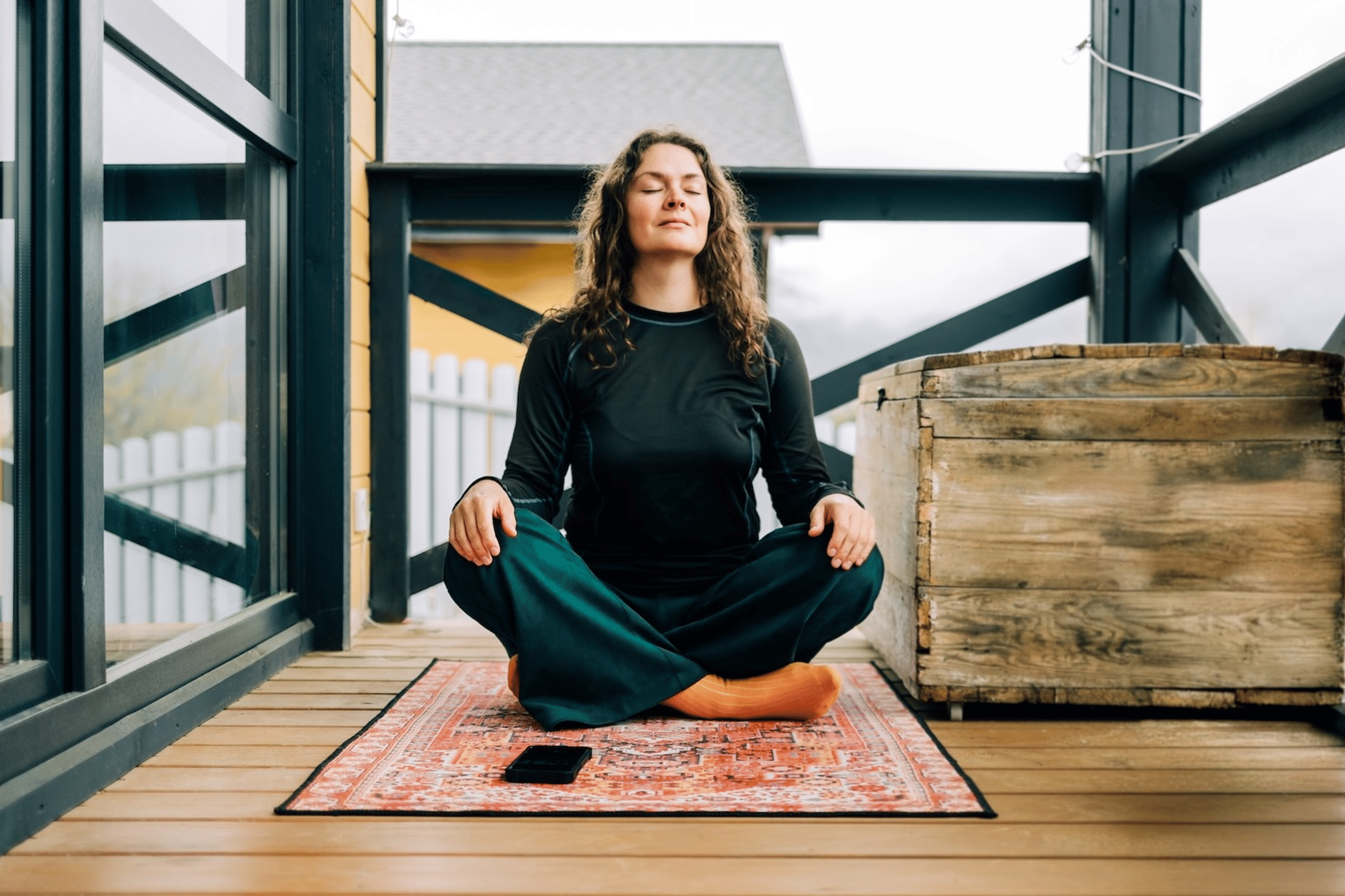
Aim for an upright meditation position instead: “A comfortable seat that allows you to feel rooted at the base and lift your spine tall with a sense of ease is ideal,” Anna says. An alert position like this sends a clear message to your body and brain that you’re resting, not sleeping.
It’s important to note that this advice isn’t one-size-fits-all, however; if you eventually find you can lie down to meditate without dozing off, feel free to do so.
2. Adjust the Time of Day
Meditating at night or when you’re already exhausted makes falling asleep far more likely, Anna says. If you keep falling asleep during meditation, Anders suggests moving your practice to the morning or earlier in the day—ideally in natural light—to send wakeful cues to your circadian rhythm. Even switching your practice from late evening to mid-afternoon may help your brain shift from sleep mode to meditation mode.
3. Start with Shorter Meditations
Long meditation sessions are wonderful, but they can also be an easier gateway to dozing. Anna recommends starting small: “You could try a short duration, like 5 minutes, to start and really focus on staying present and noticing if drowsiness begins to take hold,” she says. (There are hundreds of 5-minute meditation classes on the Peloton App you can explore.)

Peloton App
Access thousands of classes with no equipment needed.
4. Try Incorporating Light Movement or Tactile Anchors
Meditation doesn’t have to mean total stillness. Anders encourages brief, gentle sensory movement to keep the body engaged and maintain wakefulness.
“Roll the shoulders, gently tap your feet or knees, hold mudras in your hands (squeeze the fingers or thumbs together), or do anything else for a few seconds every 2–3 minutes,” she suggests. Practicing mantra repetition while moving beads on a mala, pressing fingertips together, or lightly squeezing the palms can also help, Anders adds. These quiet movements and tactile cues help reinforce focus and counter the sensory drop-off that often precedes sleep, she explains.
5. Try a Soft Visual Focal Point
If closed eyes send you straight toward sleep, consider meditating with your eyes open, maintaining a soft gaze while looking at a gentle visual anchor. “Rather than closing the eyes completely, try meditating with a candle or some other soft focus point,” Anders says. “This provides just enough sensory input to keep you conscious and grounded.”
6. Pair Meditation with Light Movement Beforehand
Coming into meditation already energized may help stave off an unwanted nap. Anna recommends “connecting to your physicality before meditating” with a brief yoga flow, stretching, or another gentle movement practice. Even a 5-minute warm-up can shift your body from sluggish to present. (Peloton has plenty of 5-minute classes to get the job done!)
7. Avoid Meditating Right After a Big Meal
Post-meal sleepiness is a real thing, Anna says, so if you meditate right after eating, you might notice amplified drowsiness during meditation, particularly if you ate more than usual or your plate contained high-glycemic foods. If you frequently fall asleep while meditating after a meal, opt for sessions earlier in the day or give yourself some time to digest before beginning your practice.
8. Meditate with More Active Breathing
Some breathing styles may naturally keep the mind more alert than others. Anders recommends techniques like counting your breaths, incorporating brief breath holds, or practicing box breathing (inhale for four counts, hold for four, exhale for four, hold for four). These patterns provide structure and cognitive engagement that help prevent drifting.
9. Try a Standing or Walking Meditation
If seated meditation continues to make you drowsy, change the orientation entirely. “Walking meditation engages enough focus and tactile feedback to avoid sleepiness,” Anders says. “Slow laps around the room that cover 10 meters back and forth, for 15 minutes, is a great starting place.” You can also take your practice outdoors with a Peloton walking meditation class.
The gentle motion keeps blood flowing and provides steady sensory input while maintaining mindfulness. Walking meditation can also support mood, mental wellbeing, and stress regulation, combining movement with meditative focus.
10. Consider Saving Ultra-Relaxing Styles for Bedtime
Body scan meditations, yoga nidra, and long silent sits can be deeply restorative, but they’re also most likely to lull you into sleep, Anders says. If your aim is staying awake, she suggests choosing more “active” meditation practices (more on those in a moment) instead of deeply relaxing styles in dim light or full stillness, which can feel a whole lot like getting ready for bed to your nervous system.
Are Certain Types of Meditation Better at Staving Off Sleep?
Yes, some types of meditation are naturally more “wakeful” than others. The main difference comes down to how much structure, physical or cognitive engagement, or sensory feedback a practice provides.
Anders says practices that combine focus with gentle physical or tactile cues tend to be the most effective for staying alert. These include:
Breath-counting meditation: Silently counting each inhale and exhale to give your mind a simple task that keeps it engaged.
Box breathing: A steady breathing pattern (inhale four counts, hold four, exhale four, hold four) that promotes calm concentration without inducing drowsiness.
Mantra meditation with a mala: Repeating a word or phrase while moving mala beads through your fingers to anchor focus with physical sensation.
Walking meditation: Slow, mindful laps—about 10 meters back and forth or a continuous stroll outdoors—while tuning into physical sensations and focusing on your surroundings to keep both body and mind alert.
Morning or energizing guided meditations: Classes specifically designed to support wakeful awareness and help you start your day.
You can explore many of these wakeful meditation styles on the Peloton App.


The Takeaway
Falling asleep during meditation is extremely common and often reflects a nervous system that’s eager for rest, not a lack of focus or skill. Fatigue, bedtime practice, a full stomach, ultra-comfortable positions, and deeply relaxing meditation styles can all send you into a snooze as well.
If your goal is staying awake, small shifts go a long way: Sit with an upright posture, meditate earlier in the day, keep sessions shorter, add light movement, and use more active meditation styles like box breathing, mantra meditation, or walking meditation.
Most importantly, listen to what your body is asking for. Sometimes that’s quiet alertness, and sometimes it’s simply rest, both of which count as meaningful outcomes of your practice.
Related Articles

Sleep
Always Feel Sleepy During the Day or Wired at Bedtime? You May Be Dealing with Circadian Misalignment

Meditation
8 Meditation Tips to Help You Feel Even More Comfortable with Your Practice

Sleep
Are You Operating on Sleep Debt? Plus, How to Balance it Out

Meditation
Morning Meditation Will Transform How You Start Your Day—Here’s How to Do It
This content is for informational and educational purposes only and does not constitute individualized advice. It is not intended to replace professional medical evaluation, diagnosis, or treatment. Seek the advice of your physician for questions you may have regarding your health or a medical condition. If you are having a medical emergency, call your physician or 911 immediately.

Level up your inbox.
Subscribe for a weekly dose of fitness, plus the latest promos, launches, and events.
By providing your email address, you agree to receive marketing communications from Peloton.
For more about how we use your information, see our Privacy Policy.