AleksandarNakic / E+ via Getty Images
The 6 Best Post-Workout Recovery Drinks to Grow Stronger, Faster
We asked experts how to pick the perfect post-workout beverage.
By Mirel Zaman•
What Should You Look for In a Post-Workout Recovery Drink?
The Best Workout Recovery Drinks
How to Pick the Best Workout Recovery Drink
How Soon After Your Workout Should You Have a Recovery Drink?
After giving it your all on the bike, treadmill, or mat, there’s a good chance that one of the first things you reach for is your water bottle. After all, little in life tastes better than an icy cold post-workout drink.
But while water alone is plenty refreshing and hydrating—not to mention crucial for your wellbeing—adding a workout recovery drink to your post-exercise fueling strategy can provide extra benefits.
“Post-workout drinks can do more than just hydrate,” says Yasi Ansari, RDN, a registered dietitian nutritionist and certified specialist in sports dietetics. “When they include nutrients like protein, carbohydrates, and electrolytes, they can help replenish energy, support muscle repair, and speed up recovery, especially after longer or more intense workouts.”
Ahead, experts break down exactly what to look for in a post-workout recovery drink so you can pick the beverage that’s best for your fitness routine and goals.
What Should You Look for In a Post-Workout Recovery Drink?
If you’re searching for a workout recovery drink with benefits beyond hydration, look for a beverage that delivers a few key nutrients or minerals. “The most important ingredients are carbohydrates and protein,” says Jason Karp, PhD, a sports and exercise scientist who’s researched post-workout recovery drinks.
Here’s why: Carbs are needed to replace fuel stores (known as glycogen) that your muscles use up while you exercise, Karp says. Replenishing your glycogen supply is crucial, especially if you intend to work out again in the next day or so, since it’s the body’s main fuel source during exercise. Protein, on the other hand, helps repair the tissue damage that occurs during exercise, helping them grow back stronger, he explains.
After more intense or longer workouts, picking a recovery drink that has electrolytes or antioxidants may provide additional benefits. Electrolytes, particularly sodium, may help you rehydrate and maintain muscle function, especially after an intense or particularly sweaty training session, explains Lauren Manaker, RDN, a registered dietitian nutritionist. There’s also recent evidence that antioxidants may promote muscle recovery after exercise, possibly by reducing the inflammation and oxidative stress caused by the workout, she notes (although more research is needed to say for sure).

Peloton App
Access thousands of classes with no equipment needed.
The Best Workout Recovery Drinks
There’s no single post-workout recovery drink that’s right for every situation. Rather, the best beverage is one that’s tailored to your body’s needs and your exercise goals. Luckily, there are many different workout recovery drinks you can choose from that will help you refuel and recover, so you can get the most out of your training session. Here are six top choices to consider.
1. Homemade Smoothie
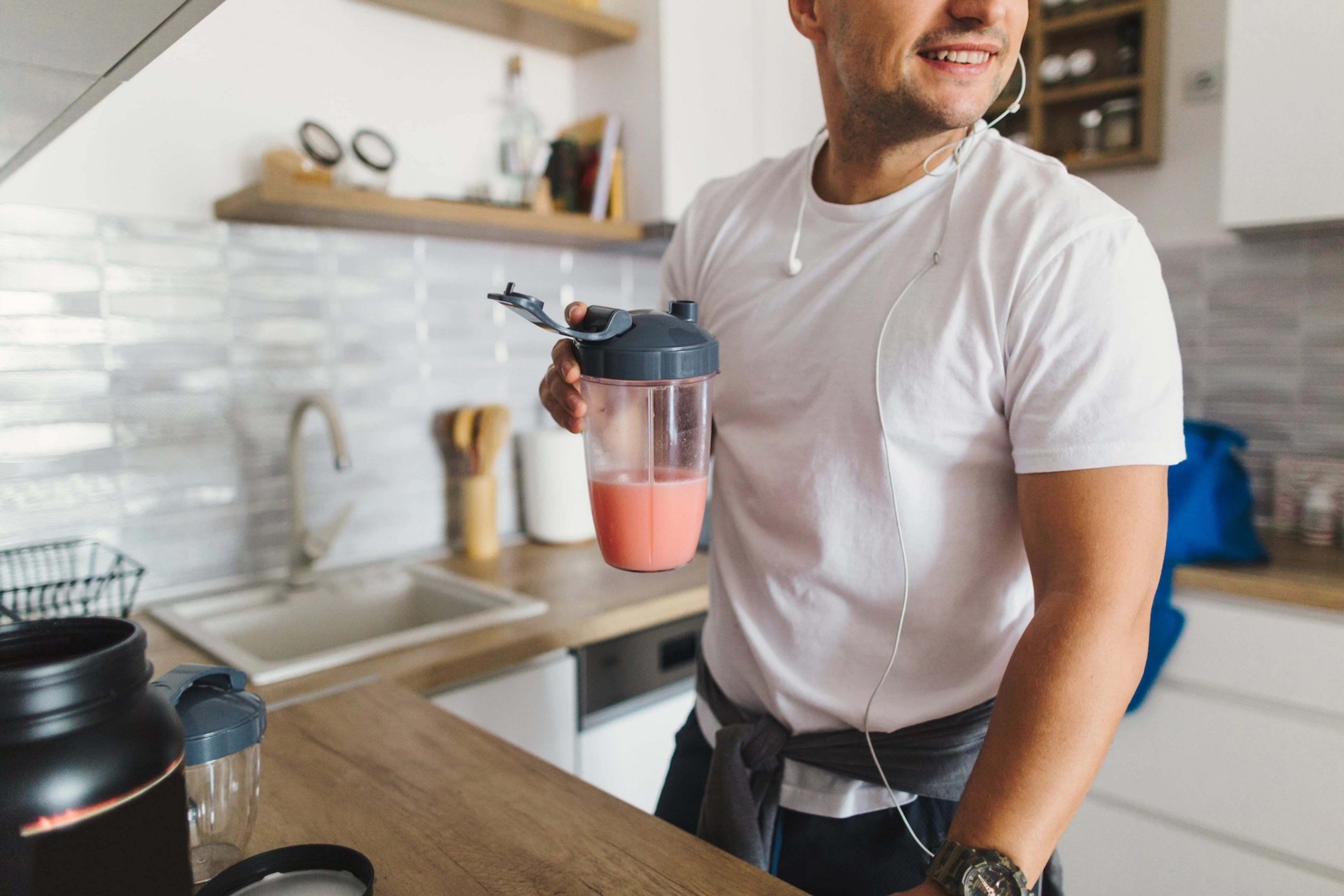
A homemade smoothie is one of the best post-workout recovery drinks because it allows you to tailor the ingredient list—and the macronutrient balance—to your goals, needs, and taste preferences. Ansari recommends using a mix of carbs (such as fruit or granola) and protein (like yogurt, milk, or a healthcare-provider-approved protein powder), then adding healthy fats such as omega-3 fatty acids (from chia seeds, ground flaxseeds, or nut butter).
When selecting ingredients for your post-workout smoothie, consider the macro balance it’ll provide. Many experts recommend sticking to a 2:1 to 4:1 ratio of carbs to protein (so 2–4 grams of carbs for every 1 gram of protein) in your post-workout recovery snacks. The nutrients work better together; one study in the Journal of Sports Science & Medicine found that people who consumed a drink with a 4:1 carb-to-protein ratio after intense exercise had 128 percent greater muscle glycogen restoration and 55 percent better exercise performance than those drinking a regular, carb-only sports drink.
In case you need some inspiration, Karp’s favorite blend is a banana, chocolate, and peanut butter smoothie. If you’re looking for more of a protein-packed pick, check out Peloton instructor Camila Ramón’s mango cheesecake smoothie recipe.
2. Chocolate Milk
You might have heard your gym buddy swear by chocolate milk after a workout, and for good reason. A recent meta-analysis in the journal Human Nutrition & Metabolism reviewed 16 studies and found that drinking chocolate milk after a workout may help significantly reduce levels of lactate in the blood more than other recovery drinks. Lactate levels rise in response to exercise intensity, and quicker clearance helps reduce fatigue and improve exercise performance. Drinking chocolate milk may also increase your endurance during subsequent workouts, according to a small 2006 study conducted by Karp.
So why is chocolate milk such a recovery powerhouse? It delivers that carb-protein combo that Karp says is essential for recovery, hitting a perfect 3:1 to 4:1 carb-to-protein ratio. Plus, it provides water and electrolytes to assist with rehydration.
3. Tart Cherry Juice
You may have heard of using tart cherry juice as a sleep aid, but it could also help you bounce back from training faster when used as (or added to) a post-workout recovery drink. “Tart cherry juice is rich in anthocyanins, which are antioxidants that may help ease post-exercise inflammation and muscle soreness during periods of higher intensity and back-to-back training sessions,” Ansari says.
More research is needed to determine how effective tart cherry juice really is as a workout recovery aid. But a 2021 meta-analysis of 14 studies showed that the drink does appear to partially stave off muscle soreness and help muscles recover, possibly due to its anti-inflammatory effects.
Ansari suggests blending tart cherry juice into a smoothie, or sipping it on its own or mixed with water.
4. Yogurt Drink
You may not think of yogurt-based drinks as a go-to for post-workout recovery, but Ansari points out that they deliver “at least 20 grams of protein along with gut-friendly probiotics.” She suggests pairing one with a snack, such as a granola bar, piece of fruit, or sandwich to add in a dose of carbs (aim for about 40–80 grams), creating “a more complete post-workout meal or snack that supports both performance and can offer gut-supporting compounds.”
As Ansari hinted, yogurt drinks like kefir have the added benefit of delivering a dose of probiotics. Science has shown that these healthy bugs may have the ability to improve exercise endurance, according to 2023 research published in the journal Foods. When probiotics break down dietary carbs, a few short-chain fatty acids are released. These may affect how your body creates and uses energy, allowing you to work out harder, for longer. The research doesn’t indicate that taking probiotics immediately after working out is particularly beneficial, but regularly consuming them may be. So having them be a part of your post-workout recovery drink isn’t a bad idea.
5. Green Tea with Honey
While many workout recovery drinks are suited for people who’ve exercised for at least 45 minutes, Manaker suggests green tea with honey for shorter or less-intense training sessions. “While not a traditional recovery drink, green tea offers antioxidants to reduce inflammation, and honey provides quick carbs, she says. “It’s a lighter option for low-intensity workouts or yoga sessions.”
While more research is needed on the benefits green tea or matcha might hold for exercise recovery, there’s promising early evidence. In one small study, for example, researchers asked 36 young men to drink matcha or a placebo twice a day for eight to 12 weeks while completing a resistance training program. Those in the matcha group experienced a greater increase in leg strength or skeletal muscle mass, depending on how long their training program was. The researchers also found that the matcha group had lower levels of the stress hormone cortisol in their saliva. Since stress can interrupt the body’s ability to bounce back from exercise, reducing stress levels may aid the muscle recovery process.
That said, matcha isn’t the same thing as standard green tea, and this study involved drinking it twice daily; occasionally sipping a cup of tea after a workout may not have much of an effect. Still, it certainly can’t hurt, and as Manaker points out, green tea with honey could help refuel your glycogen stores and tame inflammation.
6. Electrolyte Drink
Reaching for an electrolyte beverage as your post-workout recovery drink can be especially helpful at preventing dehydration, fatigue, and cramping if you’re exercising outdoors on a hot day or plan to be training for over an hour, Ansari says.
Keep in mind that some electrolyte or sports drinks may be more effective choices for your workout recovery roster than others. While research in the journal Nutrients shows that drinks containing sodium and carbohydrates can help the body rehydrate more effectively than water alone, other electrolytes like potassium may not have much of an effect.
Sodium helps support the fluid balance in the blood and keeps the kidneys from releasing water. And carbs may slow gastric emptying and intestinal absorption, helping keep water in your body for longer. Together, they can help you rehydrate more efficiently and avoid dehydration, which can both impact performance and increase the risk of heat-related illnesses.
Just be mindful of the fact that you probably don’t need to down an electrolyte drink after every workout, particularly those that are less than an hour long, don’t take place in extreme heat or humidity, or don’t lead to lots of sweating. (There are some risks of ingesting too many electrolytes, including heart rhythm irregularities and nausea.)
How to Pick the Best Workout Recovery Drink
When you’re picking the best post-workout recovery drink, you have to take into account the type and intensity of your workout and your personal goals, Manaker says.
The first question to ask: Do I actually need a recovery drink after a workout, or is water enough? Typically, if your training session was high-intensity, lasted more than 45–60 minutes, or left you feeling depleted, consuming a recovery drink or snack can help support your performance, Ansari says.
From there, consider the type of workout you completed. If you’ve been strength training, you may benefit from a more protein-rich post-workout recovery drink, Manaker says, such as a homemade smoothie or yogurt drink. That’s because strength training causes more muscle damage than other types of exercising, which can increase your protein needs. On the other hand, if you just knocked out an endurance workout, a drink that delivers more carbohydrates and electrolytes may be a better pick, since endurance training causes more glycogen and water losses, she notes.
If you’re not sure where to start, Ansari advises looking for a workout recovery drink with at least 20 grams of protein (which is thought to be enough to support the muscle repair process) and at least twice the number of carbs (again, looking to stay within that 2:1 to 4:1 carb-protein ratio). “That said, everyone’s needs are different. So use this as a baseline for recovery and adjust based on goals, training level, and what helps your body feel nourished and recovered,” she says. Don’t be afraid to adjust your fueling strategy and see what makes your body feel best.
Finally, you may also want to pair your post-workout recovery drink with a fueling snack or meal in order to get all the nutrients you need. If your beverage of choice doesn’t deliver enough carbs or protein to refuel you or support your training, you can supplement with a snack or meal.
How Soon After Your Workout Should You Have a Recovery Drink?
You should generally aim to have a recovery drink within 30–60 minutes of finishing your workout, Ansari says. “That’s when the blood flow to the muscles is greater, and the body’s ability to absorb more carbohydrate and protein is enhanced,” she says.
If you train fasted, it’s especially important for you to consume protein right after your workout to help the muscle recovery process begin, according to the Journal of Orthopaedic & Sports Physical Therapy. And failing to take in carbs within two hours after exercise can lead to low glycogen levels 4 hours later and worse next-day exercise performance, research in Sports Medicine reports.
What you eat and drink the rest of the day, both before and after your training session, matters too. There’s no substitute for getting enough protein, carbs, and fat throughout the day to sustain your activity levels. But the right post-workout recovery drink can make a huge difference in your body’s ability to re-energize and repair, so you’re ready to crush your next workout—and your long-term health and fitness goals.


This content is for informational and educational purposes only and does not constitute individualized advice. It is not intended to replace professional medical evaluation, diagnosis, or treatment. Seek the advice of your physician for questions you may have regarding your health or a medical condition. If you are having a medical emergency, call your physician or 911 immediately.
Level up your inbox.
Subscribe for a weekly dose of fitness, plus the latest promos, launches, and events.
By providing your email address, you agree to receive marketing communications from Peloton.
For more about how we use your information, see our Privacy Policy.