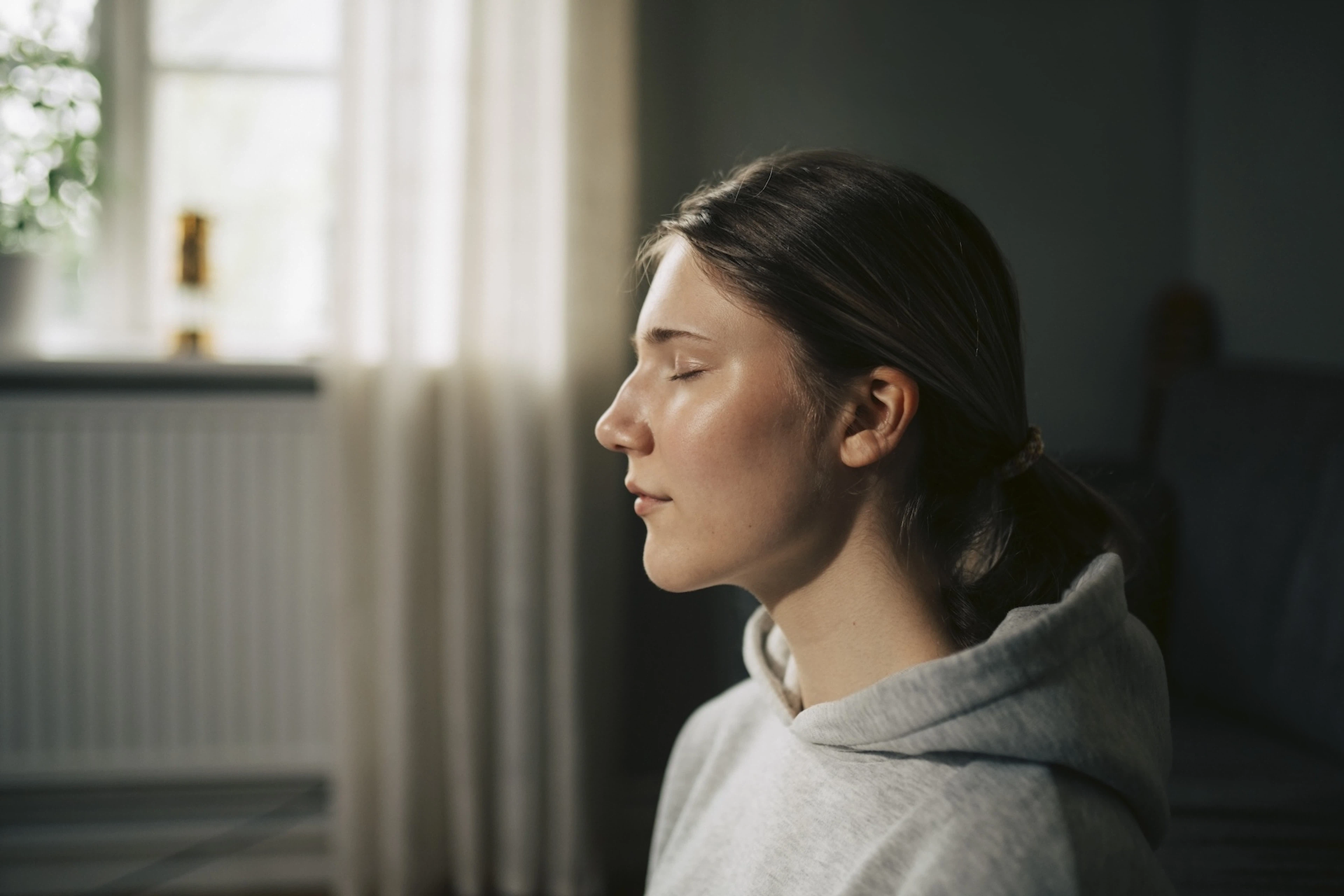
Maskot / Maskot via Getty Images
Is There an ‘Optimal’ Meditation Frequency to Aim For?
Daily, weekly, twice-daily—how often should you really aim to meditate? We asked the experts.
By Michelle Konstantinovsky•
How Often Should You Meditate?
How Long Should You Meditate During a Session?
Tips for Gradually Meditating More Often
The Takeaway
Meditation is a simple yet extremely beneficial practice—but if you’re new to the technique, it can admittedly come with a few logistical questions. You might wonder, for example, how long you should meditate for, the best time of day to do it, or how you should position yourself. But perhaps one of the most common questions has to do with frequency: How often should you meditate?
We asked the experts to break down how often they recommend meditating and their best tips for gradually incorporating more meditation into your regular routine. Keep reading for what you need to know.
How Often Should You Meditate?
Everyone has different needs, goals, and availability, which can all impact our ideal meditation frequency. But in a perfect world, we’d all be dedicating a few moments to meditation every single day.
“If possible, you should aim to meditate every day,” says Peloton instructor Nico Sarani. “Science says that meditating five days per week for at least 10–20 minutes already shows measurable effects on your mind and body. Most yogic traditions also advise daily meditation practice.”
If meditating every day sounds daunting, consider this helpful reminder from licensed neuropsychotherapist and author Britt Frank: You can start with absurdly short sessions. “In order to make a habit stick, we need to start so small we feel ridiculous,” Frank says. That could look like meditating for just 30 seconds two or three days a week. “Eventually, we can build up to longer sessions and more frequently,” she continues. “But to make a habit stick, we need to make it small.”
Nico agrees, recommending that those new to meditation start with shorter, more frequent sessions in order to gradually get acclimated to the practice. “In my opinion, it’s valuable to first create the habit to sit down and practice on a regular basis, rather than doing longer meditations infrequently,” she says.
With all that in mind, here are a few benefits of various meditation frequencies.
Benefits of Meditating Daily
Research indicates that daily meditation can have a positive impact on the brain, even in short durations. One study, for example, found that meditating for 13 minutes every day for eight weeks helped enhance participants’ attention, memory, and mood. And research on habit formation in general indicates that by repeatedly performing an action in the same context, the brain forms a strong association, which allows the behavior to become automatic.
“With a habit like meditation, we want to train our brains to expect it and to receive it as expected,” Frank says. “The consistency allows our brains to trust the process.”
Benefits of Meditating Once Every Few Days or Weekly
Some research suggests that meditating even once a week could offer significant benefits, such as reduced stress and anxiety, improved sleep quality, and enhanced life satisfaction.
However, while research has shown that missing one opportunity to perform a specific behavior (for example, skipping one meditation session) doesn’t affect the habit-formation process, a high degree of repetition and consistency (like a daily practice) is best for making that habit truly automatic.
Benefits of Meditating More Than Once a Day
While there isn’t much research on the specific benefits of meditating more than once a day, studies have shown that the more often you perform a task, the less cognitive effort it requires, helping to make it more automatic.
Additionally, meditating more than once a day—even for a few minutes at a time—could potentially help promote relaxation and reduce stress levels to avoid an accumulation of tension throughout the day. That said, you don’t have to meditate multiple times a day to reap the benefits; establishing your own version of regularity is what matters most.
You’ll also want to pay attention to the quality of your meditations to make sure you’re getting the most out of them—or if you’d be better suited focusing on one session a day instead. “If you get a good 10 minutes of [daily] meditation that really calms your mind, that’s more important than meditating for, say, 30 minutes in the morning and before bed but being distracted in the process,” Nico says. “If the quality of your practice is great, meditating more often will also give you more benefits. If it’s not, you may want to focus on getting one good meditation in, instead of two or three that aren’t so great.”
How Long Should You Meditate During a Session?
While it’s great to have goals, there’s no single “right” length of time to meditate. Depending on your personality, mood, experience level, and more, you may find that fitting in a daily 5-minute meditation works well, or you might discover that longer, 20- or 30-minute sessions are right for you. The key is to have a steady, stable routine.
“It’s better to aim for a daily practice that can easily be integrated into everyday life [rather] than practicing for longer but infrequently, in my opinion,” Nico reiterates. “However, once you have established a daily habit, maybe by practicing shorter meditations at first, you may then want to increase the length of your meditations, as it gives you a better opportunity to find deeper stillness of mind.”
Tips for Gradually Meditating More Often
If your goal is to gradually ramp up the duration or frequency of your meditations, incorporating small, actionable steps into your daily routine can help get you there. Here are a few pro tips to help you on your journey.
1. Set Yourself up for Success
You don’t need to dedicate an entire room to meditation, but it can be helpful to pick a spot that you can find peace in right away. Whether that means plopping a pillow in the corner of your bedroom or making sure your yoga mat is rolled out and ready for you, having a go-to space can really support your practice.
“Make it as easy for yourself to drop into stillness without distractions so you can find peace of mind with as much ease as possible,” Nico says. Again, this doesn’t need to be anything fancy: “Sometimes, sitting in your [parked] car with headphones or ear plugs before work is the calmest place to be,” she says.
2. Approach Meditation Like Strength Training
In strength training, the concept of progressive overload refers to gradually increasing the stress placed on the body over time. While this kind of physical process can improve physical strength and endurance, applying the same concept to your meditation practice can improve mental focus and stamina.
“If you want to increase your cadence, it helps to think of meditation time increases the way you would approach weight increases—a little at a time, and enough to fatigue the muscles, but not so much that it creates strain,” Frank says.
3. Find a Time That Works for You
The best time of day to meditate is a time that you can regularly commit to and that works for your schedule, but carving out a few moments in the morning may help set you up for a calmer, more focused day ahead. “Meditation helps you to start your day off on a good note,” Nico says. “Some people have more time and space before bed, however, to practice meditation.”
You don’t necessarily have to meditate at the start or end of the day, though. Meditating after a workout can also be a great way to wind down and reset. Nico says that, similar to meditating in the morning, it might be easier to calm your mind with a post-exercise meditation after you’ve released physical and mental stress through movement. “Take advantage of that fact— it may make mental stillness more accessible and meditation therefore more enjoyable,” she says.
4. Expand Your Definition of Meditation
There’s a reason Peloton offers such a wide variety of meditation styles, from breath-based practices to sleep-focused sessions to mindful walks and more. “There’s more than one way to meditate,” Frank says. “While we usually think of meditation as the ‘quiet your mind and close your eyes’ kind, meditation is simply the act of paying attention. You can meditate by observing the world around you, by listening to music, by drawing, by cooking, or by any other activity. So if you want to increase meditation, start by increasing your awareness.”
It’s also important to start where you are and accept what works for you right now. If deep relaxation meditations aren’t serving you, try something different, like a guided visualization. “Everybody’s minds are very different, and there are a multitude of different practices out there,” Nico says. “So everybody starts at a different ‘level’ and ‘progresses’ at different ‘speeds.’”
She also recommends trying out different techniques—for example, loving-kindness meditation, mindfulness meditation, body scan meditations, and so on—and choosing a style that you enjoy. “When we get excited for something, chances increase that we want to do that activity again,” Nico says.


5. Try Habit Stacking
One simple way to ensure meditation becomes a more natural part of your everyday routine is to use habit stacking. This means you might “stack” meditation onto an existing habit, like brushing your teeth in the morning: Every time you put your toothbrush away, you do a few minutes of meditation. Tacking the practice on to an activity you already do each day “makes it easier to stick with it,” Nico says.
6. Track Your Progress
Tracking your fitness progress is a great way to keep tabs on just how much strength you’ve gained over time. Similarly, keeping track of your meditation routine can help you stay motivated and accountable. “Try to work with an app that lets you hit streaks and daily goals,” Nico says. The Peloton App does just that, plus offers thousands of meditation classes spanning styles and lengths.

Peloton App
Access thousands of classes with no equipment needed.
The Takeaway
When it comes to how often you should meditate, the answer is two-fold. First, as with most mental and physical practices, it depends on a variety of unique personal factors; second, consistency wins over intensity. While a daily practice is ideal for making meditation an automatic habit, the most effective approach for beginners is to start with small, manageable goals that you can build on. This gradual strategy helps ensure you build a sustainable routine without overwhelming yourself.
Even if you can't meditate every day, experts agree that a regular practice—whether that’s once a week or more—can still yield significant benefits, from reducing stress to improving sleep. The key is to find a personalized approach that fits your life, whether that means meditating after a workout, in your parked car, or for a few minutes before bed.
“Meditation is like a muscle,” Nico says. “If you stick to the practice, meditation will become easier over time. Meditation truly has the ability to change your life and well-being and opens doors to vast amounts of possibilities and potential.”


This content is for informational and educational purposes only and does not constitute individualized advice. It is not intended to replace professional medical evaluation, diagnosis, or treatment. Seek the advice of your physician for questions you may have regarding your health or a medical condition. If you are having a medical emergency, call your physician or 911 immediately.

Level up your inbox.
Subscribe for a weekly dose of fitness, plus the latest promos, launches, and events.
By providing your email address, you agree to receive marketing communications from Peloton.
For more about how we use your information, see our Privacy Policy.