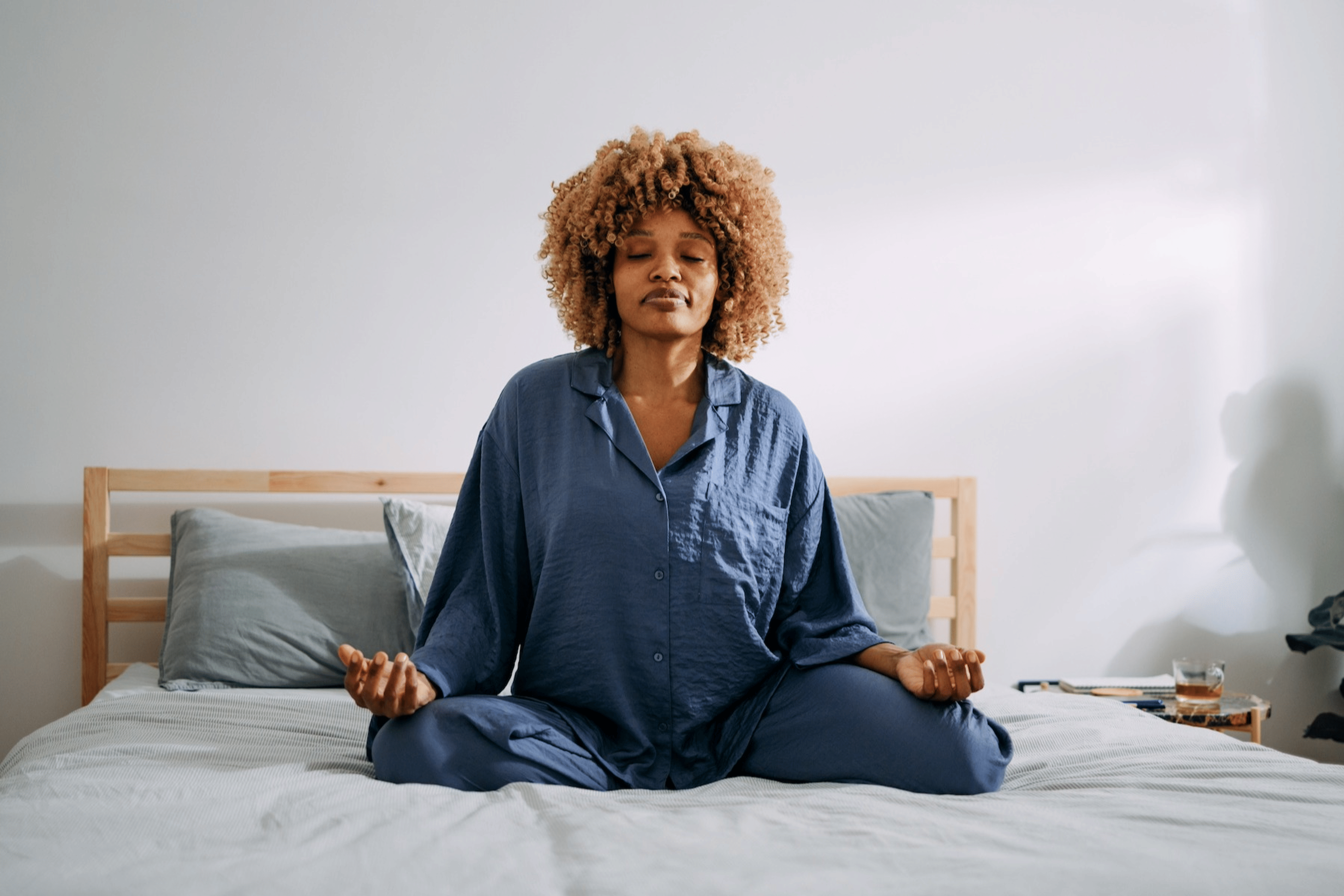
miniseries / iStock / Getty Images Plus via Getty Images
How to Start Meditating Daily (and 7 Benefits of Doing So)
Making time for meditation each day offers serious perks for your wellbeing.
By Michele Ross, Haley Jena•
Benefits of Daily Meditation
How to Meditate Daily
Are Certain Types of Meditation Better Suited for Daily Practice Than Others?
It’s no secret that meditation is good for you. The practice has been shown to reduce stress, sharpen attention span, improve your overall wellbeing, and much (much) more. And while any time you can spare here and there for meditating is great, daily meditation can turn the practice into a game-changing habit.
Ahead, we’re covering just how powerful daily meditation can be, plus sharing pro tips on how to form this mindful routine and make it stick.
Benefits of Daily Meditation
Meditating daily can have profound effects on your physical, mental, and emotional health. A simple, short daily practice can calm your mind, steady your focus, lower heart rate and blood pressure, and even enhance your immune system, according to Elizabeth Winkler, a licensed therapist who also specializes in mindfulness and meditation.
More specifically, here are a few benefits of daily meditation.
1. It Sets Your Day (or Night) up for Success
Winkler is a huge fan of morning meditation to create a positive intention for the hours ahead. Starting your day with meditation can give you a grounding foundation of peace and relaxation before you begin to tackle your to-do list. A morning mindfulness practice may also remind you to tap into that inner stillness if you face challenges later in the day.
That said, meditating at any time of the day can be beneficial. “If you can meditate for just a few minutes in the afternoon or evening with the intention to let go of everything you’ve taken in over the course of the day, you will sleep better and wake up with greater vitality and peace of mind,” Winkler says.
2. It Enhances Focus and Fulfillment
You can think of daily meditation as a form of training. “Just like training our bodies through running, walking, biking, yoga, or any other exercise, regular meditation trains the brain,” Winkler says. “Just as we use weights to strengthen our muscles, we can use meditation to strengthen the muscle of attention.”
A focused attention span can help you stay present and better control where your energy flows—something that may be especially beneficial for those of us prone to rumination, distraction, and worrying.
“Your life is reflected by how you use your attention, and meditation helps you become more aware of how distracted you become and how you can choose to shift your attention the moment you realize you are lost in thoughts,” Winkler says. “This skill is easier to hone with a daily practice, and when applied in your day-to-day life, it becomes life-changing. You become more able to live in the present moment rather than in your thoughts or stories about it.”
3. It Reduces Stress and Improves Mood
Meditating daily has the power to benefit your mind and mood alike—even for novice meditators and relatively shorter practices. According to a 2019 study published in the journal Behavioural Brain Research, non-experienced meditators who listened to 13-minute guided meditations daily for eight weeks noticed improved moods and decreased anxiety. But that’s not all: They also experienced cognitive boosts such as enhanced attention and memory.
4. It May Ease Symptoms of Depression and Anxiety
Practicing mindfulness every day may also help ease anxiety and depression, according to a 2024 study in the British Journal of Health Psychology. Participants who adhered to a 10-minute mindfulness meditation practice (which included intention setting, a body scan, focused breathing, and self-reflection) every day for 30 days reported a 19.2 percent reduction in depression, a 12.6 percent reduction in anxiety, and a 6.9 percent improvement in wellbeing compared to a control group.
5. It Builds a Solid Habit
Consistency is key to achieving just about any goal, from reaching a new workout PR to learning a new language to, yes, building a meditation habit—and practicing daily can help you form a meditation routine that feels automatic. “Consistency delivers the results,” Winkler says.
But while a daily meditation practice is ideal for forming a new habit, don’t beat yourself up if a looser cadence is more practical for your schedule or preferences. For instance, meditating every other day (rather than daily) is still something to be proud of. “Just like working out every other day, meditating every other day has obvious positive benefits but takes longer to build,” Winkler explains. (With this analogy, there’s one important point of difference: Rest days definitely have a time and place as far as your workouts go, yet meditation is a form of R&R in and of itself.)
6. It Might Improve Time Management
Maybe your calendar is so packed, you can’t imagine squeezing in a daily meditation. But setting aside a few moments for meditation could actually make your schedule feel more manageable.
“Making the time to meditate daily actually makes space for more time in our lives because it is a practice of being aware and present,” Dr. Chelsea Jackson Roberts, a Peloton meditation and yoga instructor, previously told The Output. “I am absolutely more mindful of my time and time management when I integrate meditation daily.”
7. It Could Help You Stick with Other Healthy Habits
Not only is daily meditation a great healthy habit to adopt on its own, but it may also help you stick with other good-for-you routines. The same British Journal of Health Psychology study mentioned above also found that practicing a daily 10-minute mindfulness meditation practice can motivate you to exercise consistently, get better sleep, and follow healthier eating habits.


How to Meditate Daily
No matter if you’re new to meditating, fell off the wagon, or need some encouragement to meditate daily, these tips will help you stay the course:
Start Small
Many people believe that meditation requires innate peace, quiet, and stillness from the get-go, or that you need to commit to sitting for long periods of time to attain any benefit. But these are simply myths in need of busting: Short stints of daily meditation can work wonders to form a habit and set the stage for a successful, sustainable practice.
“Try meditating for 5 minutes instead of 10 or 30, and build from there,” Peloton instructor Nico Sarani recommends. “Once you get into the flow of meditating, you may naturally want to stay in that nice, meditative state because it just feels so good.” Until then, keeping your practice within short but sweet time frames can help you stay accountable and motivated.
Try Habit Stacking
Habit stacking, which involves adding a new habit onto existing ones, is an approachable way to form a new daily meditation routine.
Start by finding a convenient time when there’s room to add in a few minutes of meditation. “For example, make it a habit to sit down to quiet your mind after you’ve had your first cup of coffee, right after your evening workout session, or take five minutes to listen to a meditation after work,” Nico says. “It’s like meditation slowly becomes part of your already-established routines or habits, and this makes it easier to stick.”
Tag It Onto a Workout
If you’re in a solid rhythm with your fitness routine, you could also cap off your workouts with meditation. Experts say this sequence is a great way to regulate your emotions and generally reset before moving on to your next activity. Not to mention, you may feel more comfortable sitting for a daily meditation session since your body is likely loose and warm from your workout.
The Peloton Cross Training Series can make this workout-to-meditation pipeline extra seamless. If you just finished a heart-pumping run and subsequent stretch on the Tread+, for example, you could simply rotate the Swivel Screen, sit down on your mat or meditation seat, and start a guided meditation class.

Peloton Treadmills
Two treadmills. One Peloton experience.
Aim to Meditate the Same Time Each Day… or Don’t
Bookmarking a consistent time for your daily meditation practice—whether that’s morning, noon, or night—typically makes it easier to stick with.
Although the choice is ultimately yours, those who have trouble nailing a steady routine may find that morning is the best time to meditate, according to a 2023 observational study published in the Journal of Medical Internet Research. Participants who listened to guided meditations in the morning had higher rates of maintaining a consistent practice with an app. Researchers believe the strength of existing morning routines and our circadian rhythms make it easier to build new habits (like meditation) in the morning—but they also stress that flexibility with your practice is key for staying persistent in the long term.
And again, morning isn’t the end-all, be-all time to meditate—some people may prefer to reserve 5 or 10 minutes in the afternoon for their practice, while others prefer to meditate at night to drift off to sleep. Long story short, while keeping a regular meditation time may help with habit formation, there’s truly no wrong way (or wrong time) to meditate daily.
Associate Meditation with Something Positive
If you struggle with meditating daily, Nico suggests remembering successful meditations you’ve done before to get your brain on board.
“Whenever you feel like something else is more important, more exciting, or more beneficial than sitting down on your meditation cushion, you may recall a beautiful meditation experience that made you feel good, relaxed, or helped you get over something,” she says. “You could also recall all the benefits of meditation you know about to be more motivated to practice,” Nico adds, which, again, includes increased focus, less stress, more calm and clarity, improved memory, and beyond.
Give Yourself Grace
According to Nico, there’s no such thing as a “bad” meditator; rather, there’s only the right strategy waiting to be found. This may involve experimenting with different meditation styles, instructors, meditation positions, and the like.
If you fall off your daily meditation practice or find it difficult to stay present, it’s important to go easy on yourself. Progress—not pressure or perfection—is the general aim here.
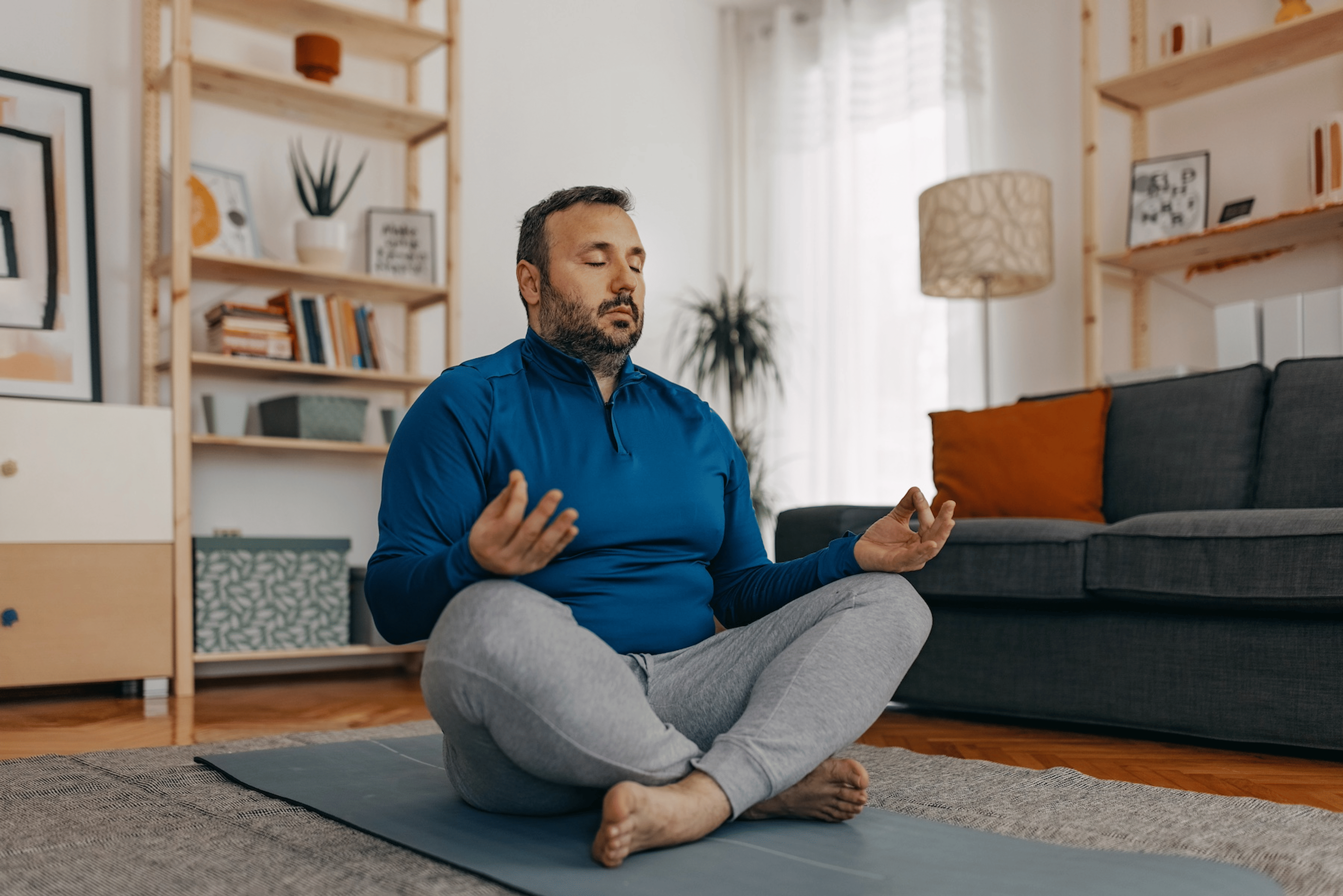
supersizer / E+ via Getty Images
Are Certain Types of Meditation Better Suited for Daily Practice Than Others?
With so many types of meditation to choose from, you might wonder if you should pick a certain style to practice every day or if it’s better to switch it up. Fortunately, both methods can work.
“In my opinion, a specific meditation that resonates with you—as in, you feel how it changes your state, brings you calm, releases stress, and you enjoy it—can become a true anchor when repeated regularly,” Nico says. “It’s easier to get back into a meditative state through that specific meditation practice because you become so familiar with it over time.” She likens it to finding your groove with a specific yoga pose you’ve practiced for a while—chances are it’s easy to get into and you’ll know how to navigate the experience.
Still, Nico recognizes the value of flexibility and personal preference as you begin to forge your daily meditation habit. “Our days, moods, and physical or emotional wellbeing change, and there may be days we need specific support with a theme or emotion in our lives. Choosing a meditation based on that can provide immediate support—kind of ‘targeted’ to your needs on that day,” she explains. For instance, if you’re feeling particularly worried one morning, you might seek out a guided meditation class that focuses on anxiety relief.
Types and styles of meditation aside, you can also be flexible with how long your daily meditation practice is, what time of day you meditate, whether you follow a guided meditation or not, and so on.
The Peloton App has no shortage of meditation classes to explore, with options ranging from 5–30 minutes that explore themes from gratitude and happiness to sleep and relaxation and beyond. Whether you take one favorite on repeat or prefer to mix and match, there are thousands of classes to explore and try.
Related Articles

Meditation
Morning Meditation Will Transform How You Start Your Day—Here’s How to Do It

Meditation
New to Meditation? Here’s How to Form a Beginner-Friendly Practice That Sticks

Meditation
8 Meditation Tips to Help You Feel Even More Comfortable with Your Practice

Meditation
Meditation Is an Easy and Effective Stress Reliever. Here Are 7 Tips for Getting Started
This content is for informational and educational purposes only and does not constitute individualized advice. It is not intended to replace professional medical evaluation, diagnosis, or treatment. Seek the advice of your physician for questions you may have regarding your health or a medical condition. If you are having a medical emergency, call your physician or 911 immediately.

Level up your inbox.
Subscribe for a weekly dose of fitness, plus the latest promos, launches, and events.
By providing your email address, you agree to receive marketing communications from Peloton.
For more about how we use your information, see our Privacy Policy.