
Jacoblund via Getty Images
Can You Walk a Marathon? Absolutely—But Here’s What You Should Know Before You Do
For starters, you definitely still need to train.
By Liz Doupnik•
Can You Walk a Marathon?
How Long Does It Take to Walk a Marathon?
Is There a Cutoff Time for Walking a Marathon?
Reasons Why You Might Want to Walk a Marathon
How to Train to Walk a Marathon
Race Day Tips for Walking a Marathon
Whether you’re recovering from an injury or raising funds for a cause you care about, there are so many reasons to walk a marathon. But while walking a full marathon—all 26.2 miles of it—may seem less strenuous than running one, it’s still a hefty challenge, which begs the question: Can you really walk a full marathon?
“Yes, absolutely,” says Ben Bring, DO, board-certified physician in family and sports medicine, and medical director for the Columbus Marathon in Ohio. “We have people walk marathons every single race.”
Though walking a marathon may seem deceptively simple, you still need to train. Below, find out everything you need to know about walking a marathon, from race day logistics to training you won’t want to skimp on.
Can You Walk a Marathon?
As Bring mentioned, it’s totally possible to walk a marathon. And while someone’s reasons for walking a marathon may vary, one thing remains the same: the need to prepare. That includes physical training as well as some logistical prep, including doing a little research ahead of your race to learn about water stations, cutoff times (more on that below), and the course map, among other details.
How Long Does It Take to Walk a Marathon?
Just like running a marathon, it will take folks different lengths of time to walk a full marathon—but you’re looking at about 7 to 9 hours total. According to the Centers for Disease Control and Prevention (CDC), the average adult walks briskly at a moderate intensity around three miles per hour. Given that a full marathon is 26.2 miles, by that math, it would take about 8 hours and 45 minutes to complete the distance. Similarly, Bring notes that most folks walk between a 17- and 19-minute mile, which would correlate to a marathon time of between 7.5 and 8.5 hours.
However, it’s important to note that many marathons have cutoff times; so if you’re hoping to have your photo taken crossing the finish line, you might plan to put in a more strenuous effort.

Peloton App
Access thousands of classes with no equipment needed.
Is There a Cutoff Time for Walking a Marathon?
Yes and no. Host cities and towns typically shut down key throughways and roads to allow marathoners space to race, fans to cheer, and volunteers to provide support. Since this can cause major traffic disruptions, marathons are frequently allocated a specific amount of time to take over the streets, which involves not only the race, but also the set up and subsequent clearing of discarded signs, water cups, barricades, and more. With that, athletes are typically granted a window to try and complete the course before the race organizers need to wrap things up and hand the streets back over to the town.
“For the Columbus Marathon, the cutoff time is usually about six-and-a-half hours,” Bring says. But it’s not quite as simple as having over six hours to dedicate to your race, he points out. At the starting line, many walkers are often placed in corrals (where athletes are organized according to past race performances and predicted finish times) further in the back to provide space for runners, and avoid unnecessary start line congestion. So, walkers in the Columbus Marathon often need to wait about half an hour after the race begins to cross the starting line, he says. There goes 30 minutes, even before you can start your watch.
Every race is different, however, and it’s important to check in on the race details to learn about the specific cutoff time for the marathon you intend to walk. However, while the course might close before you’re done, you may be able to finish by walking the distance safely on the sidewalk, so long as you feel comfortable doing so without race support, water stations, and medics on site, Bring says.
If you know you want to walk a marathon and haven’t yet signed up for a race, look for “walker-friendly” marathons with longer cutoff times.
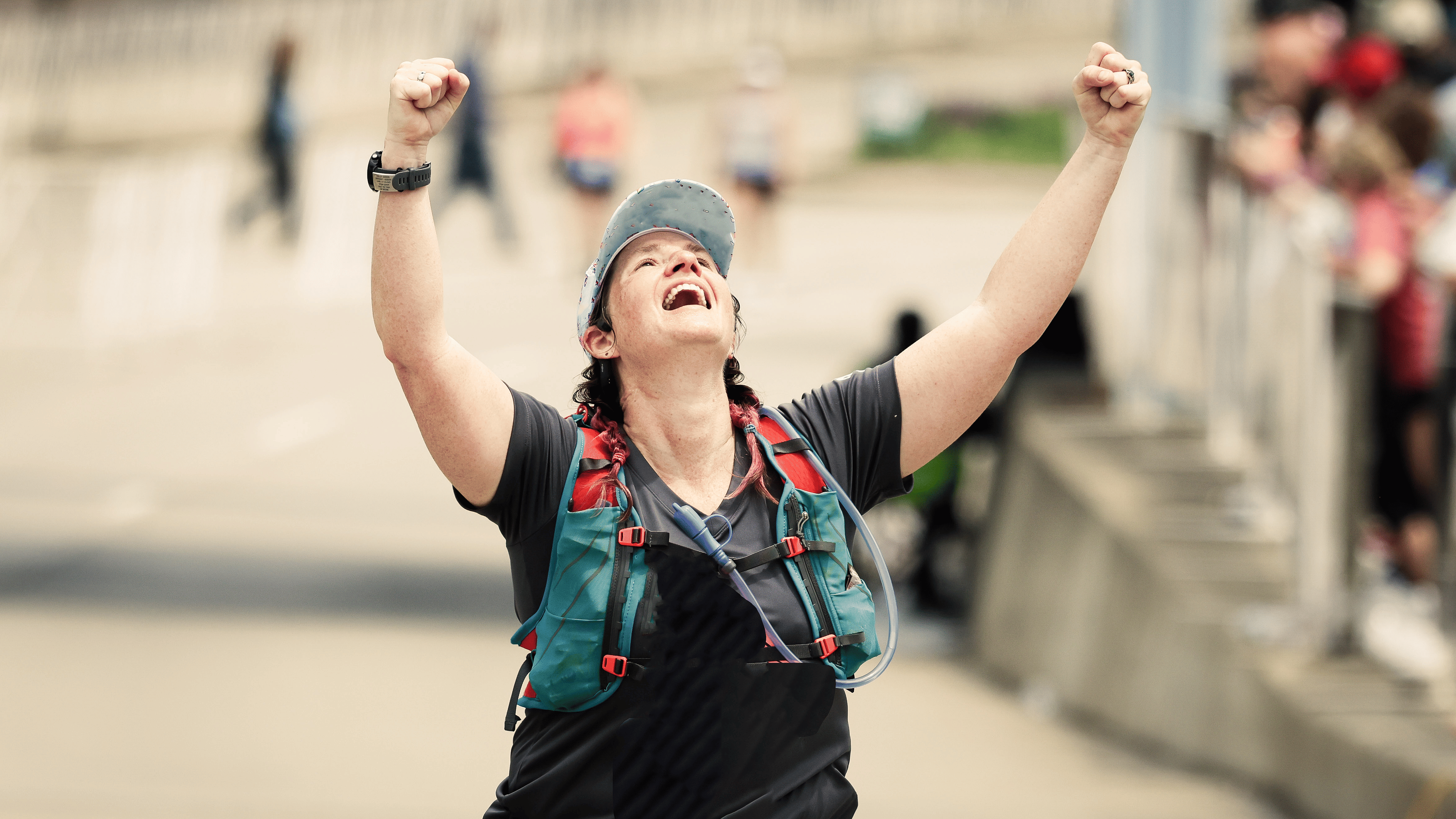
Ben Garvin via Getty Images
Reasons Why You Might Want to Walk a Marathon
Sure, walking a marathon is less common than running one, but that doesn’t make it any less of a challenge. (It’s still 26.2 miles, after all.) There’s a huge range of reasons why you might want to walk a marathon—this list just scratches the surface.
You’re Dealing with (or Want to Prevent) an Injury
For example, someone “may be coming back from injury and not wanting to miss the race while also ensuring they keep impact to a minimum,” says Peloton instructor Becs Gentry. According to research published in a 2024 issue of Frontiers in Bioengineering and Biotechnology, runners land with forces equivalent to about 1.5 to three times their body weight with each step. And the faster a runner goes, the more the impact their body absorbs, which also increases the potential for injury, the report says.
Unlike running, where an athlete is airborne for a split second during each stride, walking entails always having one foot on the ground. This means that walking produces significantly lower impact than running (around one times an athlete’s bodyweight). With that, walking and walk-running are often included as part of a wider injury recovery plan, prescribed by a licensed physical therapist or comparable medical provider—or can simply serve as a lower-risk way to complete the distance.
You’re Not a Runner (Yet)
Alternatively, some folks may walk a marathon because they want to experience the atmosphere of the event or check the accomplishment off their list of fitness goals even if they aren’t currently a runner. “Their fitness level may dictate that walking is currently their comfortable pace and that pace is still a challenge for that person to complete 26.2 miles,” Becs says.
You’re Just Starting On Your Fitness Journey
“One thing I really encourage people to do is get out there and start walking,” says Bring, noting the positive health implications that walking can produce, like optimized heart health, bone mineral density, cognition, and more. Committing to a big goal, like a marathon, might be exactly the motivation you need to get out there and walk regularly.
Your Training Didn’t Go As Planned
Perhaps you started a marathon training plan, but then life (injuries, commitments, travel, work) got in the way of your training. If you initially planned to run a marathon but don’t feel ready to run the full distance, walking or walk-running is definitely an option. Doing so allows you to still participate, use your race bib, and tackle a significant physical challenge while taking it at your own pace.


How to Train to Walk a Marathon
OK, so you’ve decided to walk a marathon—great! Can you get away with squeezing in a few extra steps here and there, and calling it training? Not quite.
“The standard recommended 10,000 steps a day covers around four or five miles, so that’s a big jump to 26.2 miles,” Becs says. “Therefore, you should absolutely train to walk the distance in the same way people train to run it. It’s about building up strength in the body to endure the distance.” To get ready for race day, it’s crucial to carve out ample time to build up your strength, endurance, and mental resilience. Here’s how to get it done.
Plan to Progress Slowly
All in, training to walk a marathon may take between 10 and 12 weeks to provide time to safely increase your weekly distance and walk intensities, which should, ideally, culminate in at least one long walk of at least 20 miles, Bring says. (This isn’t all that different from what a running-based marathon training plan entails.)
“Starting out low and slow is the key,” says Bring. “To avoid injury, we want our athletes to be really good at walking two or three miles at a time first.” He recommends working on feeling comfortable walking two to three miles before lengthening your distance. Then, once that feels like a walk in the park (pun intended), gradually build your mileage. A common piece of running advice is to follow the “10 percent rule.” This consists of increasing your weekly mileage—so long as you feel mentally and physically able—by no more than 10 percent each week. For example, if you walked 10 miles last week, you would aim to walk no more than 11 miles the following week.
If you’re more goal-oriented, Bring recommends using shorter races as actionable benchmarks to help give structure to your training. “One of my favorite things to recommend is signing up for a 5K to start,” he says. “You can train for that, then go walk a quarter marathon, then train for the half marathon, and then go from the half to the full.” By focusing on one distance at a time, you’re able to keep motivated by slowly (and safely) building your stamina and gain race-day experience you can use for your big race.
Prioritize Strength Training
Walking a marathon, just like running one, requires strength and endurance. Strength training can become your secret ingredient in achieving your goals, helping to prevent injuries, work on optimal walking form and address any muscular imbalances.
“Walking is still strenuous and puts a lot of strain on your body,” Bring says. “That's why strength training is so important—so that your muscles are able to handle the increased workload over 26 miles.” Should the body be unprepared to take on about six hours of constant movement, your muscles could fail, he adds.
Bring suggests starting simple and focusing on lower body exercises that emphasize key walking muscles like squats, lunges, and calf raises. Alternatively, check out the Strength for Runners classes on the Peloton App, which offers guided coaching on lower body strength and core work, and will help you build up strength for walking too.
Try a Strength for Runners Class on the Peloton App


Train Hard, Recover Harder
It can be beyond motivating when you begin to see results from your training. But without taking the time to nourish, fuel, and rest your body, training can become a slog—or worse, you could burn out or get injured.
One useful rule of thumb to ensure you’re getting enough sleep is to think of your weekly mileage as extra minutes you need to spend each night snoozing. For example, if you walked 20 miles in a week, you would need an extra 20 minutes in bed every evening. That said, you should listen to your body’s cues and sleep more if you’re feeling extra fatigued.
Fueling your body with nutrient-dense foods—before, during, and after your training—is another step in supporting your recovery and combatting fatigue. You’ll want to practice your fueling strategies during long training walks so you’re prepared for race day. “Make sure you’re getting enough proteins and carbs,” Bring says. And don’t skimp on hydrating, either, he says. To develop a customized eating plan for your needs and goals, consider working with a registered dietitian who can put together a personalized meal plan for you.
Find Your Community
No matter how you train for a marathon, it’s an admirable feat. It can be a comfort to pursue the same goal side-by-side with a friendly face. “Find a friend to move with—having a ‘walk and talk’ will make those miles pass by much better,” Becs says. Indeed, joining a walking group can help with accountability, while also creating a new opportunity to strengthen and build friendships.
Connecting with other marathon walkers virtually can also help you find inspiration for your training, or talk through any questions or concerns you have with folks going through the same thing. Consider finding a Peloton Team with a similar goal, or create your own.
Race Day Tips for Walking a Marathon
It’s here. You’ve made it to race day. All your training is in the rearview mirror. Now, only 26.2 miles stand between you and your goals.
Walk the race you’ve trained for: While it’s easy to get swept up with all the race-day excitement, staying focused on your plan will pay dividends by the time mile 20 rolls around. This means sticking to the pace you’ve trained at (as long as you feel able), consuming gels or liquids you’ve tried on your long walks, and wearing shoes you’ve worn in training. If possible, stick to tried-and-true foods before the race, including enjoying a reliable dinner the night before and a familiar breakfast the morning of.
Try walking poles: Walking poles can provide additional assistance in your balance and stability, and are worth giving a try, Becs says. Just know that some marathons don’t permit walking poles on the course, so be sure to check in with the race rules early in your training to ensure you’re appropriately prepared at the start line.
Don’t skimp on fueling: “Fuel and hydrate well,” says Becs. This means consuming enough carbs and fluids during the race to keep you powered all the way to the finish.
Wear the right shoes: Not all walking shoes are created equal, and each person has different requirements for shoes that will have them feeling supported for the full length of the race. “Have [a local running shop] map out your foot, get fitted for a pair of inserts (if needed), and find a pair of running shoes that fits your foot and walking style to help prevent injuries,” says Bring.
With ample training, a strong support crew and strong game plan, you’ll be well on your way to walking a marathon.


This content is for informational and educational purposes only and does not constitute individualized advice. It is not intended to replace professional medical evaluation, diagnosis, or treatment. Seek the advice of your physician for questions you may have regarding your health or a medical condition. If you are having a medical emergency, call your physician or 911 immediately.

Level up your inbox.
Subscribe for a weekly dose of fitness, plus the latest promos, launches, and events.
By providing your email address, you agree to receive marketing communications from Peloton.
For more about how we use your information, see our Privacy Policy.