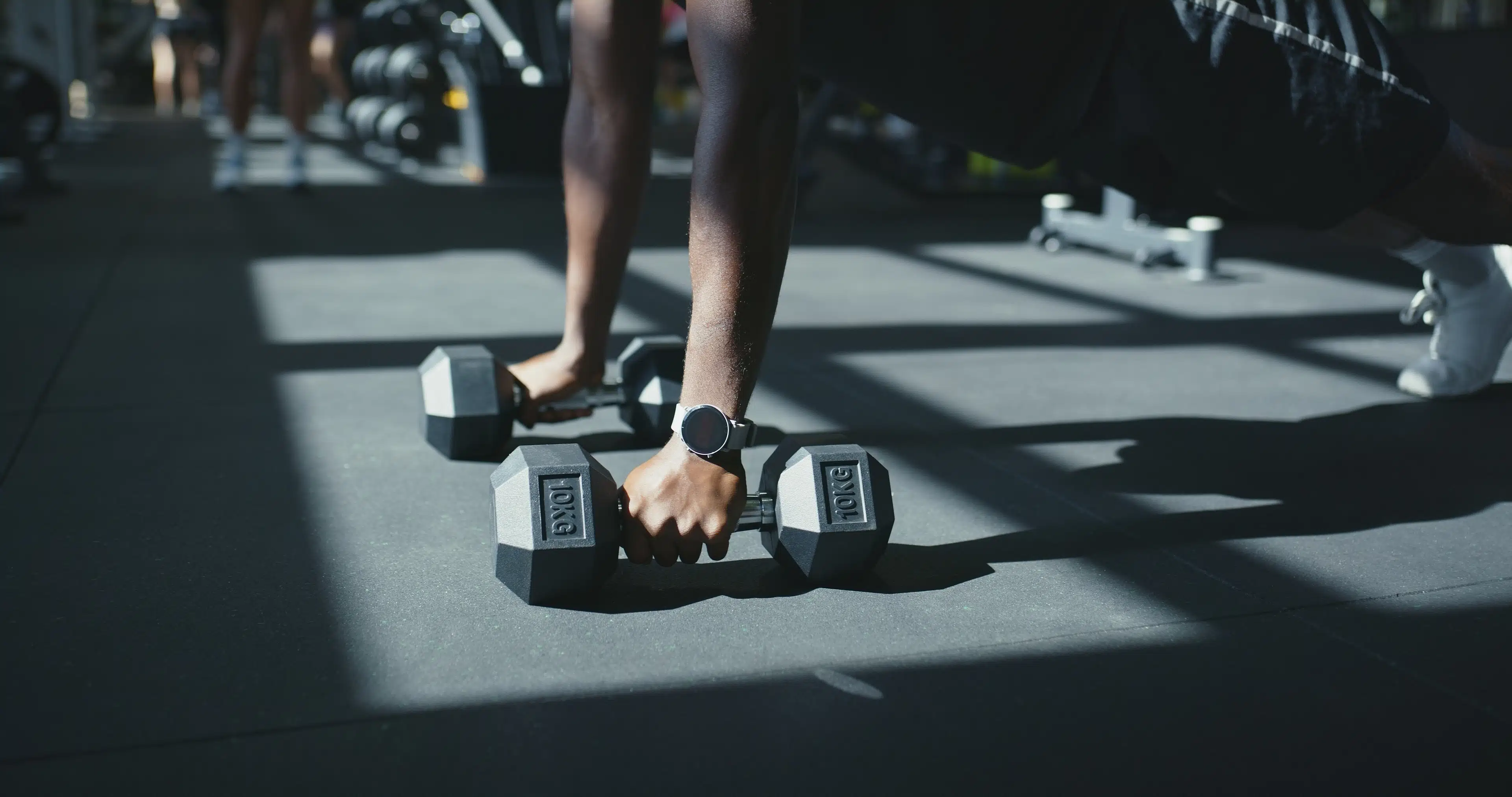
Marco VDM via Getty Images
How to Choose the Right Weights for Strength Training, Based On Your Level and Goals
“Light” and “heavy” are relative—here’s how to ID your perfect weights for every workout.
By Alyssa Sybertz, Team Peloton•
How Much Weight to Lift, Depending On Your Fitness Goals
How to Choose the Right Weights for Strength Training
How Do You Know If You’re Lifting the Right Weights?
How to Know When to Switch Weights
How Peloton Can Help You Choose the Right Weights
Workouts that utilize weights, such as strength training and bootcamp classes, are a smart addition to any well-rounded fitness routine. But without the help of a personal trainer, you might be at a loss for exactly how to incorporate weights into your workouts. Should you lift light and get more reps in? Or lift so heavy you’re struggling through each set? Does it make a difference whether you’re working your upper body or lower body that day, or whether you’re a runner vs. a yogi?
As with so many other things in fitness, the answer to “how much weight should I be lifting?” is a gray area. The weights you should reach for will depend on your goals, preferences, workout plans, and physical abilities. Below, Peloton instructor Ben Alldis explains how to know how much weight to lift, including where Peloton can step in to help.
How Much Weight to Lift, Depending On Your Fitness Goals
Your fitness goal, or what you hope to achieve with your workout routine, is one of the major factors in determining how much weight you should lift. “Are you trying to develop a single muscle group? Gain stamina? Or perform each exercise with better form? Setting your goals will guide your dumbbell selection process,” Ben explains.
Here’s a quick look at how certain fitness goals might influence your ideal weight selection.
Improve Overall Fitness
If you’re new to working out or returning after a break, your goal might be as simple as getting comfortable with strength training and perfecting your form for various exercises. If that’s you, starting with bodyweight exercises and lighter weights will help you gain confidence and nail proper exercise form (which will be a crucial foundation for getting those gains later on).
Using light weights can also be useful if you’re recovering from an injury or doing physical therapy, Ben notes. That’s because using lighter weights for higher reps can help your muscles build endurance to stabilize and support your tendons and joints.
Increase Muscular Endurance
Muscular endurance, your muscles’ ability to exert force against gravity or resistance over a period of time, is important for those who participate in endurance sports (such as long-distance running or cycling), and also for maintaining proper posture and efficient movement throughout your day. To improve muscular endurance, the American College of Sports Medicine (ACSM) recommends using relatively light weights that allow you to do a high number of reps (i.e., 10–25).
Build Muscle Mass
If you’re looking to build muscle mass (aka hypertrophy), you’ll want to reach for moderately heavy weights. “Heavier dumbbells are good for building muscle,” Ben explains, because they challenge your muscles enough to elicit growth. To promote hypertrophy, ACSM recommends lifting 70–85 percent of your one rep max (or 1RM, the maximum amount of weight you can lift for one rep). That amount should allow you to complete 8–12 reps, but still pose a challenge.
Increase Maximal Strength
If you’re a beginner or intermediate lifter, using moderately heavy weights for 8–12 reps should challenge your muscles enough to continue building maximal strength (i.e., the maximum amount of weight you can lift), according to ACSM. However, more advanced individuals will need to get more specific with their training, lifting even heavier weights for fewer reps. For example, if you’re an experienced lifter, the ACSM recommends lifting at least 80 percent of your 1RM for 1–6 reps.
Related Articles


How to Choose the Right Weights for Strength Training
With your fitness goal in mind, you’re one step closer to knowing which weights to choose—but there are additional factors to consider. “Different exercises, skill levels, and physical abilities will necessitate different dumbbells,” Ben says.
The weights you’ll need are totally unique to your fitness journey, and they may vary wildly from the weights your friends, family, or fellow gym-goers use when strength training. The right weights for you will also change over time, depending on how much (or little) you’re strength training, if you’re focusing on other fitness goals (say, training for a half marathon), and what else might be going on in your life.
That said, these tips can help you figure out which weights might be suitable for your next strength workout.
Light vs. Medium vs. Heavy Weights
During a Peloton strength class, an instructor might tell you that you’ll need a pair of light, medium, or heavy dumbbells or kettlebells. How do you know which ones to grab? When it comes to weights, the terms “light,” “medium,” and “heavy” are all relative—what might be light for you could be heavy for someone else—or vice versa.
For beginners, Ben recommends trying 5–10 pounds for light weights, 10–20 pounds for medium weights, and 15–30 pounds for heavy weights—or simply starting with five-pound weights for each exercise and working up from there. He also recommends having two- or three-pound weights on hand for some arm exercises, including the Arms & Light Weights classes on the Peloton App.
On the other hand, if you’re more advanced, you can start a little bit heavier. As a reference point, Ben uses 15- and 25-pound weights for both full-body and arms and shoulders classes, and 20- and 30-pound weights for glutes and legs workouts.
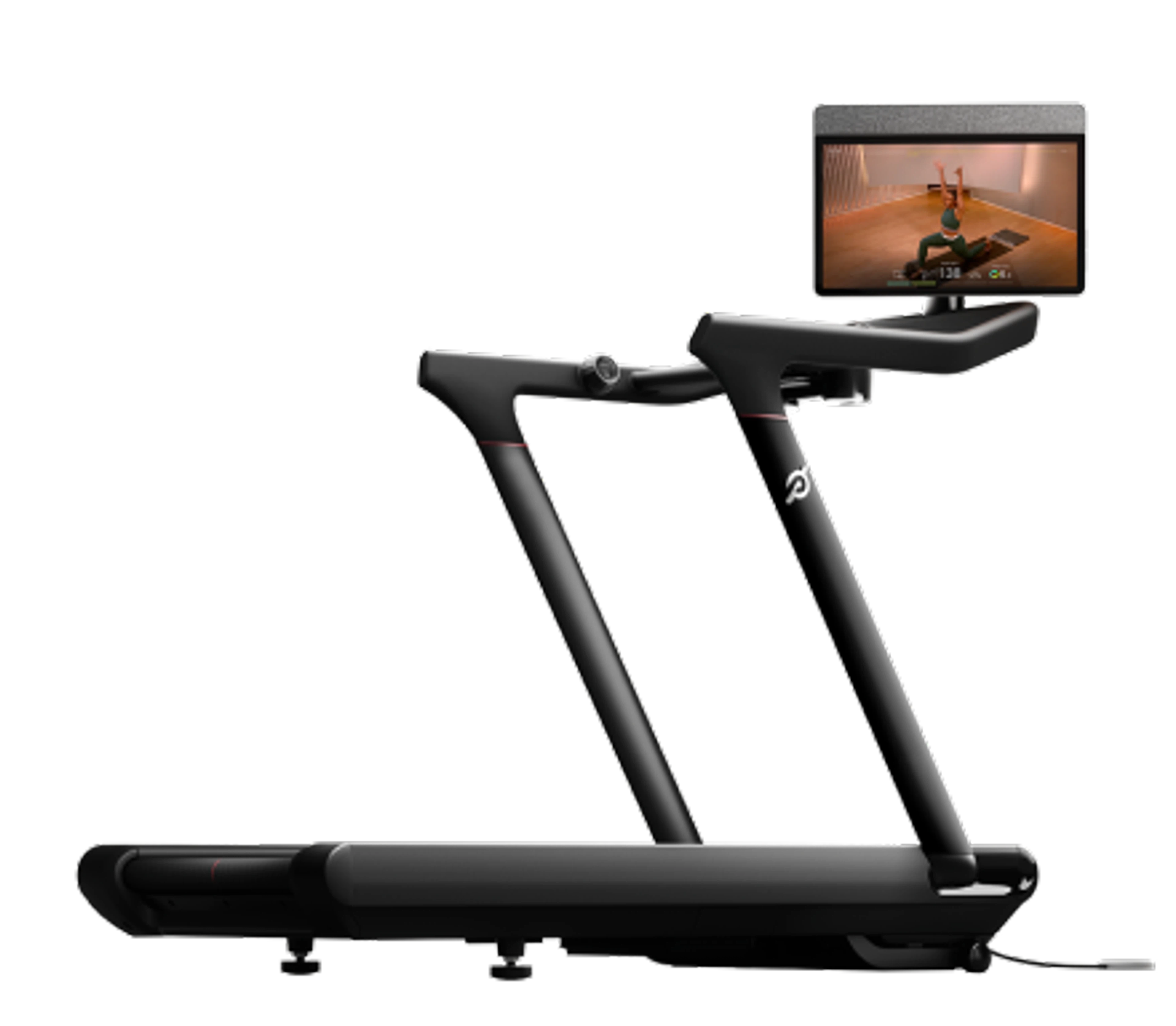
Remember, these weights are just suggestions; you can always go lighter or heavier based on your body’s ability. With the Peloton Cross Training Bike+, Row+, and Tread+ powered by Peloton IQ, you can save your preferred light, medium, and heavy weights in the digital weight rack, and Peloton IQ will suggest the right ones for each exercise when you cue up a qualifying strength workout.

Peloton App
Access thousands of classes with no equipment needed.
Be Honest About Your Ability Level
To help choose the right weights when strength training, Ben suggests considering your personal background and ability level. “If you’re someone who has experience in exercise and sports, or you work a job which requires you to carry out manual labor, you are likely to be stronger than someone who doesn't,” he says, stressing the fact that each person’s starting point is going to be unique. If you haven’t exercised in a long time, you may need to start with no weight at all—and that’s totally OK. (Bodyweight exercises are fantastic for building functional strength!)
For reference, ACSM defines novices or beginners as people with no strength training experience or who haven’t trained for several years, intermediates as people with approximately 6 months of consistent strength training experience, and advanced lifters as those with years of strength training experience.
Consider the Muscles You’re Working
You’re not going to be able to do biceps curls with the same weight that you can barbell squat. The muscles you’re targeting in a certain workout and the exercises you plan to do will have a major impact on how much weight you should pick up.
“The weight you use should correspond to the strength of the muscles you're working,” Ben says. “For example, your glutes are very powerful, so you can probably go pretty heavy with a weighted squat or deadlift. However, if you’re working your shoulders with a lateral or frontal raise, you may need to go lighter because it’s a smaller, weaker muscle group.”
A good rule of thumb: Ben generally recommends using lighter weights for smaller muscles like your arms and shoulders and heavier weights for larger muscle groups such as your chest, legs, and back.
Prioritize Form
“Without a doubt, lifting lighter weights with proper form is always better than lifting heavier weights with poor form,” Ben says. Poor form can lead to injury, including muscle strains, ligaments sprains, and fractures or damage to bones and joints.
For this reason, Ben recommends mastering each exercise using only your bodyweight before even picking up dumbbells. “When you feel confident that your form is strong using your own bodyweight, select light weights and build from here,” he says. “It’s always better to start light and add weight in small increments.”


How Do You Know If You’re Lifting the Right Weights?
Luckily, there’s a simple way to know if you’ve chosen the right weights: The last couple of repetitions in each set will let you know if you’re using the correct weights, Ben says.
“Your weight is too light if you don't start to struggle during those last few reps,” he explains. “You should start to feel the work from the very first rep, and your weights should really make you work for those last few, without compromising your form. If you feel like you have no problem getting to the end, it's probably too light.”
On the Peloton Cross Training Bike+, Tread+, or Row+ powered by Peloton IQ, the weight rack and suggested weights features can help you keep track of your preferred weights for certain exercises and suggest which you should grab for a given Peloton Strength workout—including when you might be ready to level up.
How to Know When to Switch Weights
You might be comfortable banging out biceps curls with 10-pound weights, feeling totally confident that you’ll get through each set and not be sore the day after a workout. Unfortunately, growth doesn’t happen in your comfort zone—and being mindful of your effort will help you progress toward your fitness goals. In fact, listening to your body and changing your weights up when they start to feel easy is critical to achieving results.
“By changing or progressing in your workouts, you'll keep your muscles challenged, and you'll get stronger,” Ben says. “In the beginning, you want to progress in range of motion and form. If you do the same workout you did the week before, but with better form, that’s progression. After proper form and full range of motion are established and ingrained, it’s time to worry about progressing in repetitions and weight.” Keep Ben’s earlier rule of thumb in mind: If you’re breezing through an entire set without feeling challenged, that’s a good sign you can pick up heavier weights for that move.
On the other end of the spectrum, there might be times when you need to drop to a lower weight to keep your goals in motion. Progress isn’t always linear, and sometimes when life happens (an injury, a long vacation, or just needing to prioritize other things in a season of life), your body needs to take a step back before you can move forward. Some signs that you might need to grab lighter weights may include:
Your form starts to suffer.
You're burning out much more quickly during reps and sets.
You're debilitatingly sore after a workout.
How Peloton Can Help You Choose the Right Weights
During any Peloton strength workout, you’ll get some guidance on which weights to pick up—either your instructor will explain which weights to grab at the beginning of a class, or you’ll see the equipment needed under workout details.
If you’re working out with a Peloton Cross Training Bike+, Tread+, or Row+ powered by Peloton IQ, there are next-level strength features that can help ensure you’re lifting the right amount of weight during movement-tracking enabled strength workouts. The weight rack and suggested weights features can help you sort your available weights into categories (light, medium, heavy), keep track of your preferred weights for certain exercises, and suggest which you should grab for a given strength workout. Then, while you’re lifting, Peloton IQ will keep an eye on your form, offering real-time feedback on your technique. If your form is consistently lacking, Peloton IQ might suggest going lighter to help prevent injury, whereas if you’re exceeding the rep count, it’ll nudge you to level up.
To experience these features yourself, give the Peloton Cross Training Series a try at your local Peloton store or retail location, or book a virtual appointment with an expert. Learn more.
This content is for informational and educational purposes only and does not constitute individualized advice. It is not intended to replace professional medical evaluation, diagnosis, or treatment. Seek the advice of your physician for questions you may have regarding your health or a medical condition. If you are having a medical emergency, call your physician or 911 immediately.

Our Products
Level up your inbox.
Subscribe for a weekly dose of fitness, plus the latest promos, launches, and events.
By providing your email address, you agree to receive marketing communications from Peloton.
For more about how we use your information, see our Privacy Policy.