
Cardio vs. Strength Training—Which Is More Important for Your Health and Fitness Goals?
Spoiler: You need both in your fitness routine for the best results.
By Team Peloton•
What Is Cardio?
What Are the Benefits of Cardio?
What Is Strength Training?
What Are the Benefits of Strength Training?
Cardio vs. Strength Training for Different Goals
How to Combine Strength and Cardio
Should You Do Cardio or Strength Training First?
When it comes to working out, we all have our preferences. Some are firmly in the cardio camp, while others are fans of free weights and resistance training. But in the cardio vs. strength training debate, one thing is clear. Just like PB&J, some things are better together.
“The best workouts include a dose of strength and a dose of cardio,” says Peloton instructor Ben Alldis. “The benefits are reciprocal—not only does weight training strengthen your cycling and running (and vice versa), it also builds you up to tackle those functional, day-to-day movements.”
Each boasts major health and fitness benefits, so by bringing cardio and strength training together, you’re getting the best of both worlds and powering up your workouts.
Here, we dive into the health benefits of cardio vs. strength training, how they stack up for different goals, and share why both should be nonnegotiables in your fitness routine.

Peloton App
Access thousands of classes with no equipment needed.
What Is Cardio?
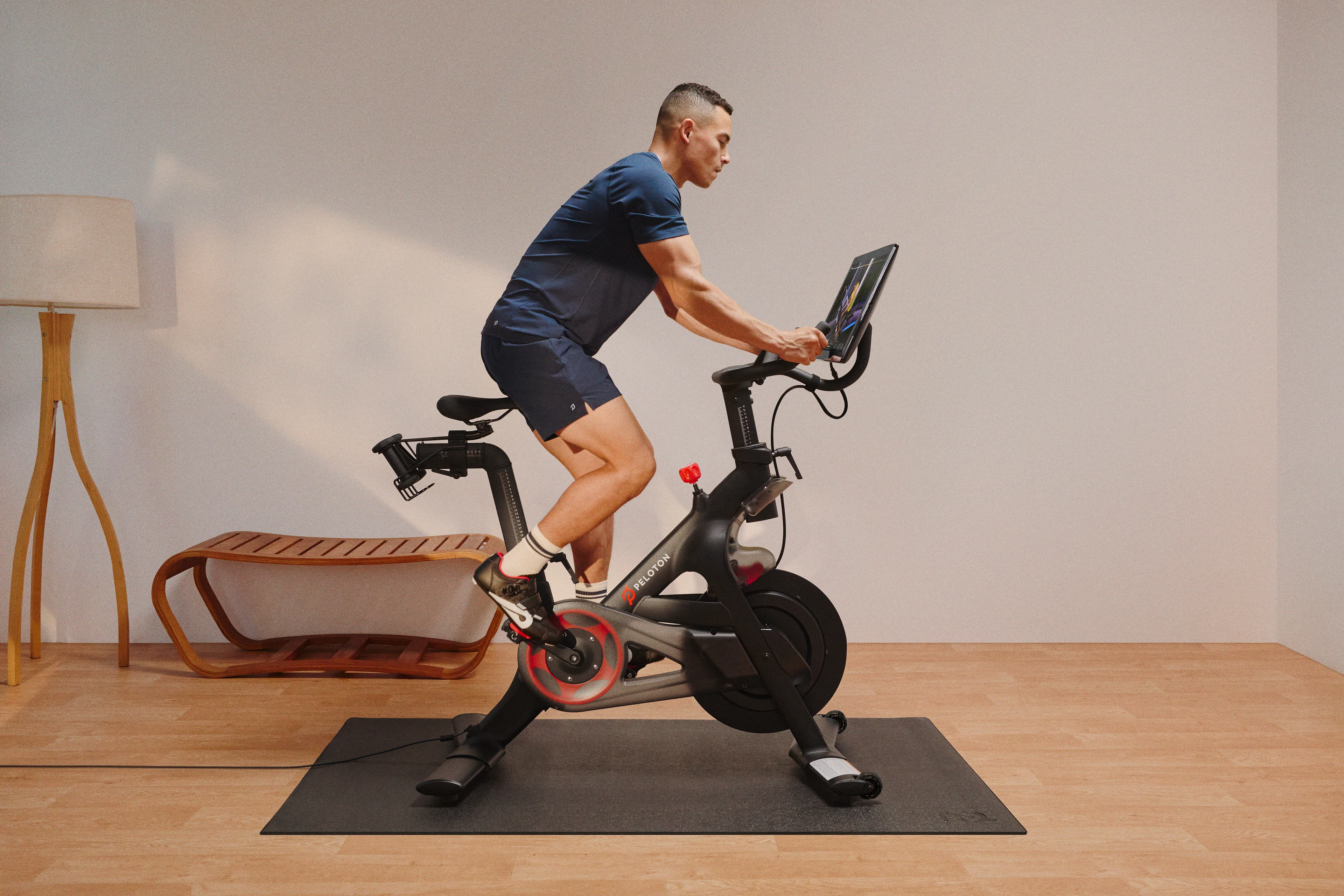
Cardio is any form of aerobic exercise that gets your heart pumping over a sustained amount of time. Short for cardiovascular training or conditioning, cardio works to increase your heart rate and breathing, boosting the flow of oxygen through your blood vessels to power your movement.
Running, swimming, cycling, rowing, and power walking are some of the most popular forms of cardio, but it can also include dance cardio, hiking, aerobics, HIIT, and sports like basketball or tennis. Even walking up and down stairs on repeat can be considered cardio. As long as you’re moving at a moderate to fast pace, breathing faster, and working up a sweat—even a little one—you can consider it a form of cardio.
How Often Should You Do Cardio?
Health organizations like the Centers for Disease Control and Prevention (CDC) and the World Health Organization (WHO) recommend that adults do at least 150 minutes of moderate-intensity exercise per week, 75 minutes of vigorous-intensity exercise, or an equivalent combination of the two. That could be broken down into 15-30 minutes, five times a week, or even shorter bursts several times a day, depending on your schedule and workout preferences. The most important thing is to find a form of cardio (or multiple) that you enjoy, that feel right for your body and goals, and, crucially, that you’ll stick with.
What Are the Benefits of Cardio?
Cardio boasts a multitude of benefits, ranging from improved fitness levels to better physical and mental health. “Cardio exercise helps improve your body’s ability to deliver blood and oxygen to your muscles, strengthening your heart and lungs,” says Ben. Here are just a few of its core benefits.
1. Cardio Keeps Your Heart Healthy
Boosting your heart rate with regular cardio has been shown to improve general cardiovascular health, helping to prevent heart disease and other non-cardiovascular diseases such as diabetes, osteoporosis, and even colon cancer.
2. Cardio Boosts Your Immune System
Cardio can help you fight off sickness, with even small amounts aiding your immune system. A 2009 study on 13 young males found that 20-minute bouts of cardio varying from low to high intensity all helped activate the immune system by boosting the circulation of specialized immune cells responsible for fighting off infections. While the low-intensity exercises were beneficial, higher intensity cardio had an even stronger effect on the participants’ immune cells.
3. Cardio Boosts Your Mood and Energy Levels
That buzz you get when you’ve worked out? Those are your endorphins (among other things) kicking in. Cardio boosts the production of “feel-good” hormones including endorphins and dopamine, with studies showing it helps to lift and stabilize your mood and improve your overall mental health.


What Is Strength Training?
Strength training—also known as weight training, lifting, or resistance training—is any form of exercise that uses resistance to build strength. That resistance (which can come from free weights, a weight machine, resistance bands, or even your own body weight) causes your muscles to contract, which over time builds more strength, endurance, and muscle mass.
Unlike cardio, which is aerobic exercise, strength training is typically anaerobic exercise, which means it doesn’t use oxygen for energy; instead breaking down the glucose stored in your body. That said, there’s sometimes crossover between aerobic and anaerobic exercise. For example, if you do a particularly vigorous strength workout that gets your heart rate up (think: high-intensity interval training, or HIIT, with weights), this can fall into the cardio category too, as your body will also be using oxygen for energy. A workout that includes both cardio and strength elements is sometimes called hybrid training.
How Often Should You Do Strength Training?
Health organizations including the US Department of Health and Human Services (HHS) and the World Health Organization (WHO) recommend that adults aim to strength train all major muscle groups at least twice a week. Generally speaking, you shouldn’t plan to strength train every day; it’s best to give a muscle group at least 48 hours between sessions so it has time to recover.
Keep in mind, depending on your fitness level and the intensity at which you’re exercising, practices like yoga, barre, or Pilates can count as strength training in addition to traditional strength training, such as bodyweight calisthenics workouts, resistance band work, using weight machines, and lifting weights.

What Are the Benefits of Strength Training?
Like cardio, strength training offers lots of benefits for your mind and body. “Strength training helps you build muscles that support you in your everyday life and boost your metabolism,” Ben says. Here are three key reasons you need strength training as part of your routine.
1. Strength Training Builds Muscle
Building muscle is perhaps the most popular goal of strength training. Consistent strength training increases muscle mass through a process known as hypertrophy. When you challenge your muscles, you create microscopic damage in the tissue, and your body rebuilds the muscle fibers to be bigger and stronger. More muscle mass isn’t just an aesthetic goal; for one, research has linked increased muscle mass to lower risk of death among older adults, making strength training an important part of exercising for longevity.
2. Strength Training Improves Bone Health
Any form of strength or resistance training can help promote better bone health and improve bone density. Stronger bones can help protect you against injuries and reduce your likelihood of developing osteoporosis or osteopenia.
3. Strength Training Provides Stress Relief and Can Boost Mental Health
Like exercise, in general, strength training has been found to improve mental health. In addition to helping decrease symptoms of depression and anxiety, it can boost confidence and improve the mind-body connection.


Cardio vs. Strength Training for Different Goals
Combining cardio and strength workouts can help you harness all the benefits that both have to offer. “It taps into all the ways your body can output power, including improved overall cardio capacity, learning how to work hard under fatigue, increasing your fitness level and building strength via a full-body experience,” says Peloton instructor Rebecca Kennedy.
The truth is, both cardio and strength training are essential for maintaining overall health and wellbeing—and for reaching most fitness goals. That said, depending on your aim, you may need to shift the emphasis of your routine.
Get Stronger
It might go without saying, but in order to get stronger, you generally need to strength train. By challenging your muscles with resistance, you prompt them to become bigger, stronger, and more capable over time. This will help you to lift heavier weights and do things like hoist your suitcase overhead with more ease. You should still plan to incorporate cardio in your fitness routine for all its important health benefits, but strength can take priority when you’re planning your workouts.
Improve Cardio Endurance
If you’re training for an endurance event like a half marathon, marathon, road ride, obstacle race, or even a long hike, cardio endurance work should be the cornerstone of your routine. That said, you’ll still want to do some strength work as cross training; building strength in the muscles you’ll use in your sport of choice can help increase power and mobility, prevent fatigue, and reduce your chances of injury.
Age Well
Both cardio and strength training are linked to a longer, healthier life—and for best results, you’ll want to do both. Research published in JAMA Network Open, that followed over 115,000 older adults, found that both cardio and strength activities were independently associated with a reduced risk of death, but that those who met the HHS guidelines for both aerobic activity (at least 150 minutes of moderate-intensity or 75 minutes of vigorous-intensity per week) and strength training (at least two sessions per week) had the lowest risk of death.
Maintain a Healthy Weight
Both cardio and strength training have the capability to help you burn calories, boost your metabolism, and maintain a healthy weight, but they do it in different ways. Cardio helps you burn calories and, at certain intensities, fat stores, while you work out. While cardio may burn calories faster than strength training, it only does this during your workout. Strength training plays the long game, building muscle mass over time, which boosts your metabolism and helps your body burn more calories even when you’re not in workout mode.
How to Combine Strength and Cardio
If you’re still favoring strength or cardio, let us say it once more: the optimal approach isn't to pick one or the other, but to integrate both into your routine. “A healthy combination of strength and cardio training will allow your body to perform at its best, letting the two systems complement each other rather than compete,” Ben explains.
To incorporate both strength and cardio into your life, you can schedule them on alternating days; a balanced weekly workout routine could include three full body strength days, and three days of cardio, for example.
Alternatively, you can include both in the same workout. Rebecca, for one, is a big fan of that approach. “It’s an incredibly effective workout and efficient use of time,” Rebecca says. “These intense workouts bring the best of both worlds into one workout that will make you stronger and leave you incredibly sweaty, feeling confident and proud.”
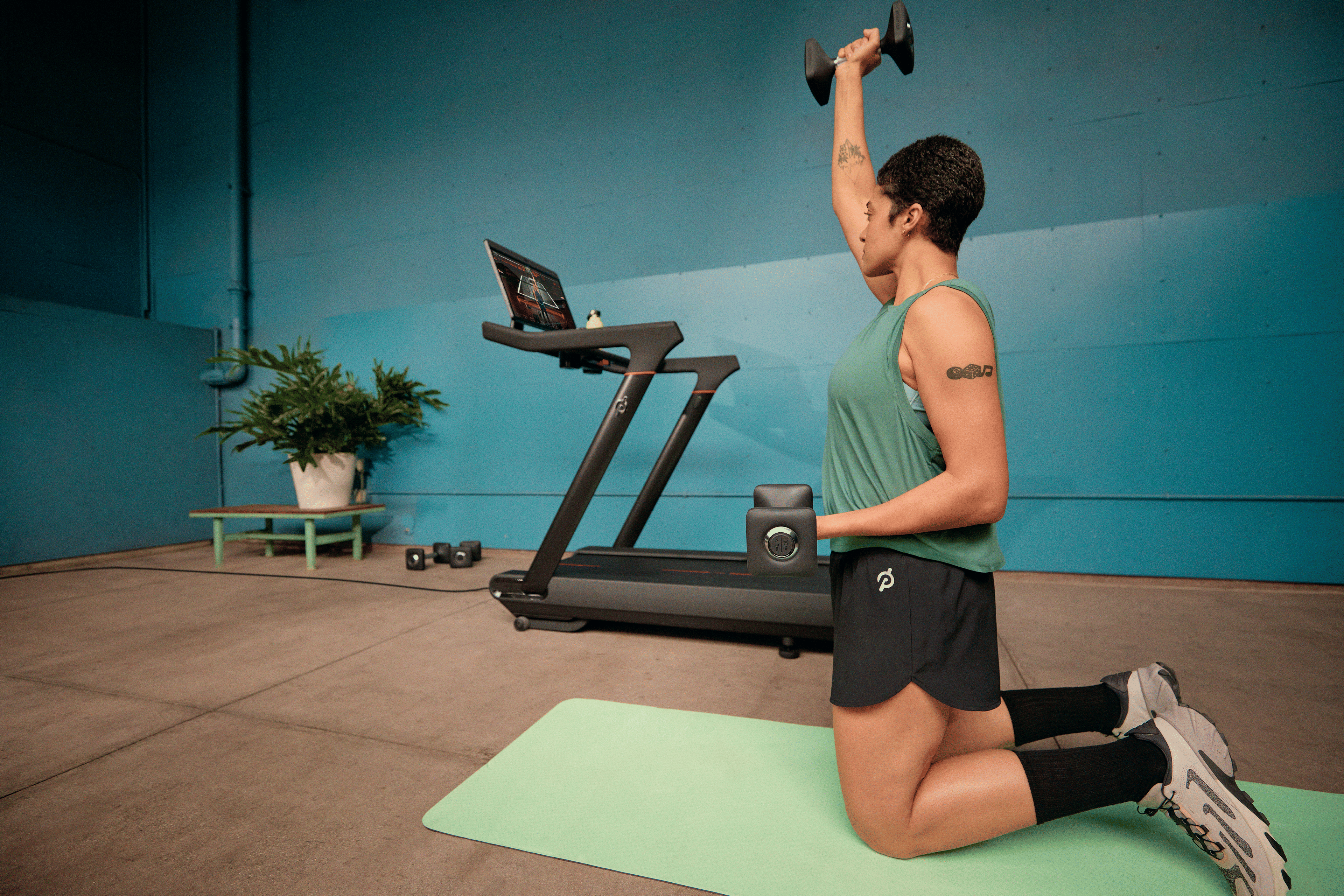
Take, for example, a bootcamp workout. During a Peloton Bike Bootcamp, Tread Bootcamp, or Row Bootcamp, you’ll alternate doing strength exercises on the floor with weights and cardio intervals on your Bike, Tread, or Row. In doing so, “you’ll keep your heart rate elevated and adrenaline pumping with quick switches between your exercise bike or treadmill and your mat,” Rebecca says. “And before you know it, it’ll be over and you’ll be left planning when you can do it all over again.”
If a bootcamp doesn’t appeal, there are other workout options that combine cardio and strength:
High-intensity interval training (HIIT) workouts can be done in a variety of ways, but when you do them with free weights or strength exercises (such as in Peloton’s HIIT Cardio classes), you reap the benefits of both strength and cardio.
Strength and conditioning workouts (sometimes described as metabolic conditioning workouts, or met con) typically involve a combination of strength training, cardiovascular exercises, and high-intensity intervals designed to engage all of your body’s energy systems. Peloton’s Kettlebell Strength & Conditioning Classes, for example, will take you through some slower strength exercises but also get your heart pumping with sets of swings, snatches, or other high-energy moves.
Circuit training is a method of strength training where you perform one exercise after another with minimal rest in between (unlike traditional strength training, where you do a set of a certain exercise, rest, then do another set of the same exercise, and repeat). As a result, you get your heart rate up to a moderate- or high-intensity level while doing strength-building resistance exercises.
Stacked Classes, a feature available on Peloton, comes in handy for combining strength and cardio. It allows you to build a playlist of classes, so as soon as you finish one, you can jump into the next one. Try stacking a 15- to 20-minute strength class with a cardio workout of the same length, and you can knock out both types of training in under 45 minutes.
Try a Cardio and Strength Workout on the Peloton App


Should You Do Cardio or Strength Training First?
If you’re looking to plan out your training and include cardio and strength on the same day, the question of “cardio or weights first?” will naturally come up. Though it’s hotly debated, the order of cardio or strength training really depends on your fitness goals. For example, if your main priority is to get stronger or build muscle, it’s best to lift weights or do strength work first. If you want to improve your endurance for, say, a race, start with cardio and end with weights.
For beginners or those coming back to exercise after a break, consider starting with one type of workout per day. The goal is to keep things balanced and avoid overtraining; ease into your new routine and build it up slowly as you go. Make sure you schedule at least one rest day per week too. It’s always a good idea to consult your physician before starting any new workout, especially if you have any injuries or health issues.


This content is for informational and educational purposes only and does not constitute individualized advice. It is not intended to replace professional medical evaluation, diagnosis, or treatment. Seek the advice of your physician for questions you may have regarding your health or a medical condition. If you are having a medical emergency, call your physician or 911 immediately.


Level up your inbox.
Subscribe for a weekly dose of fitness, plus the latest promos, launches, and events.
By providing your email address, you agree to receive marketing communications from Peloton.
For more about how we use your information, see our Privacy Policy.