Iuliia Burmistrova via Getty Images
7 No-Equipment, Full Body Workouts You Can Do Anywhere
Whether you’re traveling or just don’t have access to a gym, these exercises will keep your fitness routine on track.
By Emily Laurence•
Can You Get an Effective Full Body Workout Without Equipment?
The Benefits of Doing No-Equipment Workouts
Types of No-Equipment Full Body Workouts
A 10-Minute Bodyweight Workout You Can Do Without Equipment
Tips to Keep In Mind When Doing No-Equipment Workouts
If you typically rely on your Peloton Bike or Tread, dumbbells, or other equipment to help you reach your fitness goals, you may wonder if you can score a truly effective workout without any tools whatsoever. The truth: You absolutely can. According to Peloton instructor Tunde Oyeneyin, a full body workout with no equipment can be just as intense as one in the gym—and it can be tailored to fit your goals, whether that’s getting stronger, upping your endurance, or increasing your flexibility and mobility.
Can You Get an Effective Full Body Workout Without Equipment?
Yes, you definitely can. While having a gym full of exercise equipment at your disposal is helpful, your body is a built-in weight rack and cardio machine. “Bodyweight exercises require multiple muscles to resist and engage, ultimately strengthening themselves in the process,” Tunde says.
Another great thing about no-equipment full body workouts: They’re extremely versatile. “It’s exciting to change up your fitness routine and not do the same thing every day,” Tunde explains. And the more varied your routine is, the more your body will benefit, because you’ll be working different muscle groups, ranges of motion, and skills.
Even if your routine consists of only no-equipment full body workouts, there’s still plenty of room to play. “Even if I did choose to do a HIIT circuit every day, the options of the exercises that the circuits could consist of are endless,” Tunde says.

Peloton App
Access thousands of classes with no equipment needed.
The Benefits of Doing No-Equipment Workouts
There’s no question that workouts with no equipment are effective. Below are six major benefits you can expect.
Builds Strength
Working against your body weight can make you stronger. One 2015 study, for instance, found that older adults who did 16 weeks of bodyweight exercise developed more strength both in their upper body and lower body, even when doing just one set of each move. Another study published in the journal Progress in Rehabilitation Medicine found that people with rheumatoid arthritis who did bodyweight exercises experienced improved muscle strength and range of motion.
Supports Bone Health
Bodyweight training bolsters your bones too. Studies show that weight-bearing bodyweight workouts, including yoga, Pilates, and jogging, all support bone health by increasing bone density, which reduces the risk of fractures.
Improves Cardiovascular Health
Bodyweight workouts can also help improve cardiovascular health, Tunde says. There’s certainly no shortage of ways to get your heart rate up sans equipment, whether it’s by jogging, a bodyweight HIIT circuit, or doing a dance cardio workout.
Boosts Balance and Stability
If you have no equipment, all you have to rely on for balance and stability is your own body, Tunde points out. For this reason, bodyweight training can be an effective way to improve both by enhancing proprioception (your body’s awareness of where it is in space) and recruiting deep core and joint stabilizer muscles. Through bodyweight workouts, “you can also improve your joint health and overall coordination, which is beneficial for strengthening your body’s natural reactions to movement, reducing the risk of injury,” Tunde says.
Encourages Consistency
Traveling or don’t have access to a gym? No problem. No-equipment workouts are free and can be done anywhere, so you can squeeze in a quick bodyweight exercise session whenever and wherever you find a free moment. This encourages consistency in your workout routine, which is key to seeing results.
emiliozv/iStock/Getty Images Plus via Getty Images
Types of No-Equipment Full Body Workouts
As Tunde pointed out, part of the beauty of no-equipment workouts is their versatility. Whatever your mood, goals, or energy level, there’s a no-equipment, full body workout for you. Need some ideas? Here are some to try.
Running
Running may require a lot from your hamstrings, calves, and glutes, but it’s not just a lower-body workout. In fact, proper running form requires full body activation. The movement engages the core muscles to stabilize the torso and transfer force effectively, and the upper body is important for balance, rhythm, and momentum.
Research shows that even just 5 to 10 minutes of running at a moderate speed (less than 6 miles per hour) is linked to a lower risk of cardiovascular disease and increased longevity. It’s also beneficial for mental health, so if you’re feeling down or in a funk, one of the best things you can do is lace up your sneakers and get moving.
If running is inaccessible to you, walking is another great option. Similar to running, walking is linked to a plethora of health benefits, including a reduced risk of many chronic diseases, better sleep, improved mental health, and longevity. When you’re ready, you can try the run-walk method, which incorporates small bouts of running to build up your stamina.
Bodyweight Strength
When Tunde’s traveling, she likes to take a bodyweight strength class through the Peloton App. (You can choose from full body, lower body, upper body, and core-focused routines.) These no-equipment workouts feature a variety of bodyweight exercises, such as push-ups, squats, and lunges, that don’t require any equipment or a ton of space.
Bodyweight Cardio or HIIT
You can do a cardio workout with just your bodyweight using high-energy moves like plyometrics (i.e., jumping exercises). High-intensity interval training (HIIT), which cycles between periods of high-intensity work and rest, is a particularly great way to get your heart rate up and can be done without any weights or machines. “Exercises you could do in a HIIT circuit might include burpees, jump squats, high knees, and jumping jacks,” Tunde says. Once again, the Peloton App comes in handy here, with guided HIIT workouts that don’t require any equipment whatsoever.
Pilates
Pilates is a low-impact workout method that improves balance and flexibility while building functional strength. It relies almost entirely on your bodyweight (optional Pilates props include blocks, balls, and sliders) and focuses on building strength and stability in the core, though there are plenty of moves that engage the upper and lower body too.
Yoga
Yoga is another great way to improve balance and flexibility through gentle movement. You can make your yoga flow as restorative or fast-paced as you want, depending on what type of workout you’re looking for. On the Peloton App, turn to Power Flow classes if you’re looking for a challenge, and a Slow Flow, Yin Yoga, or Restorative class for more of a relaxing practice.
Barre
Barre is a full body workout with moves inspired by classical ballet, and taps into many of the small stabilizer muscles other exercises miss. (If you’ve ever been to the ballet, you’ve seen first-hand the strength it requires!) Barre classes—which you can also find on the Peloton App—tend to be fast-paced, so you may get cardiovascular benefits out of it too.
Dance Cardio
Dancing is so fun that it may not feel like a workout, but it absolutely is. Dance cardio is an effective way to increase cardiovascular endurance and stamina, improve balance and coordination, and build core strength. You can always throw on some tunes and move to the beat of your own drum, or, if you prefer a structured dance cardio class, the Peloton App has you covered, whether you’re into Usher, K-pop, or Beyonce.
Try a No-Equipment Full Body Workout on the Peloton App


A 10-Minute Bodyweight Workout You Can Do Without Equipment
For an effective bodyweight workout that'll get your heart rate up, try this circuit inspired by one of Tunde’s bodyweight strength classes on the Peloton App, including three of her favorite bodyweight strength moves: lunges, push-ups, and planks. Warm up with five minutes of dynamic stretching, then jump into the below.
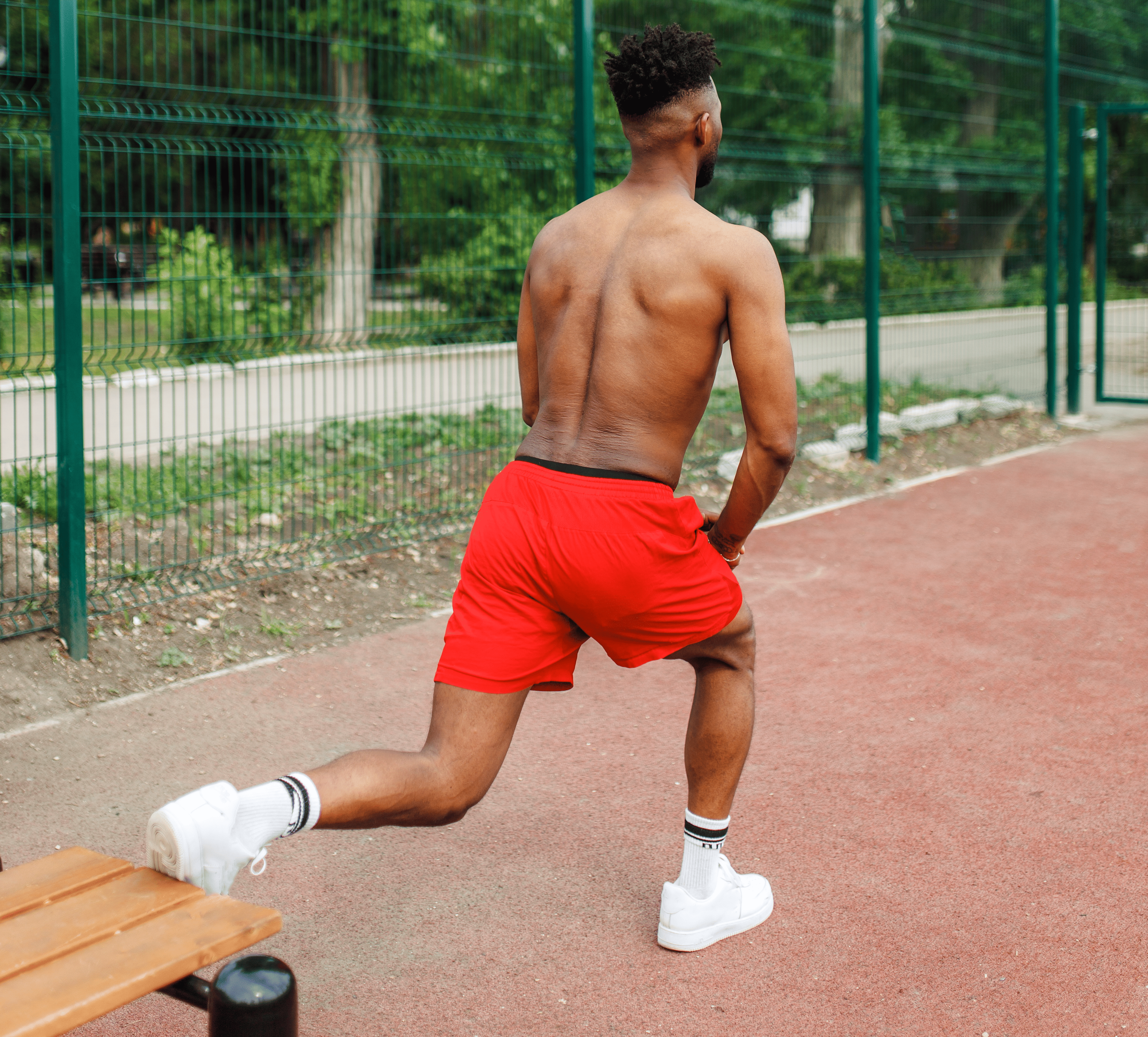
Split Squat to Reverse Lunge: Do 60 seconds of split squats on the right side, then 20 seconds of reverse lunges with the same leg. Then, repeat on the left side. “Lunges help strengthen your lower half as well as enhance your balance and stability,” Tunde says.
Push-ups: Do 15 seconds of push-ups, then 15 seconds of triceps push-ups. “Not only do push-ups significantly strengthen your upper body,” Tunde says, “but it’s empowering to be able to push your own body weight up and off the floor.”
Planks: Hold a plank for 30 seconds, then do 30 seconds of mountain climbers. “Yes, planks target the core, but they also help strengthen other parts of your upper body, as well as help with posture, and in some cases, alleviate back pain,” Tunde says.
Rest and Repeat: Rest for 10 seconds, then repeat the circuit two more times.
Tips to Keep In Mind When Doing No-Equipment Workouts
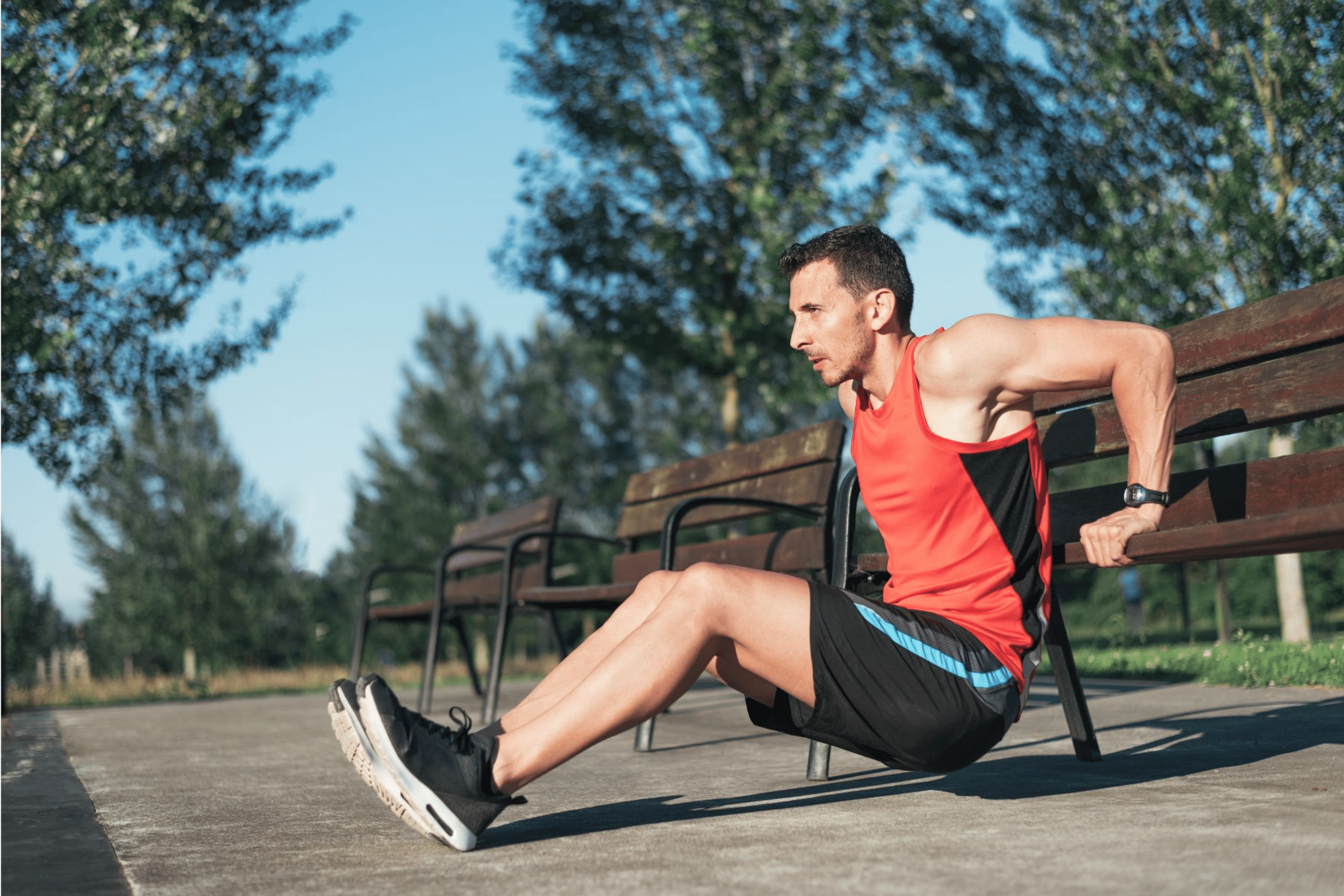
While your body is an effective cardio- and strength-building tool on its own, it can also be beneficial to switch things up—and you can do so even without dedicated fitness equipment like weights or machines. Incorporating heavy objects, benches, steps, and other objects around you can take your workout to the next level and challenge your muscles in new ways.
For example, “you can use stairs to crush a cardio circuit—running up and down in intervals is a great workout,” Tunde says. “You can pick up a stack of books, or whatever heavy object you have lying around the house, and start squatting. You can use a small stool to elevate your back foot for Bulgarian split squats.” Tunde has one other parting word of advice: “Always prioritize your form and listen to your body,” she says. “Get creative, but be safe.”
Related Articles

Sculpt
Yes, Bodyweight Training Can Be Just As Effective As Lifting Weights—If You Know These Tricks

Strength Train
Yes, You Can Work Your Biceps with No Weights. Here's How

Beginners
The 13 Best Bodyweight Exercises for Beginners, According to Experts

Strength Train
I’m a Peloton Strength Instructor and These Are My Favorite Bodyweight Training Moves
This content is for informational and educational purposes only and does not constitute individualized advice. It is not intended to replace professional medical evaluation, diagnosis, or treatment. Seek the advice of your physician for questions you may have regarding your health or a medical condition. If you are having a medical emergency, call your physician or 911 immediately.
Level up your inbox.
Subscribe for a weekly dose of fitness, plus the latest promos, launches, and events.
By providing your email address, you agree to receive marketing communications from Peloton.
For more about how we use your information, see our Privacy Policy.